A thermal leak detector works by showing temperature differences across a surface, so its sensor resolution and temperature range decide what you actually find. Match the device to your surface type: concrete needs a wider range, drywall a finer one. Skip it if you need to inspect inside a drain or behind a wall, where a borescope or moisture meter fits better.
The Mistake That Leads to a False Reading
Pointing a thermal leak detector at anything without checking its surface type leads to a number that means nothing. Metal, glass, and painted drywall emit heat differently, so a device calibrated for one surface misreads another. Check the listing for an emissivity setting or a fixed value that matches your wall, window, or pipe.
Cold air from a draft and cold air from a ductless room look similar on a basic device. A model with a narrow temperature range misses the difference. Compare the minimum and maximum readings on the specification sheet before you buy.
Holding the detector too far from the surface is another avoidable error. Every model has a distance to spot ratio that tells you how wide an area it reads at a given range. A unit rated for close work gives blurry results across a room.
Sensor Resolution Sets the Ceiling
Resolution works like pixels on a camera. A single point infrared sensor reads one temperature at a time, so you must sweep it slowly across a wall and watch for the number to jump. A thermal camera with a grid of sensors reads dozens or hundreds of points at once, which makes a draft or cold corner stand out immediately.
For a large room, a coarse grid may miss a narrow leak between a window frame and the wall. A finer grid costs more but catches smaller temperature differences. Think about the size of the leaks you expect to find: a wide cold band is easy, a hairline crack is not.
Some devices advertise a high display resolution while the sensor itself is low. Check the sensor resolution, not the screen resolution. The listing should state the number of measurement points separately from the display.
Temperature Range Must Cover Hot and Cold Jobs
A thermal leak detector built for building inspections often reads from about 14 to 140 degrees Fahrenheit, which covers cold drafts and warm walls. If you also want to check a hot water pipe or a heating duct, you need a wider range, often up to 600 degrees or more.
Plumbers and property maintenance workers should compare the upper limit on any model they consider. A device that tops out at 140 degrees cannot safely read a boiler pipe or a radiator. The lower limit matters less for indoor drafts but matters if you inspect a cold storage room or an exterior wall in winter.
Range and resolution trade off in cheaper units. A wide range often comes with a coarse sensor, so a device that reads both a freezer and a furnace may blur small differences in between. Decide which end of the scale your work sits on most often.
Surface Emissivity Changes the Number You See
Emissivity is how efficiently a surface gives off heat. Shiny metal has low emissivity, so it reads cooler than it is unless the device compensates. Painted drywall and wood have high emissivity and read closer to true temperature. A fixed emissivity setting works for homes with standard painted walls, but a variable setting helps when you scan metal ducts, pipes, or glass.
If you inspect a mix of surfaces, look for a device with an adjustable emissivity setting or a preset list. A unit with a fixed setting of 0.95 reads drywall well but gives misleading numbers on a copper pipe. Some listings hide this spec, so ask the seller if it is not shown.
A laser pointer on the front does not change the reading. It only shows where you are aiming. Two devices with the same laser can have very different emissivity handling, so treat the laser as a convenience, not a quality signal.
Design Types Split on Speed and Detail
Single point infrared thermometers are the cheapest and fastest to use one handed. You pull the trigger, read one number, and move on. They work for checking a radiator or a known cold spot, but they miss leaks you do not already suspect.
Thermal cameras show a full color image of temperature differences across a wall or room. They are the best choice for a home buyer or a property manager scanning an unfamiliar house, because the image reveals patterns a single number cannot. They cost more and take a few seconds to render each frame.
Dual laser spot thermometers read two points and average them, which gives a slightly more stable number than a single point. They still require a slow sweep to find a small leak, but they reduce the jumpiness of a single reading.
IR array sensors sit between a spot thermometer and a full camera. They use a small grid, often 8 by 8 or 16 by 16 points, to show a rough heat map. They are lighter and cheaper than a camera but still show a cold corner or a hot pipe run at a glance.
| Design type | Scan speed | Leak detail | Effort to use | Suits |
|---|---|---|---|---|
| Single point IR | Slow sweep | Only large leaks | One hand, easy | Known cold spots |
| Dual laser spot | Slow sweep | Slightly better | One hand, easy | Drafty window checks |
| IR array sensor | Moderate | Small leaks visible | Point and watch | Room by room scans |
| Thermal camera | Fast image | Finest detail | Two hands, slower setup | Home inspections |
Which Features Matter and Which Are Marketing
A color display helps you read a thermal image, but it does not improve the sensor. A low resolution grid shown on a bright screen is still a low resolution grid. Check the sensor spec, not the screen size.
Bluetooth and app connectivity are useful for saving readings or marking a floor plan, but they add cost and a battery drain. For a one time DIY renovation check, a simple handheld unit with a memory function is enough.
Adjustable emissivity is a real feature for mixed surface work. A built in laser is a minor convenience. A data hold button matters when you scan a dark corner and cannot read the screen until you pull the device back.
IP ratings matter only if you use the device outdoors in rain or near a wet drain. For indoor wall and window checks, a basic plastic body works. Check the battery type: a rechargeable lithium ion pack costs more up front but avoids buying coin cells repeatedly.
When a Thermal Leak Detector Is the Wrong Tool
A thermal leak detector reads surface temperature, not moisture or airflow. A cold wall can be a draft, but it can also be a damp wall behind a vapor barrier. For suspected water damage, use a moisture meter instead. For a draft you can feel but not see, a smoke pencil or an incense stick shows airflow direction better.
Drain inspections need a completely different tool. A thermal detector cannot see inside a pipe, and a sewer camera with enough cable reach is the right choice for a clog or a cracked line. A borescope fits a small opening but has a shorter reach.
If you need to measure a distance, not a temperature, a thermal detector will not help. A laser measure gives room dimensions and wall lengths, which a thermal scan cannot. Keep the two tools separate.
For a quick check of a single window or door, a low cost single point IR thermometer may be all you need. Spending more on a camera only pays off if you scan many rooms or inspect houses you do not know.
Reading a Listing Before You Buy
Look for three numbers on the specification sheet: sensor resolution, temperature range, and distance to spot ratio. If any of these is missing, ask the seller before you buy. A listing that only shows the display resolution or the laser class is hiding the important part.
Check the emissivity spec. If it says fixed at 0.95, you can read painted drywall and wood but not bare metal. If it says adjustable, you can set it for the surface you scan. A preset list of materials is a good middle ground.
Ask what the response time is. A slow sensor makes you hold the device still for several seconds on each spot, which turns a room scan into a chore. A fast response time, often under half a second, lets you sweep a wall continuously.
For battery powered models, check whether the listing states battery life in hours or number of scans. A rechargeable battery is convenient for daily property maintenance work, while a coin cell model is fine for occasional DIY checks.
Long Term Costs and Care
The main consumable is the battery. A model that uses standard AA or AAA cells is cheap to replace, but a rechargeable lithium ion pack saves money over years of regular use. Check whether the battery is user replaceable or requires a service center.
The lens or sensor window needs occasional cleaning with a dry microfiber cloth. A scratched window scatters the infrared reading and gives false numbers. Store the device in a case or a drawer, not loose in a tool bag with screwdrivers.
Calibration drifts over time, especially on cheaper units. If you use the detector professionally, plan to have it checked or recalibrated every couple of years. For home use, a quick test against a known surface, like a cup of ice water, shows whether the reading is still sane.
Thermal Leak Detector Questions Before You Buy
How do I choose a thermal leak detector for home use?
Start with the surface you will scan most. For painted drywall and wood, a fixed emissivity of 0.95 works. For metal pipes or ducts, get an adjustable emissivity setting. Then check the temperature range covers both cold drafts and warm walls, and pick a sensor resolution fine enough to see the narrow leaks you expect.
Is a thermal leak detector worth it for a one time renovation?
For a single room or a few windows, a low cost single point infrared thermometer is often enough. It finds large cold spots and costs less than a thermal camera. If you plan to inspect a whole house or buy a home, a thermal camera or an IR array sensor saves time and finds smaller leaks you would otherwise miss.
What is the difference between a thermal camera and an infrared thermometer?
An infrared thermometer reads one point at a time and shows a single number. A thermal camera reads a grid of points at once and shows a color image of temperature differences across a whole wall or room. The camera finds leaks you do not already suspect, while the thermometer works best for checking a known cold spot.
Can a thermal leak detector find a water leak inside a wall?
No. A thermal detector reads surface temperature, so it can show a cold or warm patch caused by water behind the surface, but it cannot tell water from a draft or a cold air pocket. Use a moisture meter to confirm water, and a thermal detector only to narrow down where to check.
Which thermal leak detector works for plumbing and heating pipes?
Choose a model with a wide temperature range, often up to 600 degrees Fahrenheit or more, and an adjustable emissivity setting for bare metal. A single point or dual laser thermometer is usually enough for checking a pipe run, because you are looking for a known hot or cold spot rather than scanning a whole wall.
Which Thermal Leak Detector Fits Your Job
A homeowner checking drafty windows and cold corners gets the most from an IR array sensor: it shows a rough heat map without the cost of a full camera. Pick a model with adjustable emissivity and a range that covers at least 14 to 140 degrees. If you inspect metal pipes or heating ducts daily, switch to a single point infrared thermometer with a wide range and a fast response time.
Real thermal leak detector listings, so you can check the points in this guide against actual products. These are affiliate links: as an Amazon Associate we earn from qualifying purchases, at no extra cost to you.
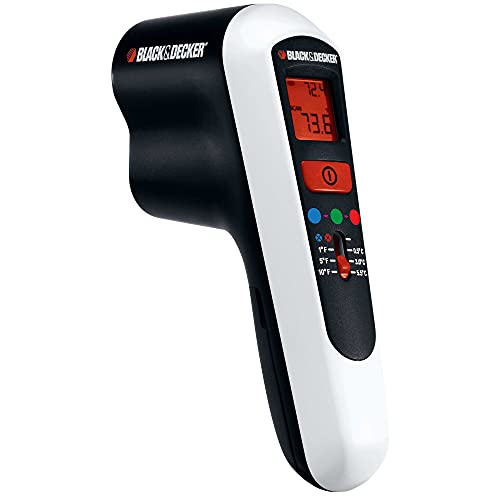 BLACK+DECKER BLACK+DECKER Thermal Leak Detector (TLD100)
View on Amazon ↗
 AIOMEST Thermal Camera Water/Air Leak Detector Imager, AIOMEST Infrared Imaging Gun…
View on Amazon ↗
Listing names and images come from Amazon and are rechecked against the live listings; last checked Nov 8, 2026. No prices shown; the current price is on the listing.
What this guide is. This guide covers the thermal leak detector category as a whole, not individual models. It is written from general knowledge of how these devices work, and you should verify any dimension or specification on the product listing before you buy.