Two factors decide most torque wrench purchases: the fastener sizes you actually turn and how often you need repeatable accuracy. Small furniture and bike bolts call for a 1/4 or 3/8 inch drive in a lower range. Lug nuts, suspension, and engine work demand a 1/2 inch drive, a mid to high range, and a calibration you can trust. The main tradeoff is simple: a click style is easier to use, while a beam style is cheaper and never needs recalibration but is harder to read in tight spots.
Match the Drive to Your Fastener Sizes
A torque wrench only works with sockets that fit its square drive. Most home assembly and bike work uses 1/4 inch or 3/8 inch drives. Car lug nuts, brake calipers, and suspension bolts usually need a 1/2 inch drive. Check the sockets you already own before picking a drive size.
Drive size also sets a realistic torque range. A 1/4 inch model often tops out around 20 to 25 newton meters or 15 to 20 foot pounds, which is plenty for furniture and small engine covers. A 1/2 inch model typically starts around 20 to 30 foot pounds and can reach 150 to 250 foot pounds, the range for wheel lugs and larger fasteners.
Low versus High Range Changes the Whole Tool
A wrench that reads a wide range is not automatically better. A 1/2 inch drive rated from 20 to 150 foot pounds is less precise at 20 foot pounds than a smaller wrench built for 10 to 50 foot pounds. For repeated small fasteners, buy a lower range tool. For wheels and suspension, buy a higher range one.
Check the minimum marked value. Many click wrenches are least accurate in the bottom 20 percent of their scale. If you need 15 foot pounds, a tool that starts at 10 or 15 foot pounds serves you better than one that starts at 30.
Click, Beam, and Digital Wrenches Split on Feel
A beam wrench uses a pointer over a fixed scale. It costs little, never goes out of calibration, and works for occasional jobs where you can see the scale straight on. It is harder to read under a car or inside an engine bay.
A click wrench releases with a felt and heard snap when you reach the set torque. Most micrometer click wrenches adjust by turning a handle and reading a scale. Split beam click wrenches use a different internal design that holds calibration longer and adjusts with a small knob.
Digital wrenches show the torque on a screen and often add angle measurement for stretch bolts. They are the most expensive and need batteries, but they remove guesswork in tight spaces where you cannot see a beam scale or hear a click clearly.
| Wrench style | Reading effort | Calibration need | Best for |
|---|---|---|---|
| Beam | High, needs clear view | None, stays accurate | Occasional, open spaces |
| Micrometer click | Low, set and feel click | Check yearly or after drops | Most home and auto work |
| Split beam click | Low, knob and click | Holds longer than micrometer | Frequent shop use |
| Digital | Lowest, screen readout | Battery and sensor checks | Tight spots, angle specs |
Calibration Is a Habit, Not a Feature
Every click and digital wrench drifts over time. Storing it at a high setting, dropping it, or using it daily speeds that drift. A beam wrench has no internal spring to wear, so it reads the same years later.
Budget click wrenches often arrive with a calibration certificate, but that only proves accuracy on day one. Plan to check a click wrench against a known reference or have it calibrated after heavy use. If you want a tool that stays trustworthy without that routine, a beam or split beam design fits better.
The Listing Details That Predict a Good Buy
Compare the torque range, drive size, and length. A longer handle gives more leverage and makes high torque easier to reach, but it can be clumsy in a wheel well. Check the scale markings: some wrenches mark only every 5 foot pounds, which forces guessing between values.
Look for the accuracy claim, often stated as plus or minus 3 or 4 percent. That matters most in the middle of the range. Ask the seller whether the wrench includes a storage case and whether the calibration certificate is included or just a marketing note.
Avoid wrenches that advertise a huge range on a tiny drive, like 1/4 inch drive up to 100 foot pounds. That spec usually means poor low end accuracy or a misleading maximum. A realistic range on a realistic drive size is a stronger sign.
Where a Torque Wrench Earns Its Space
Furniture assembly rarely needs a torque wrench. Cam locks and wood screws strip before a torque value helps. You can assemble a bed or desk with a hand tool and a careful feel. A torque wrench becomes useful for metal fasteners, especially on bikes, cars, and appliances with gaskets.
Home mechanics working on brakes, wheels, or suspension should own at least one 1/2 inch click wrench. Plumbers and HVAC techs use smaller 3/8 inch wrenches for flange bolts and compression fittings where overtightening causes leaks. Weekend projects that involve engines, motorcycles, or repeated teardowns benefit from a mid range click or digital wrench.
When a Torque Wrench Is the Wrong Tool
Skip a torque wrench if you only assemble flat pack furniture or hang shelves. A simple ratchet and a cautious hand work fine for wood and cam locks. Skip it also if you need to break loose rusted bolts: a torque wrench measures tightening, not loosening, and using it to remove fasteners can knock it out of calibration.
For occasional lug nut checks, a torque adapter on an existing breaker bar or ratchet may serve better than a dedicated wrench. It costs less and takes less storage space. But if you rotate tires or do brake work more than once a year, a dedicated 1/2 inch click wrench pays for itself in consistency and speed.
Storage Habits Decide How Long It Stays Accurate
Always return a click or digital wrench to its lowest setting before storing it. Leaving the spring compressed at a high torque setting weakens it over time and throws off future readings. Keep it in a case or padded drawer, not loose in a tool bag where it can get knocked around.
Avoid using a torque wrench as a breaker bar or ratchet. It is a measuring instrument, not a general purpose turning tool. Wipe the drive square and handle clean after use, and keep the head dry. These small habits preserve the calibration you paid for.
Torque Wrench Questions Before You Buy
Which torque wrench should I buy for lug nuts?
Pick a 1/2 inch drive click wrench with a range that includes your vehicle's lug nut spec, often 80 to 100 foot pounds. A model rated up to 150 foot pounds gives headroom without pushing the tool to its limit. Check your owner's manual for the exact value and buy a wrench whose mid range covers it.
Is a torque wrench worth it for furniture assembly?
Usually not. Furniture fasteners are wood screws and cam locks that strip at low torque, and a torque value does not prevent that. A hand ratchet or screwdriver with a steady feel works fine. Save the torque wrench for metal fasteners on bikes, cars, or appliances where overtightening causes real damage.
What is the difference between a beam and a click torque wrench?
A beam wrench has a pointer that moves over a fixed scale as you pull. It never needs calibration and costs little, but you must see the scale straight on. A click wrench releases with a snap at the set torque, so you can use it by feel in tight spots, but the internal spring drifts and needs periodic calibration.
How do I compare torque wrench accuracy?
Look for the stated accuracy, often plus or minus 3 or 4 percent. That applies best in the middle of the range. A wrench is least accurate near its minimum and maximum. Compare the range, drive size, and scale markings, and ask whether the seller includes a calibration certificate or just claims the tool is calibrated.
Can I use a torque wrench to loosen bolts?
No. A torque wrench is designed to measure tightening force, not to break fasteners loose. Using it to remove a stuck bolt can damage the internal mechanism and knock it out of calibration. Use a breaker bar or ratchet for loosening, and reserve the torque wrench for final tightening to a set value.
Which Torque Wrench Fits Your Work
Someone who rotates car tires and does brake work a few times a year should buy a 1/2 inch drive micrometer click wrench with a range up to 150 foot pounds. It covers lug nuts and suspension bolts without pushing the tool to its limit. Someone who only assembles bikes and small engine covers is better served by a 3/8 inch drive click wrench in a 10 to 50 foot pound range, which reads small values more accurately and costs less to own.
Real torque wrench listings, so you can check the points in this guide against actual products. These are affiliate links: as an Amazon Associate we earn from qualifying purchases, at no extra cost to you.
 LEXIVON LEXIVON Torque Wrench 1/2-Inch Drive Click 10~150 Ft-Lb/13.6~203.5 Nm (LX-183)
View on Amazon ↗
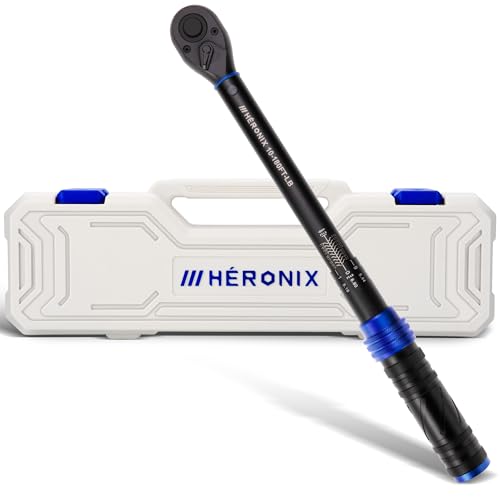 HERONIX HERONIX 1/2 Inch Drive Click Torque Wrench, 10–180 Ft.Lb/13.6–244.0 Nm…
View on Amazon ↗
 HAIRICH Hairich torque wrench 1/2, 10-170ft.lb/13.6-230Nm, ±3% HIGH PRECISION | 1/2…
View on Amazon ↗
Listing names and images come from Amazon and are rechecked against the live listings; last checked Nov 8, 2026. No prices shown; the current price is on the listing.
What this guide is. This guide covers torque wrenches as a category, not individual models. It is written from general knowledge of how the tools work and does not reference product documents, reviews, or in person testing. Verify any drive size, range, or dimension on the listing before you buy.