Match the tool to your wire gauge and insulation type first. Manual strippers give the most control for fine stranded wire, while automatic and self adjusting models save time on repetitive solid core work. The main tradeoff is between speed and precision: one style rarely excels at both.
Gauge fit decides the first cut
A wire stripper works by cutting through insulation without touching the copper underneath. The hole or jaw opening must be sized to the conductor, not the outer insulation diameter. A 12 gauge solid wire needs a different opening than 18 gauge stranded wire.
Check the tool's marked gauge range before buying. Most home wiring uses 14 to 10 gauge solid copper, while appliance cords and low voltage projects often use 22 to 16 gauge stranded wire. A tool that covers both ranges will serve more projects than one optimized for a single job.
Stranded wire is more forgiving of a slightly tight jaw, but a too small opening will cut individual strands. Solid wire is the opposite: a too large opening slips and tears insulation instead of cutting it cleanly.
Jaw shape changes how the cut feels
Round jaws cradle the conductor and cut insulation evenly around it. This shape works best on solid wire and PVC insulation that cuts predictably. V shaped jaws center the wire but apply more pressure at two points, which can help bite through tough or slippery insulation.
Flat jaws with a single cutting edge suit ribbon cable and thin insulation, but they demand a steadier hand on round wire. Some tools combine shapes: a round notch for solid core and a flat blade for zip cord.
The material behind the cutting edge matters too. Hardened steel jaws stay sharp longer, but a softer jaw may bend instead of chip if you accidentally hit a staple or screw.
Adjustment style sets the work pace
| Style | How it adjusts | Best for | Watch out for |
|---|---|---|---|
| Manual stripper | You pick the hole size | Fine stranded wire, delicate insulation | Slower on repetitive cuts |
| Automatic stripper | Spring loaded jaws close on the wire | Solid core home wiring, fast production | Can crush thin insulation or nick small strands |
| Self adjusting stripper | Jaws sense conductor diameter | Mixed gauge jobs, beginners | Less precise on brittle or aged insulation |
| Wire stripper pliers | Manual squeeze with built in stops | One hand use in tight boxes | Limited gauge range per tool |
Automatic and self adjusting tools promise one squeeze stripping, but their internal mechanism adds moving parts. That mechanism can wear or jam, especially after cutting through adhesive lined insulation or heat shrink tubing. Manual tools have fewer parts to fail, which matters for occasional use over many years.
For a first tool, a manual stripper with clearly marked holes is easier to learn. You can see exactly which opening fits the wire, and a bad cut teaches you why gauge matters. Automatic tools are faster once you already know your wire sizes.
Insulation type is the hidden variable
PVC insulation cuts cleanly and predictably. Silicone and Teflon insulation are softer and stretchier, so they need a sharper jaw or a tighter fit to avoid tearing. Aged insulation gets brittle and can crack instead of cutting, leaving sharp edges that snag on conduit.
If you work on older homes or appliances, look for a tool with replaceable blades or jaws. A dull blade on brittle insulation crushes the insulation into the conductor instead of slicing it, which makes the next strip harder.
Some tools include a built in wire cutter and a crimper. The cutter is useful for trimming conductors to length, but the crimper only works with specific terminal types. Do not pay extra for a crimper you will not use.
Ergonomics matter in tight spaces
Wire stripping often happens inside a junction box, behind an appliance, or under a sink. Long handles give leverage but can be hard to open in a cramped space. Short handles fit tight spots but require more hand strength.
Look at the grip material and the spring. A return spring opens the jaws after each cut, which reduces hand fatigue during repetitive work. Cushioned grips help, but a grip that is too thick can make the tool hard to control for precise cuts.
If you work one handed, wire stripper pliers with a locking mechanism keep the jaws closed on the wire while you reposition. This is a real advantage when stripping wires that are already connected at one end.
Skip the tool if you rarely strip wire
A utility knife or a pair of sharp scissors can strip wire in a pinch, but the risk of nicking the conductor is high. A nicked conductor can break later under vibration or thermal cycling, and the break may be hidden inside the insulation.
If you strip wire less than a few times a year, borrow a tool or buy an inexpensive manual stripper with a limited gauge range. You do not need automatic features for occasional lamp cord repairs or a single outlet replacement.
Electricians and anyone doing regular home wiring should invest in a tool that matches their most common wire gauge. The time saved on repetitive cuts pays for the tool quickly, and the lower risk of nicked conductors prevents callbacks.
Read the listing for the missing specs
Many listings show a photo of the tool but omit the gauge range or the jaw material. Check the product description for a marked gauge range, not just a list of compatible wire types. A tool that says 'works with 10 to 22 gauge' tells you more than one that says 'for home and auto wiring'.
Look for the blade or jaw replacement policy. Some tools have replaceable cutting inserts, while others require replacing the entire tool when the jaws dull. If the listing does not mention replacement parts, assume the tool is disposable.
Ask the seller two questions if the specs are unclear: What is the exact gauge range for solid and stranded wire separately? Are the jaws hardened steel or coated with a nonstick finish? The answers tell you how long the tool will stay sharp and how it handles different insulation.
Long term costs hide in the blades
A wire stripper with replaceable blades costs more up front but can last for decades. A tool with fixed jaws will eventually dull, especially if you cut through adhesive lined insulation or accidentally hit a metal staple.
Store the tool dry and wipe the jaws after use. Adhesive residue from tape or heat shrink builds up on the cutting edges and makes the next cut ragged. A quick wipe with a cloth keeps the jaws clean.
Do not use a wire stripper as a general purpose cutter. Cutting nails, screws, or hardened wire will chip the jaws and ruin the gauge fit. Keep a separate pair of diagonal cutters for anything that is not insulated copper or aluminum wire.
Wire Stripper Questions Before You Buy
Is a wire stripping tool worth it for occasional home repairs?
Yes, even a basic manual stripper pays for itself by preventing nicked conductors. A nicked wire can break inside the insulation later, causing an intermittent connection that is hard to diagnose. For occasional repairs, an inexpensive tool with a 10 to 22 gauge range covers most home wiring and appliance cords.
Which wire stripping tool works for both solid and stranded wire?
Look for a tool with separate marked holes for solid and stranded wire, or a self adjusting tool that senses conductor diameter. Manual tools often list two gauge ranges: one for solid core and one for stranded. Using the wrong hole on stranded wire cuts individual strands and weakens the connection.
What is the difference between automatic and self adjusting strippers?
Automatic strippers use a spring mechanism to close the jaws and pull off the insulation in one squeeze, but you still set the tool for the gauge. Self adjusting strippers sense the conductor diameter and set the jaw opening themselves. Self adjusting is faster for mixed gauge work but less precise on brittle or thin insulation.
Can I strip wire with a utility knife instead?
You can, but the risk of nicking the conductor is much higher. A utility knife requires you to control the blade depth by hand, and a slip cuts into the copper. A nicked conductor can break under vibration or thermal cycling, so a dedicated stripper is safer for any connection that must stay reliable.
How do I compare two wire stripping tools with similar gauge ranges?
Compare the jaw material and the adjustment mechanism. Hardened steel jaws stay sharp longer than unhardened steel. A manual tool with a clearly marked gauge scale is easier to use than one with unmarked holes. Also check whether the handles have a return spring, which reduces hand fatigue during repetitive work.
The Pick That Fits Most Home Wiring
A manual stripper with a marked 10 to 22 gauge range covers nearly all home wiring and appliance cords. Buy one with hardened steel jaws and a return spring, and skip the built in crimper unless you already use that terminal type. If you strip solid 12 or 14 gauge wire every week, step up to an automatic stripper sized for that range and keep the manual tool for fine stranded wire.
Real wire stripping tool listings, so you can check the points in this guide against actual products. These are affiliate links: as an Amazon Associate we earn from qualifying purchases, at no extra cost to you.
 WGGE WGGE WG-015 Professional Wire Stripper, Wire Cutter and Wire Crimper…
View on Amazon ↗
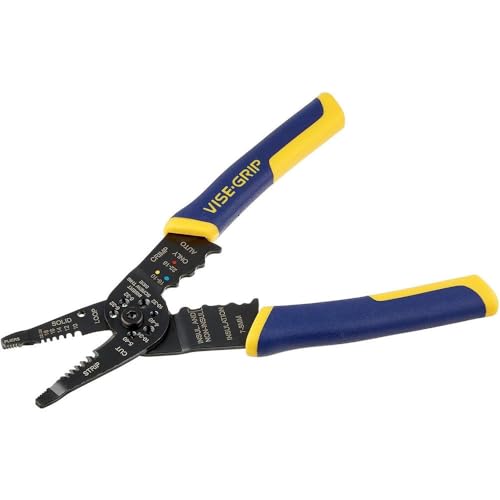 IRWIN IRWIN VISE-GRIP Wire Stripping Tool / Wire Cutter, 8 inch,…
View on Amazon ↗
 KLEIN TOOLS Klein Tools 11053 Klein-Kurve Wire Stripper and Cutter, Made in…
View on Amazon ↗
Listing names and images come from Amazon and are rechecked against the live listings; last checked Nov 8, 2026. No prices shown; the current price is on the listing.
About this guide. This guide covers the wire stripping tool category as a whole, not individual makes or models. It is written from general knowledge of how these tools work, without consulting owner reviews or testing specific units. Verify the gauge range and jaw material on any listing before you buy.