Oscillating multitools trade material removal speed for control in tight spaces. Your first decision is blade type, because each blade fits a narrow set of materials. Second is oscillation angle, which changes how fast you work and how much dust you make. Buyers doing plunge cuts in drywall or trim want a narrow angle. Buyers removing old flooring want a wide one.
Blade Type Decides What You Can Cut
An oscillating multitool is only as useful as the blade you mount. Blades come in shapes for wood, metal, grout, and scraping. A wood cutting blade has large teeth and clears chips quickly. A metal cutting blade has fine teeth and holds up to nails or screws.
Bi metal blades are a good middle ground for mixed jobs. They combine a hard cutting edge with a flexible body, so they resist snapping. Carbide blades cost more but last longer in abrasive materials like tile adhesive or drywall.
Check the blade mounting system before you buy a tool or extra blades. Some tools use a universal fit, others a proprietary pattern. A tool with a tool free blade change saves time if you switch between materials often.
- Wood blades: large teeth, fast cuts, clog in wet wood.
- Metal blades: fine teeth, slow but clean, dull on hardened steel.
- Grout blades: carbide grit, remove mortar without cutting tile.
- Scraper blades: rigid edge, lift adhesive and caulk.
Oscillation Angle Sets the Pace and the Mess
The oscillation angle is how far the blade swings side to side. Angles often run from about 2.5 to 3.8 degrees. A narrow angle moves the blade less per stroke, so it cuts slower but with less vibration and less dust. A wide angle moves more material per stroke, which is faster but can burn wood or chip tile edges.
For flush cutting door trim or baseboards, a narrow angle gives you control. For removing a section of subfloor or cutting through old adhesive, a wide angle finishes the job faster. Some tools let you adjust the angle, others are fixed. A fixed angle is fine if you mostly do one type of work.
Dust and heat rise with wider angles. If you work in a finished room, a narrow angle keeps the mess down. If you work outside or in a gutted space, speed matters more than dust.
Speed Control Prevents Burnt Edges and Chatter
A variable speed dial lets you match the tool to the material. Soft plastics and thin veneers cut cleaner at low speed. Hardwood and metal need higher speed to avoid stalling, but too much speed creates friction and burns the surface.
Look for a dial that is easy to reach while you hold the tool. Some tools have a trigger that controls speed, which is useful when you start a plunge cut. A slow start lets you set the blade before you apply pressure, reducing kickback.
Constant speed electronics help on tough materials. The tool senses load and adds power to keep the stroke rate steady. Without it, the blade can bog down and chatter, leaving a ragged cut.
| Blade type | Best material | Cut speed | Edge quality | Dust level |
|---|---|---|---|---|
| Wood with large teeth | Softwood, plywood | Fast | Slightly rough | High chips |
| Bi metal with fine teeth | Nails, thin metal | Moderate | Clean | Low |
| Carbide grit | Grout, plaster | Slow | Rough | High fine dust |
| Scraper blade | Adhesive, caulk | N/A | Depends on angle | Low |
Match the blade to the material, not the other way around. A wood blade in metal dulls in seconds. A metal blade in wood clogs and burns.
What a Listing Photo Won't Tell You
Most listings show the tool with a blade mounted, but not how that blade behaves. Check the oscillation angle in the specifications. A tool advertised as high performance may have a wide angle that is wrong for fine trim work.
Look at the accessory list. A bare tool without blades costs less up front, but you will buy blades immediately. A kit with a wood blade, metal blade, and scraper covers most home jobs. Sanding pads are another common accessory, but they wear quickly and add cost.
Ask the seller about blade compatibility before you buy. Some brands use a star shaped mount, others a hex. An adapter may exist, but it adds length and wobble. If you already own blades, make sure the new tool fits them.
Corded Versus Cordless Changes How You Work
Corded multitools run as long as you need and cost less for the same power. They are a good pick for a workbench or a single room. The cord limits you in crawl spaces or on a ladder, but you never wait for a battery to charge.
Cordless tools fit tight spaces better and pair with a battery platform you may already own. Check the amp hour rating on the battery. A 2 amp hour battery runs a multitool for roughly 20 to 30 minutes of hard cutting. A 4 or 5 amp hour battery roughly doubles that.
If you already own a cordless drill or impact wrench from one brand, a bare multitool from that brand saves money. A bare tool includes no battery or charger, so it only makes sense if you own the platform. If not, a kit with one battery and charger is the cheaper start.
The Mistake of Buying a Tool for One Job
An oscillating multitool is a specialist at awkward cuts, but a poor general saw. It cuts slowly compared to a circular saw or reciprocating saw. If you plan to build a deck or cut long boards, a different saw style serves you better.
For automotive work, a multitool reaches into wheel wells and under dashboards, but it cannot match the torque of an impact wrench for stuck bolts. Use the multitool for trim and plastic, not for breaking fasteners.
For furniture building, the multitool flushes dowels and trims plugs, but it is not a replacement for a cordless drill for joinery. Buy it for the odd angle, not for the whole project.
Blades Are the Real Long Term Cost
The tool body lasts for years, but blades are consumables. A bi metal wood blade may last through one room of trim. A carbide blade lasts longer but costs more per blade. If you cut nails or screws by accident, expect to replace blades more often.
Sanding pads and scrapers also wear. A sanding pad loses grit quickly on paint and drywall compound. A scraper blade dulls on concrete, so keep a spare. Factor a blade budget into the tool price when you compare listings.
Store blades flat and dry to prevent rust. A rusted blade cuts poorly and overheats. Some blades have a coating, but it wears off after the first few cuts.
Who Should Skip the Multitool
If your projects are mostly straight cuts in sheet goods, a circular saw is faster and cheaper per cut. If you need to cut tree branches or demolition lumber, a reciprocating saw clears material faster. The multitool earns its place only when you need flush cuts, plunge cuts, or sanding in tight corners.
Renters or occasional users may find a corded budget model enough. If you use it once a year to notch a door jamb, spending extra for a brushless motor and a wide oscillation range is unnecessary. Buy the simplest tool that fits your blade mount.
If you already own a rotary tool with cutting attachments, it may cover small plunge cuts. But a rotary tool cannot flush cut against a wall or floor the way an oscillating multitool can. The two tools overlap only on very small jobs.
Oscillating Multitool Questions, Answered
What is an oscillating multitool used for?
It makes flush cuts, plunge cuts, and small sanding or scraping jobs in tight spaces. Common uses include trimming door jambs for new flooring, cutting drywall openings, removing grout, and scraping old adhesive. The blade oscillates side to side instead of spinning, so it cuts without kicking back.
Which oscillating multitool is best for home DIY?
A corded model with variable speed and a universal blade mount covers most home jobs. Look for an oscillation angle around 3 degrees, which balances speed and control. A kit with a wood blade, metal blade, and scraper saves you a separate purchase. Avoid tools with a fixed high speed if you plan to cut plastics or veneers.
Is an oscillating multitool worth buying?
It is worth buying if you repeatedly face flush cuts or plunge cuts that other saws cannot make. For one small job, a hand saw or chisel may cost less. For frequent trim work, flooring prep, or drywall openings, the multitool saves hours and reduces damage to surrounding material.
How do I choose an oscillating multitool blade?
Match the blade to the material. Wood blades have large teeth and cut fast but leave a rough edge. Metal blades have fine teeth and cut slowly but cleanly. Grout blades use carbide grit and wear down quickly. Bi metal blades are a flexible middle option for mixed materials.
Can an oscillating multitool cut metal?
Yes, with a fine tooth metal blade. It cuts thin sheet metal, nails, and screws, but not thick steel or hardened fasteners. Use low speed and light pressure to avoid burning the blade. Expect to replace metal blades more often than wood blades, especially if you hit hidden nails.
Which Oscillating Multitool Fits Your Work
A homeowner who replaces door trim, cuts drywall openings, and scrapes old caulk should start with a corded multitool with variable speed and a universal blade mount. Pair it with a bi metal wood blade and a scraper. If you work in crawl spaces or away from outlets, get a cordless bare tool that matches a battery platform you already own, and add a 4 amp hour battery for longer run time.
Real oscillating multitool listings, so you can check the points in this guide against actual products. These are affiliate links: as an Amazon Associate we earn from qualifying purchases, at no extra cost to you.
 DEWALT DEWALT 20V MAX XR Oscillating Multi-Tool Cordless, Variable Speed Brushless…
View on Amazon ↗
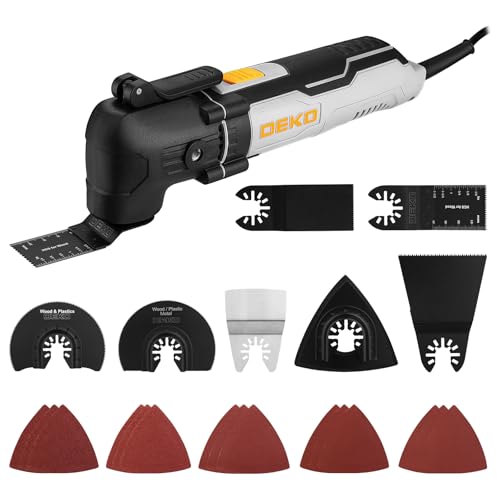 DEKOPRO Oscillating Tool 2.5 Amp, 22000RPM, 3° Oscillating Multitool Kit with…
View on Amazon ↗
Listing names and images come from Amazon and are rechecked against the live listings; last checked Nov 8, 2026. No prices shown; the current price is on the listing.
Scope and limits. This guide covers the oscillating multitool category in general terms, from how blade geometry and oscillation angle affect a cut. It is not based on any individual product documents, reviews, or in person testing, so confirm dimensions and blade compatibility on the listing before you buy.