Two factors decide a digital laser measure: the surfaces you measure and the distances you work at. Rough or dark surfaces scatter the beam, so a larger spot size and a stronger sensor matter more than a long range rating. If you mostly work indoors under 50 feet, a basic unit works. For bright outdoor sites or drain runs, you need a camera viewfinder or a green beam. The main tradeoff is simplicity against capability: pocket units are fast, while models with tilt and Bluetooth add steps.
Match the Beam to the Surface
A laser measure sends a beam to a surface and times the reflection to calculate distance. The surface decides how much of that beam comes back. A white painted wall reflects well. A dark carpet, a rusted pipe, or a wet drain wall absorbs the beam. The usable range drops, sometimes to half the stated figure.
Check the spot size in the listing. A larger spot spreads the beam over more surface, which helps on rough or dark targets. It also makes the dot easier to see at a distance. A small, tight dot works well on pale indoor walls but can disappear on a dark beam or a textured ceiling.
If you measure into drains, ducts, or dark corners, look for a model with a camera viewfinder or a target plate. The viewfinder shows where the dot lands on a screen. A target plate gives the beam a bright surface to hit when the wall itself is not reflective enough.
Distance Ratings Work Only in Ideal Conditions
The range printed on the box is a best case number. It assumes a bright, reflective target, low ambient light, and a steady hand. A 100 foot rated unit may only manage 60 feet on a brick wall or 40 feet on a black surface. For drain inspections and basement work, treat the stated range as a ceiling, not a promise.
Think about where you stand. A plumber measuring a pipe run from a bright doorway into a dark crawl space needs more range headroom than the number suggests. A home buyer checking room sizes on a sunny day faces the same problem outdoors. Choose a unit rated two to three times your typical distance if you often work on dark or rough surfaces.
Bright sunlight is the hardest condition. The laser beam competes with daylight and the sensor has to reject all that extra light. A green beam is easier for your eye to see than a red beam, but the sensor still has to work. A camera viewfinder helps more than a brighter dot in full sun.
- Stated range assumes a bright, reflective target
- Dark or rough surfaces can cut usable range by a third or more
- Buy headroom: a 100 foot rating for a 50 foot task is sensible
Accuracy Class and the Last Fraction of an Inch
Most digital laser measures list an accuracy spec such as plus or minus 1/8 inch or 1/16 inch. That spec applies to a controlled measurement. Real world results vary with your hand movement, the surface, and the temperature. For trim work, tile layout, or cabinet fitting, the tighter spec matters. For rough framing or room estimates, a looser spec is fine.
Compare the accuracy spec to the price tier. Budget units often list 1/8 inch accuracy. Mid range units typically list 1/16 inch. Premium units may list 1/16 inch plus a tilt sensor for indirect measurements. The difference between 1/8 and 1/16 inch rarely matters for property maintenance or drain runs.
A tilt sensor changes what you can measure. It lets you shoot a distance to the top of a wall and calculate the height using the angle. This is useful for roof estimates, stair runs, and pipe slopes. If you do not need indirect measurements, skip the tilt sensor and keep the tool simple.
Pocket Unit, Tilt Model, or Camera Viewfinder
Three design types cover most buyers. A pocket laser measure is the size of a small remote. It does one thing well: point, press, read a distance. It is fast for room measurements and quick checks. A tilt and area model adds buttons for area, volume, and indirect height. It is still compact but the menus take a few more presses.
A camera viewfinder model has a small screen that shows the target and a crosshair for the laser dot. This is the best choice for drain inspections, long outdoor distances, or any job where you cannot see the dot. The screen adds bulk and battery drain, but it removes the guesswork.
A green beam unit uses a green laser instead of a red one. The green dot is easier for your eye to see in daylight and on dark surfaces. Green beam models often cost more and draw more battery. For a plumber working in bright mechanical rooms, the green beam can be worth the extra cost.
| Design type | Best surface | Outdoor use | Learning curve |
|---|---|---|---|
| Pocket laser | Pale indoor walls | Weak | Minimal |
| Tilt and area model | Indoor rooms, stairs | Fair | A few extra buttons |
| Camera viewfinder | Dark drains, long runs | Strong | Screen menus to learn |
| Green beam unit | Bright sites, dark pipes | Strong | Similar to pocket, but heavier |
The table shows a clear split. If you measure the same kind of surface every day, pick the simplest unit that works there. If your jobs vary between bright sun and dark drains, a camera viewfinder or green beam saves time and mistakes.
Battery Life and the Long Term Cost
Most laser measures run on AAA or AA batteries, with some using a built in lithium ion pack. A camera viewfinder or green beam drains batteries faster. If you measure all day, a unit with a rechargeable pack costs less to run over time. If you use it once a week, standard batteries are simpler and easier to replace.
Check how the battery door opens. A screw secured door is less likely to pop open when the tool drops. A slide off door is faster in the field but can crack. Also check whether the unit has an auto off feature. A laser that stays on in your tool bag will be dead when you need it.
Protective cases and target plates are the main extras. A rubberized housing absorbs drops on concrete. A target plate extends the usable range on dark surfaces. Neither is essential for a home buyer measuring rooms, but both pay off for plumbers and property maintenance crews.
Read the Listing Before You Buy
Start with the accuracy spec and the spot size. If the listing does not state them, ask the seller before you buy. A listing that only gives a range number is hiding the details that matter. The range number is the easiest spec to inflate.
Check the measurement units. Most units switch between feet, inches, and meters. Some add fractions for imperial work. If you work in a trade that uses decimal feet, confirm the unit supports that display. Not all do.
Look for the IP rating if you work in wet or dusty areas. An IP54 rating means the unit tolerates splashes and dust. A unit with no IP rating will fail faster in a drain inspection or a rainy exterior job. For indoor home use, the IP rating matters less.
Ask the seller what target the range rating assumes. A good answer names a white wall or a reflective plate. If the seller cannot answer, assume the real world range is shorter than the stated number.
- Accuracy spec and spot size should be listed
- Confirm measurement units: feet, inches, decimals, or fractions
- Check IP rating for wet or dusty work
- Ask what target surface the range rating assumes
Who Should Skip a Laser Measure
A laser measure is the wrong tool for very short distances under a foot. A tape measure or a ruler is faster and more accurate there. The laser needs a line of sight to the target, so it cannot measure around corners or through walls. For pipe runs with bends, you need to shoot each straight segment separately.
If you measure curved surfaces or soft materials, a laser gives you the distance to the nearest point, not the surface length. A flexible tape follows the curve. For upholstery, cable runs, or irregular stone work, a tape measure still wins.
A laser measure also fails on transparent or highly reflective surfaces. Glass, mirrors, and polished metal can bounce the beam away from the sensor. Some units handle these surfaces better than others, but a tape measure is the reliable fallback.
The Drain Inspection Habit That Wastes Measurements
Measuring into a drain or duct means shooting into a dark, curved, often wet space. The laser beam can hit the side wall instead of the far end and give you a short reading. A camera viewfinder shows where the dot actually lands, which prevents that wrong number.
A common mistake is trusting a single reading from the mouth of a drain. The beam may reflect off standing water or a joint. Take two or three readings from slightly different angles. If the numbers disagree by more than an inch, the beam is not reaching the far wall cleanly.
For drain runs, a target plate placed at the far end of the run gives the beam a bright, flat surface to hit. This is the most reliable way to get a true distance in a dark pipe. Without a plate, expect the reading to be shorter than the actual run.
Quick Answers on Laser Measure Specs
Is a digital laser measure worth it for a home buyer?
For a home buyer measuring room sizes, a basic pocket laser measure saves time and gives consistent numbers. It is not essential, but it removes the risk of misreading a tape measure in a dim room. If you only need room dimensions once, a tape measure works. If you plan renovations after purchase, a laser measure pays off quickly.
Which digital laser measure is best for outdoor use?
For outdoor use, look for a green beam or a camera viewfinder. A green beam is easier to see in daylight. A camera viewfinder shows the dot on a screen, so you do not need to see the dot at all. A red beam pocket unit works on overcast days but struggles in bright sun.
What is the difference between a red and a green laser measure?
The color affects visibility, not measuring power. A green beam is easier for the human eye to see, especially in daylight. A red beam is cheaper to produce and uses less battery. On pale indoor walls, both work equally well. On dark surfaces or in bright sun, the green beam is easier to aim.
Should I buy a laser measure with a camera viewfinder?
Buy a camera viewfinder model if you measure into drains, ducts, or other dark spaces, or if you work outdoors in bright sun. The screen shows where the laser dot lands, which prevents wrong readings on rough or dark targets. For indoor room measurements, a viewfinder adds cost and bulk without much benefit.
How do I compare two laser measures with the same range rating?
Compare the accuracy spec, the spot size, and the target surface the rating assumes. A unit rated at 100 feet on a white wall may only reach 60 feet on brick. A tighter accuracy spec matters for trim work. A larger spot size helps on rough surfaces. These details matter more than the range number.
Which Laser Measure Fits Your Work
For a home buyer or a weekend DIY renovator measuring rooms and furniture, a pocket red laser with a 100 foot rating and 1/8 inch accuracy is the sensible pick. It is fast, cheap to run, and handles indoor walls well. A plumber or property maintenance tech who works in bright mechanical rooms or dark drains should instead choose a camera viewfinder model, because seeing the dot on a screen prevents the wrong numbers that a pocket unit gives in those conditions.
Real digital laser measure listings, so you can check the points in this guide against actual products. These are affiliate links: as an Amazon Associate we earn from qualifying purchases, at no extra cost to you.
 BOSCH BOSCH GLM100-23 100 Ft Blaze Laser Distance Measure, With 2…
View on Amazon ↗
 ROCKSEED Laser Measure 50M/165ft,RockSeed Digital Laser Distance Meter with 2 Bubble…
View on Amazon ↗
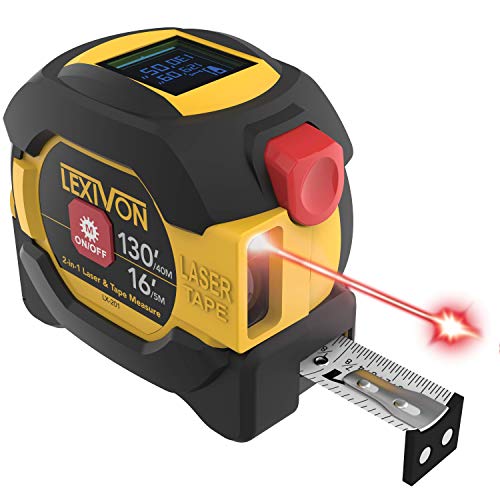 LEXIVON LEXIVON 2 in 1 Digital Laser Tape Measure | 130ft/40m…
View on Amazon ↗
Listing names and images come from Amazon and are rechecked against the live listings; last checked Nov 8, 2026. No prices shown; the current price is on the listing.
What this guide is. This guide covers the digital laser measure category as a whole, not any specific model. It is written from general knowledge of how laser distance tools work, without reading individual product reviews or handling any units. Always check the accuracy spec, spot size, and stated range on the listing before you buy.