Start with the cutting job. A short stroke saw with a compact body suits pruning and tight spaces, while a long stroke model with orbital action clears material faster in demolition. Battery platform matters as much as the tool: pick a saw that fits batteries you already own or plan to build around. The main tradeoff is control versus speed.
Stroke Length Decides How Fast You Work
Stroke length is the distance the blade travels back and forth. A longer stroke means each pass removes more material, so a demolition saw with a 1 1/8 inch or longer stroke clears studs and nails quickly. A shorter stroke, often around 3/4 inch, gives more control for pruning or cutting pipe in a tight spot.
Check the listing for stroke length and strokes per minute. A higher stroke rate helps with wood, but a slower rate with a long stroke often cuts metal more cleanly. If you cut mostly thin branches or PVC, prioritize control over raw speed.
Orbital action changes the blade path so it pushes forward on the cutting stroke and lifts slightly on the return. That makes wood cutting faster but leaves a rougher edge and makes the saw harder to hold steady. Many saws let you switch orbital action off for metal or precise cuts.
Battery Platform Is as Important as the Saw
A cordless reciprocating saw lives or dies by its battery. The voltage, usually 18V or 20V max, tells you about power, but the platform matters more. If you already own a cordless drill or other cordless tools from one brand, buying the same platform means spare batteries and chargers you already have.
Higher amp hour batteries add runtime and weight. A 2.0 Ah battery keeps the saw light for overhead pruning, while a 5.0 Ah or larger pack handles long demolition sessions but makes the tool nose heavy.
Some saws are sold as bare tools without a battery or charger. That lowers the upfront cost but only makes sense if you already own compatible batteries. If this is your first cordless tool, a kit with a battery and charger usually costs less than buying them separately later.
Two Design Types: Compact and Full Size
Compact reciprocating saws, sometimes called one hand saws, weigh less and fit into wall cavities, between joists, or inside a tree canopy. Their short stroke and small body make them easy to control with one hand, but they cut slower and may struggle with thick hardwood or heavy demolition.
Full size saws have longer strokes, bigger motors, and more weight. They are built for tearing out framing, cutting roots, or slicing through multiple layers of material. The tradeoff is fatigue: holding a heavy saw overhead for pruning gets tiring fast.
A few saws are designed specifically for pruning, with a narrow nose and a trigger layout that works with gloves. They overlap with compact saws but often include features like a rafter hook or a blade guard shaped for branch access.
| Design type | Stroke length | Weight feel | Best cutting job | Control level |
|---|---|---|---|---|
| Compact one hand | Short, often 3/4 in | Light, easy one hand | Pruning, pipe, tight demo | High |
| Mid size standard | Around 1 in | Balanced | General demo and framing | Moderate |
| Full size demolition | 1 1/8 in or longer | Heavy, two hand | Stud removal, root cutting | Lower |
| Pruning specific | Short to mid | Light with narrow nose | Branch and canopy work | High |
Compare weight without the battery and with the largest battery you plan to use. A saw that feels light as a bare tool can become front heavy with a big pack.
Shoe Adjustment and Blade Clamp Save Money
The shoe, or footplate, presses against the material to steady the saw. A shoe that slides or pivots lets you use different parts of the blade, which spreads wear across the teeth instead of dulling one spot. That extends blade life and lets you reach into corners with the tip.
Look for a tool free blade clamp. Some saws require a hex key to change blades; others use a lever you flip by hand. A lever is faster when a blade snaps mid job or when you switch between a wood blade and a metal blade.
A pivoting shoe also helps when cutting pipe or branches at an angle. The shoe stays flat against the surface while you angle the saw, which reduces vibration and keeps the cut from wandering.
Vibration and Grip Decide How Long You Can Cut
Reciprocating saws vibrate by nature, but the amount varies. A counterweighted mechanism, often listed as anti vibration or reduced vibration, cuts down the shaking that travels up your arm. That matters for long pruning sessions or when you cut overhead.
Check the grip shape and trigger placement. A rubber overmold helps, but the real test is balance. A saw with the battery at the back and a front handle placed near the blade gives you two hand control for heavy cuts.
Some saws have a variable speed trigger and a separate dial to cap the speed. That lets you start a cut slowly to avoid the blade jumping, then squeeze for full speed. For metal, a lower speed setting prevents overheating the blade.
Features That Matter Versus Marketing
A brushless motor is worth paying for. It runs cooler, uses battery power more efficiently, and typically lasts longer than a brushed motor. The difference shows up in longer runtime per charge and less heat buildup during extended cutting.
A built in LED light helps in dim garages or inside wall cavities. A rafter hook is handy for demolition work when you need to set the saw down between cuts. Neither changes cutting performance, but both reduce frustration.
Ignore claims about maximum cuts per charge. That number depends on wood density, blade sharpness, and how hard you push. Instead, compare battery amp hours and motor type to estimate runtime.
Some listings highlight a tool free blade change as a premium feature. It is common on mid range saws now, so treat it as a baseline expectation rather than a reason to pay more.
Who Should Pick a Different Tool
If you mostly make straight cuts in sheet goods or long rips in lumber, a circular saw or a saw built for repeated cuts is faster and more accurate. A reciprocating saw is for rough cuts, demolition, and pruning, not furniture building.
For cutting metal pipe or conduit repeatedly, a band saw or an angle grinder with a cutoff wheel gives cleaner, straighter cuts. A reciprocating saw works in a pinch but leaves a rougher edge and wanders more easily.
If you only need to trim small branches occasionally, a pruning saw or loppers cost less and weigh less. A cordless reciprocating saw earns its price when you cut branches too thick for hand tools or when you need demolition capacity too.
Check the Listing Before You Buy
Confirm the stroke length and whether orbital action is included. If the listing does not state stroke length, ask the seller or check the manufacturer page. Stroke length is the single most important spec for cutting speed.
Verify the battery platform and what comes in the box. A bare tool listing may show a photo with a battery that is not included. Look for the words bare tool, kit, or tool only in the title or description.
Check the weight with the battery you plan to use. Listings often give bare tool weight, which understates how the saw feels in use. Add the battery weight from the battery listing to get a realistic number.
Ask about the blade clamp type if the photos do not show it. A hex key clamp is not a dealbreaker, but a lever clamp saves time when you switch between pruning and demolition blades.
Cordless Reciprocating Saw Questions, Answered
What is a cordless reciprocating saw used for?
It cuts wood, metal, plastic, and drywall with a back and forth blade motion. Common jobs include demolition, cutting pipe, pruning branches, and rough cutting lumber. It is not a precision tool, but it reaches into tight spots where a circular saw cannot fit.
Should I buy a cordless reciprocating saw or a corded one?
Cordless wins for portability, overhead work, and jobs far from an outlet. Corded wins for continuous heavy demolition where you do not want to swap batteries. If you already own compatible batteries, cordless is often the better value now.
Which cordless reciprocating saw blade should I use?
Match the blade to the material: coarse wood blades for fast pruning and demolition, fine metal blades for pipe and conduit, and demolition blades for wood with nails. Blade length should be a few inches longer than the material thickness.
Is a brushless cordless reciprocating saw worth it?
Yes for frequent use. A brushless motor runs cooler and more efficiently, so you get more cuts per charge and a longer tool life. For occasional pruning or light DIY, a brushed motor costs less and still works fine.
How do I choose the right stroke length?
Shorter strokes around 3/4 inch give more control for pruning and pipe work. Longer strokes of 1 1/8 inch or more cut faster in demolition and thick wood. Pick the shortest stroke that still handles your hardest job to keep control.
The Saw That Fits Most Garage and Garden Jobs
A homeowner who prunes a few trees each year and occasionally tears out a wall needs a compact or mid size saw with a short to medium stroke, a lever blade clamp, and a battery platform they already own. That combination handles branches, PVC, and light demo without the fatigue of a full size demolition saw. If your main job is gutting rooms or cutting thick roots, step up to a full size saw with orbital action and a 5.0 Ah battery, and accept the extra weight for the speed.
Real cordless reciprocating saw listings, so you can check the points in this guide against actual products. These are affiliate links: as an Amazon Associate we earn from qualifying purchases, at no extra cost to you.
 BLACK+DECKER BLACK+DECKER 20V MAX* Cordless Reciprocating Saw Kit (BDCR20C)
View on Amazon ↗
 SEESII SEESII Reciprocating Saw Cordless with 2 x 4.0Ah Batteries and…
View on Amazon ↗
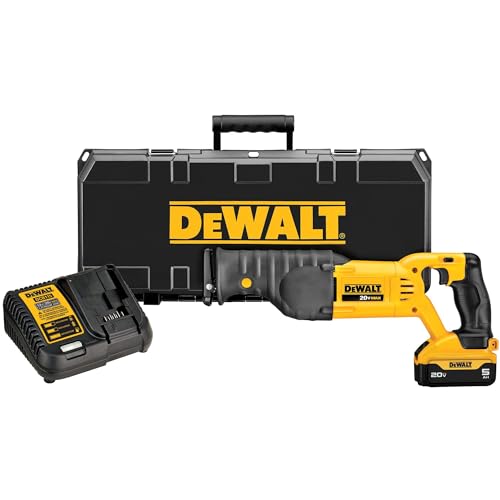 DEWALT DEWALT 20V MAX* Cordless Reciprocating Saw, Battery and Charger Included…
View on Amazon ↗
Listing names and images come from Amazon and are rechecked against the live listings; last checked Nov 8, 2026. No prices shown; the current price is on the listing.
How to read this guide. This guide explains cordless reciprocating saws as a category, not individual models. It is based on general knowledge of how these tools work, so check the stroke length, battery platform, and weight on any listing before buying.