Two things separate sets that feel right from ones that fight you: the ratchet's back drag and the handle's shape for your palm. A fine tooth ratchet works in tight spots, while a coarse tooth one needs more swing room. Stubby or flexible drivers help with recessed screws, but they give up the reach and torque of a full handle.
How the Ratchet Decides Where the Set Works
A ratcheting screwdriver spins the bit in one direction and freewheels in the other. The number of teeth in the mechanism sets the smallest swing the handle needs to engage the next tooth. A fine tooth head often needs only a five to ten degree arc, which matters inside a cabinet or behind an appliance.
Back drag is the resistance you feel during the freewheeling direction. Lower back drag lets you keep one hand on the handle while your fingers roll it back and forth without shifting the bit out of the screw head. Higher back drag can make the handle feel sticky, so you end up lifting the bit and reseating it more often.
A coarse tooth ratchet usually costs less and can handle more torque before the pawls skip. That makes it a fair pick for deck screws or furniture bolts where you have open swing room. For electricians or anyone working near junction boxes, the fine tooth head is the one that avoids a scraped knuckle.
Handle Shape and the Grip You Actually Keep
The handle is the part you hold for every screw, so its shape matters more than the bit count. A barrel with a slight palm swell and a soft overmold gives a steadier twist than a thin, hard plastic cylinder. Check the listing for the grip diameter and any textured zones near the top where your thumb and forefinger rest.
A full size handle delivers the most torque because your whole hand wraps around it. A stubby handle sacrifices that leverage for access to recessed screws, such as those inside a dishwasher door or behind a car dashboard. A flexible shaft driver splits the difference: the handle stays full size while the shaft bends to reach around an obstacle.
Look for a handle with a spinning cap on the end. That cap lets your palm press down while your fingers turn the barrel, which keeps the bit seated in the screw head. Without a cap, you have to grip the sides harder, and the bit tends to cam out of Phillips heads.
Bit Storage Adds Convenience, Not Performance
Most sets store bits in the handle or in a separate case. Handle storage puts common bits within reach, but it adds weight and can make the barrel thicker. A case keeps the handle slim and organized, yet you have to open it every time you switch from a Phillips to a Torx.
Bit count is often marketing. A 40 piece set may include duplicates, uncommon security bits, or tiny slotted bits you will never use. A 12 to 15 bit set with standard Phillips, slotted, square, and a few Torx sizes covers most furniture assembly, outlet covers, and appliance panels.
Check whether the bits are standard 1/4 inch hex shanks. That lets you use the same bits in a cordless drill or an impact driver. Some sets use a proprietary shank that only fits that handle, which locks you into that brand for replacements.
Design Types and Their Tradeoffs
| Design type | Swing arc | Torque feel | Best for | Main limit |
|---|---|---|---|---|
| Fine tooth ratchet | 5 to 10 degrees | Moderate | Tight spots, electrical work | Lower max torque |
| Coarse tooth ratchet | 15 to 20 degrees | High | Open areas, deck screws | Needs swing room |
| Stubby driver | Varies | Low | Recessed fasteners | Hard to grip firmly |
| Flexible shaft | Varies | Moderate | Around corners, auto work | Less direct feel |
Fine tooth and flexible shaft designs overlap in tight spaces, but the flexible shaft can reach around an obstruction. A stubby driver works where no other handle fits, yet it is the wrong tool for a long drywall screw that needs wrist strength.
When a Ratcheting Set Is the Wrong Tool
Skip a ratcheting screwdriver set if you mostly drive screws into hard wood or metal. The ratchet mechanism adds a tiny bit of play, and the handle is not built for the repeated high torque of a deck or framing job. A fixed screwdriver or a cordless drill with a clutch does that work faster and with less hand strain.
For a plumber or home mechanic who needs a specific size for a valve or a brake caliper, a dedicated fixed screwdriver often gives a more solid feel. The ratchet is for speed across many screws, not for breaking loose a corroded fastener.
If you only assemble one piece of furniture a year, a small bit driver that comes with the furniture kit or a basic six way screwdriver may be enough. A full ratcheting set is worth it when you reach for a screwdriver at least a few times a month.
How to Read a Listing Before You Buy
Check the swing arc in degrees if the seller lists it. A lower number means the handle engages sooner. If the listing only says 'fine tooth' or 'high torque', look for a photo of the mechanism or a close up of the head to see the tooth spacing.
Ask the seller about the back drag or the freewheeling resistance. A good answer mentions a specific feel, like 'light enough to roll with two fingers'. A vague answer about 'smooth operation' tells you nothing about how the ratchet behaves under your palm.
Confirm the bit shank standard. The listing should say '1/4 inch hex' or show a photo of the bit end. If it does not, ask before you buy, because a nonstandard shank limits every future bit purchase.
Look at the handle length and grip diameter in the specifications. A handle under four inches is a stubby, not a full size driver. A grip diameter over one and a half inches may feel bulky in a small hand.
Mistakes That Leave a Set in the Drawer
A common mistake is buying the biggest bit count for the lowest price. Those sets often pair a weak ratchet with soft bits that round out the first time you lean on a screw. A smaller set with a quality mechanism and hardened bits will outlast the bargain box.
Another mistake is ignoring the bit retention. A magnetic bit holder is convenient, but a strong magnet can hold the bit while you pull the driver away, leaving the bit stuck on the screw. A spring clip or a ball detent holds the bit more securely, though it takes a firmer pull to change bits.
Storing the set loose in a tool bag without a case or handle storage leads to lost bits and a scratched handle. If you work in a truck or a shared shop, a case with labeled slots is worth the extra space.
Long Term Care and Replacement Bits
The ratchet mechanism rarely needs oil. If it feels gritty, a drop of light machine oil at the joint and a few back and forth swings usually clears it. Do not soak the handle in solvent, because that can wash the grease out of the pawls.
Bits are the consumable. Phillips and Torx bits wear at the tip, especially if you use them in an impact driver. Replace a bit when the tip starts to shine or when it cams out of a screw that used to hold. A set that uses standard 1/4 inch hex bits is cheaper to keep stocked.
Wipe the handle with a dry cloth after use. Solvents and oils from your hands can break down a soft overmold grip over time. If the grip gets slick, a light scrub with dish soap and water restores the texture.
Questions About Ratcheting Screwdriver Sets
Is a ratcheting screwdriver set worth it for a first apartment?
Yes, if you plan to assemble furniture, hang curtain rods, or tighten cabinet knobs in the first few months. The ratchet speeds up repetitive screws, and a small bit set covers most flat pack hardware. If you only need to hang one picture, a basic fixed screwdriver costs less and takes up no drawer space.
Which ratcheting screwdriver set is best for home mechanics?
Look for a fine tooth ratchet with a flexible shaft option. The fine tooth head works in engine bays where the swing arc is short, and the flexible shaft reaches around hoses and brackets. A full size handle with a spinning cap gives more torque for stubborn fasteners than a stubby.
What is the difference between a fine tooth and a coarse tooth ratchet?
The tooth count sets how far the handle must swing before it grabs the next tooth. A fine tooth head often needs a five to ten degree arc, while a coarse tooth head needs fifteen to twenty degrees. Fine tooth suits tight spots; coarse tooth usually tolerates more torque.
Should I buy a ratcheting screwdriver set with 40 bits?
Not unless you already use security Torx, hex, and specialty bits. Most home tasks need only Phillips, slotted, square, and a few Torx sizes. A 12 to 15 bit set with standard 1/4 inch hex shanks covers more than ninety percent of screws and keeps the case from becoming clutter.
Can a ratcheting screwdriver replace a cordless drill?
For light assembly and outlet covers, yes. For driving many screws into wood, drywall, or metal, no. A drill with a clutch is faster and easier on your wrist. Keep the ratcheting driver for tight spots and low torque work where a drill is too bulky.
Which Ratcheting Screwdriver Set to Pick
A home renter assembling flat pack furniture and tightening outlet covers should pick a fine tooth ratchet with a full size handle, a spinning cap, and 12 to 15 standard 1/4 inch bits in a case. That set handles the most common screws without weighing down a tool drawer. If you work on cars or inside cabinets where the swing arc is short and reach is tight, skip the full handle and choose a set with a flexible shaft and a stubby driver as the secondary handle.
Real ratcheting screwdriver set listings, so you can check the points in this guide against actual products. These are affiliate links: as an Amazon Associate we earn from qualifying purchases, at no extra cost to you.
 SKYWALKER InstallMates 15-Piece Metric Multi-Bit Ratcheting Screwdriver Set - Slotted, Phillips,…
View on Amazon ↗
 CRAFTSMAN CRAFTSMAN Ratcheting Screwdriver, Multibit Set, 26-Piece (CMHT68001)
View on Amazon ↗
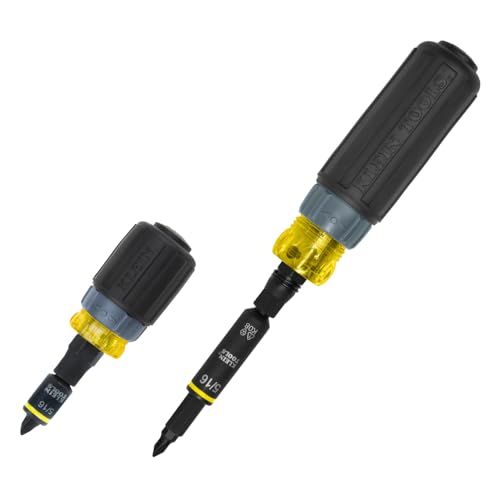 KLEIN TOOLS Klein Tools 80191 KNECT Impact-Rated Ratcheting Screwdriver Set, 2-Piece |…
View on Amazon ↗
Listing names and images come from Amazon and are rechecked against the live listings; last checked Nov 8, 2026. No prices shown; the current price is on the listing.
How to read this guide. This guide covers ratcheting screwdriver sets as a category, not individual models. It is written from general knowledge of how the mechanisms and handles work; no product documents or reviews were consulted. Verify any handle length, swing arc, or bit shank on the listing before you buy.