Start with the bit list: it must cover the screw types on your devices, not just a high bit count. Then check steel quality and the handle, because a soft bit or a wobbly grip strips the screw before the job is done. Skip kits padded with duplicates and sizes you will never touch.
The Bit List Decides What You Can Actually Fix
A precision bit kit only works on the screws its bits actually fit. Start by looking at the devices you plan to open: phones, laptops, glasses, game controllers, small appliances. Note the screw types, because a kit with fifty bits is useless if it lacks the one tri point or pentalobe size your laptop uses.
Generic listings often bury the exact bit list. Compare the list against your screws instead of trusting a count like '60 pieces'. Many kits pad that number with duplicates, nut drivers, or plastic pry tools that do not turn a single screw.
Common useful types include Phillips 000, 00, 0, and 1, flathead 1.5 to 3 mm, Torx T1 through T6, hex 0.7 to 3 mm, and pentalobe P2 and P5 for Apple devices. Security Torx, tri point Y00, and gamebit sizes matter if you open consoles or small electronics. Check that the kit includes the exact sizes, not just the type.
Steel Hardness and Tip Fit Prevent Stripped Screws
The bit tip takes all the force, so a soft tip will round off or cam out of the screw head. Hardened steel, often labeled S2 or CR V, holds its shape longer. Compare the material listed on the package or listing; a kit that does not name its steel is often using a softer alloy.
Tip fit matters as much as steel. A precision bit that is slightly undersized will wobble and chew the screw head. Look for bits described as precision machined or tight tolerance, and check the tip shape against the screw type. A snug fit means the bit fills the recess completely.
Magnetized tips help hold tiny screws during placement, but they are not a substitute for a good fit. Some bits are coated to resist rust, which matters if you work in a humid garage or near plumbing.
The Handle Is Where Control Lives
Precision screws are small and easy to strip, so the handle has to give you steady, low speed control. A swivel cap or free spinning end lets you press down with one finger while turning with your thumb and forefinger. This is the standard grip for small electronics work.
A knurled or rubberized body helps when your hands are dry or oily. A wider midsection gives more torque, but a slim handle fits into recessed screw holes better. Some kits include an extension shaft for deep set screws; check whether it locks firmly or adds wobble.
A separate driver handle with interchangeable bits is more comfortable than a stubby bit holder, but it takes up more space. If you only open a laptop once a year, a compact holder may be enough. If you repair weekly, a full size handle is worth the room.
Case Design Keeps Small Bits From Disappearing
Precision bits are easy to lose, so the case matters more than it does for full size bits. A rubber or foam insert that grips each bit keeps them in place when the case is dropped. A case where bits rattle loose will leave you shaking out a pile of mixed sizes.
Look for a case that opens flat and labels each slot. Molded labels printed on the insert are easier to read than tiny stickers that peel off. A magnetic base or lid can hold screws you remove, which helps during reassembly.
Some cases are slim enough for a pocket, while others are desk boxes. Match the case to where you work. If you carry the kit to a job site or a friend's house, a pocketable case beats a heavy box. If it lives on a workbench, a larger organizer with a hinged lid is easier to use.
Which Screw Types You Encounter
Different devices use different screw heads, and a kit built for one may miss another. Phones and tablets often use pentalobe, tri point, or tiny Phillips. Laptops use Phillips, Torx, and occasionally pentalobe. Glasses use tiny Phillips and flathead. Game consoles use security Torx and gamebit.
If you mostly assemble flat pack furniture, a precision kit is not the right tool. Those screws are larger and need a full size bit set or a cordless screwdriver. A precision kit handles small electronics, eyeglasses, jewelry, and hobbies.
For first apartments, a small precision kit covers the odd screw on electronics, remote controls, or battery compartments. Home mechanics will reach for it for carburetor adjustments, small engine parts, and dashboard screws. Plumbers use precision bits on faucet set screws and appliance control boards. Weekend projects like fixing a toy or a pair of glasses are where these kits earn their keep.
- Phones, tablets, and laptops: pentalobe, tri point, tiny Phillips, Torx
- Glasses and jewelry: tiny Phillips and flathead, often 1.4 to 2.0 mm
- Game consoles and controllers: security Torx, tri point Y00
- Small appliances and battery compartments: Phillips 0 and 1, hex
Where a Precision Bit Kit Is the Wrong Tool
A precision bit kit is not a general screwdriver set. If you assemble furniture, hang shelves, or work on a car, you need full size bits with a 1/4 inch shank and a handle that can take real torque. Precision bits are narrow and short; they will snap or strip under that load.
Skip a precision kit if you only own one device that needs a rare screw. A single driver with the exact bit is cheaper and takes less space. Buy a kit when you regularly open several types of electronics or when one stripped screw has already cost you a repair.
Also skip kits sold mainly on a high piece count. A 100 piece kit with 40 duplicates and 20 tiny sockets is not a better deal than a 32 piece kit that covers the screw types you actually see. Count the distinct bit types, not the pieces.
Mistakes That Turn a Good Kit Into a Stripped Screw
The most common mistake is using a bit that is close but not exact. A Phillips 00 in a Phillips 000 screw will cam out and round the head. A flathead that is too narrow will twist and damage the slot. Match the size exactly, even if it means switching bits more often.
Another mistake is applying too much downward force. Precision screws are small and the threads are fine; a firm press is enough. Leaning on the driver pushes the bit out of the recess and strips the screw. Use a light touch and let the bit do the cutting.
Storing bits loose in a drawer or bag lets them bang together and dull the tips. Keep them in the case slots, and wipe off any oil or debris after use. A dull or chipped tip should be replaced, not forced back into a screw.
Long Term Costs: Extras and Consumables
The kit itself is a one time purchase for most people. The bits wear slowly if you use the right size and do not overtighten. The consumable is the occasional replacement bit for the size you use most often, which is usually Phillips 00 or 0.
Some kits include plastic pry tools, tweezers, or suction cups for opening devices. These wear out faster than the bits. Check whether they are sold separately or as part of a replacement pack before you rely on them.
A kit with a standardized 4 mm shank is easier to expand. You can buy single bits from other makers and they will fit the same handle. Kits with a proprietary shank lock you into one brand for replacements.
Features Worth Paying For and Features That Are Marketing
Hardened steel, a labeled case, and a comfortable swivel cap are worth paying for because they directly affect whether the bit turns the screw or strips it. Magnetic tips help with tiny screws, and an extension shaft helps with recessed screws.
A high piece count is mostly marketing. Duplicate Phillips and flathead bits do not make the kit more useful. Color coded rings on the bits are nice but not essential. A hard plastic case with a molded insert is just as protective as an aluminum one.
Claims like 'professional grade' or 'aircraft aluminum' matter less than the actual steel type and tip tolerance. A kit that lists S2 steel and exact sizes is more useful than one that lists a count and a color.
| Kit style | Bit coverage | Handle feel | Case size | Suits |
|---|---|---|---|---|
| Mini 4mm kit | 20 to 30 common bits | Slim, light grip | Pocket size | Phones, glasses, light travel |
| Standard 4mm set | 30 to 50 bits, includes Torx | Midsize, knurled | Small pouch or case | Laptops, small appliances, hobby work |
| Full electronics kit | 50 to 80 bits, adds security and tri point | Full size handle, swivel cap | Desk box | Game consoles, multiple device types |
| Pro service kit | 80 to 120 bits, rare and security types | Heavy duty, extension shaft | Large organizer | Repair technicians, daily use |
Start with the smallest kit that covers your screw list. You can add single bits later, but a case that is too big to carry will stay home when you need it.
Precision Bit Kit Questions, Answered Straight
What is a precision bit kit used for?
A precision bit kit turns small screws on electronics, eyeglasses, jewelry, watches, and small appliances. The bits have a 4 mm shank instead of the 1/4 inch shank on full size bits, so they fit into recessed holes and narrow spaces. Common jobs include opening a phone, tightening glasses hinges, or replacing a laptop battery.
Which precision bit sizes do I need for a laptop?
Most laptops use Phillips 00 or 0 for the case and Torx T5 or T6 for internal brackets. Some ultrabooks and all recent Apple laptops use pentalobe P5 for the bottom case. Check your specific model before buying, because a kit with only Phillips and flathead bits will not open every laptop.
Is a precision bit kit worth buying for occasional use?
For occasional use, a kit is worth it if you own several small electronics or wear glasses, because one stripped screw can ruin a device. If you only need to open one phone once, a single driver with that exact bit costs less and does the job. A kit pays off when you reach for it a few times a year.
Can I use a precision bit kit on furniture or a car?
No. Precision bits are too narrow and short for the torque that furniture and auto screws need. They will snap or strip under that load. Use a full size bit set with a 1/4 inch shank for furniture assembly, shelving, and automotive work. A precision kit is for small screws, not heavy fasteners.
How do I compare two precision bit kits?
Compare the exact bit list first, not the piece count. Then check the steel type, because S2 or CR V hardened steel lasts longer than unmarked alloy. Look at the handle for a swivel cap and a comfortable grip. Finally, check the case: a labeled, snug insert keeps bits from mixing and getting lost.
The Pick That Depends on Your Screw List
Someone who opens a laptop, a phone, and a pair of glasses in a normal month needs a standard 4mm set with 30 to 50 bits, hardened steel, and a swivel cap handle. It covers Phillips, Torx, pentalobe, and hex without the bulk of a pro case. A repair technician who sees security and rare screws daily should step up to a full electronics kit with tri point, gamebit, and an extension shaft, because the standard set will stop at the first uncommon screw.
Real precision bit kit listings, so you can check the points in this guide against actual products. These are affiliate links: as an Amazon Associate we earn from qualifying purchases, at no extra cost to you.
 SEDY 260-Piece Ultimate Precision Screwdriver Bit Set, Premium Security Bit Set…
View on Amazon ↗
 IFIXIT iFixit Mako Driver Kit - 64 Precision Bit Set for…
View on Amazon ↗
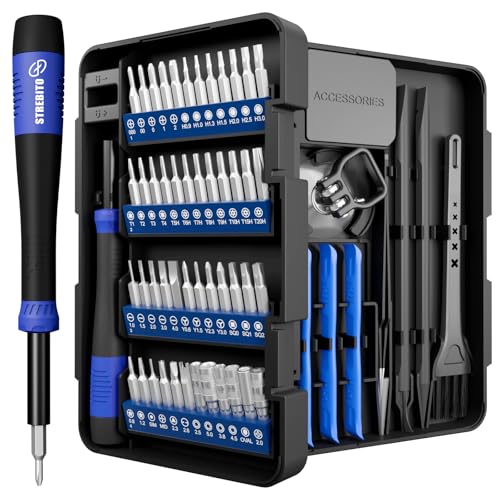 STREBITO STREBITO Precision Screwdriver Set 64-piece with Torx, Triwing, Gamebit |…
View on Amazon ↗
Listing names and images come from Amazon and are rechecked against the live listings; last checked Nov 8, 2026. No prices shown; the current price is on the listing.
How to read this guide. This guide is written from general knowledge of precision bit kits as a category, not from handling specific units. No individual product documents or buyer reviews were used, so verify any bit size, shank type, or case dimension on the listing before you buy.