Focus on foam density and rebound first, then cover removability and a low entry height. A dense memory foam or high resilience foam holds a senior dog's joints better than a fluffy pillow. If your dog chews or has accidents, prioritize a waterproof liner and a washable cover over extra thickness.
Start With the Foam, Not the Fluff
Orthopedic claims mean little without checking what is inside. A supportive bed uses dense memory foam, high resilience foam, or a combination with a firmer base layer. Look for a foam density listing, often measured in pounds per cubic foot. A density around 4 pounds or higher typically rebounds slowly and spreads weight instead of collapsing under a heavy dog.
Press on the foam if you can see it in a store, or read the listing for rebound language. Slow rebound is a clue the foam will contour to hips and elbows. A bed that bounces back immediately is usually a light, airy foam that flattens within a few months.
Thickness matters less than density. A 4 inch dense foam slab supports a large breed better than an 8 inch fluffy pillow. For a dog over 70 pounds, look for at least 4 inches of dense foam. For smaller seniors, 3 inches can be enough if the foam is firm.
The Cover Is the Second Decision
A bed that cannot be cleaned becomes a health problem. Senior dogs may have accidents, drool, or track dirt. A removable cover with a zipper that fits in a washing machine saves you from scrubbing foam by hand. Check the listing for machine washable, not just spot clean.
A waterproof liner between the cover and the foam protects the core from urine and spills. Liners made of a coated fabric or a separate waterproof layer keep the foam dry, but they can trap heat. If your dog sleeps hot, look for a liner described as breathable.
Covers with a nonslip bottom matter on hardwood or tile. A bed that slides when a stiff dog steps on it can cause a fall. Rubberized dots or a grippy fabric on the underside reduce that risk.
A Low Front Edge Helps Stiff Dogs Step In
A senior dog with arthritis or hip pain struggles to climb over a tall bolster. A bed with a low front entry, often an open U shape or a reduced bolster at one end, lets the dog walk in rather than lift its hind legs. Measure your dog's shoulder height and compare it to the listed side height.
Bolsters around the back and sides still give a place to rest the head. Look for bolsters that are firm enough to hold their shape, not just stuffed with loose fiber. A bolster that flattens against the floor provides no neck support.
For very old or injured dogs, a completely flat bed with no raised edge can be the safest choice. It removes all stepping barriers, though it offers less of a den like feel.
Size the Bed to the Sleeping Position
A bed that matches your dog's stretched length prevents legs from hanging off. Measure from nose to tail while the dog sleeps in its usual position, then add 6 to 10 inches. A dog that curls up can use a smaller bed, but a dog that sprawls needs the full length.
Large breeds need a bed wide enough to turn around without stepping off. A 48 inch bed often suits a 70 pound dog that stretches, while smaller seniors under 30 pounds can manage a 30 inch bed. Check the listed dimensions, not just the size label like large or extra large.
If the bed sits in a crate, measure the crate floor and subtract 1 to 2 inches. A bed that bunches against the crate walls loses its flat support.
Design Types and Their Tradeoffs
| Design | Support | Cleanup | Best for |
|---|---|---|---|
| Flat foam slab | High, even support | Cover usually removable | Large breeds, sprawlers |
| Bolster bed | Medium, edges may flatten | Bolsters often sewn in | Dogs that rest their head |
| Waterproof liner bed | Medium to high | Easy with liner and cover | Incontinent seniors |
| Cooling gel bed | High with gel layer | Often spot clean only | Hot sleepers, thick coats |
A bolster bed feels cozy but the raised edges are often the first part to lose shape. If your dog leans against the bolster, look for one with a separate foam insert rather than loose stuffing.
A cooling gel layer can help a dog that pants at night, but it adds weight and often cannot be machine washed. Check whether the gel is a removable pad or bonded into the foam.
Puppies and Chewers Need a Different Answer
An orthopedic bed is usually wasted on a puppy. Puppies have healthy joints and a talent for shredding foam. A cheaper, replaceable bed or a crate mat makes more sense until the chewing phase passes.
If you do buy for a puppy, choose a bed with a tough, ripstop cover and no exposed zipper. A hidden zipper or a cover that tucks under prevents a bored puppy from opening the bed and eating the foam.
For a dog that chews bedding, skip the thick foam entirely. A raised cot with a durable fabric or a simple fleece blanket on a waterproof mat is safer and cheaper to replace.
Related: frame and fabric choices for elevated pet cots explain why a cot can outlast a foam bed for a destructive dog.
Long Term Costs Hide in the Foam
A cheap orthopedic bed often costs more over three years. Low density foam flattens, the cover pills, and you buy a replacement. A dense foam bed with a washable cover can last several years with proper care.
Replacement covers are a hidden cost. Some beds sell covers separately, which is cheaper than replacing the whole bed. Check the listing for cover availability before you buy.
Odor control matters in small apartments. A bed that traps smell from accidents or drool will make the whole room unpleasant. A washable cover and a waterproof liner prevent that, but they add laundry time.
Small Apartments and Indoor Cats Change the Priority
A bulky orthopedic bed can dominate a studio apartment. Look for a bed with a slim profile or one that slides under a table when not in use. Some flat foam beds can be stored vertically against a wall.
Indoor cats often steal a dog bed, especially a heated or bolstered one. If you have both, choose a bed with a cover that resists cat claws. A tightly woven fabric or a microsuede cover hides scratches better than a loose knit.
For an apartment with limited laundry access, a bed with a waterproof liner and a small cover that dries quickly is more practical than a huge plush bed that takes two dryer cycles.
Which Features Are Real and Which Are Marketing
A bed labeled orthopedic means nothing by itself. The term is not regulated, so a thin egg crate foam bed can carry the same label as a dense memory foam slab. Look for the foam type and density instead.
Heated beds help only if your dog feels cold or has poor circulation. For most indoor dogs, a heated bed adds a cord, a chew risk, and a fire hazard. Unless your home is drafty or your dog is very old and thin, skip the heat.
A raised edge or headrest matters only if your dog actually uses it. Watch where your dog rests its head now. If it sleeps flat, a bolster is just an obstacle.
Related: other pet furniture guides cover crates, cots, and more for specific needs.
Orthopedic Dog Bed Questions, Answered
Is orthopedic dog bed worth it for a senior dog?
For most senior dogs, yes. A dense foam bed reduces pressure on hips, elbows, and shoulders, which can improve sleep quality and make it easier to stand up. The benefit is clearest for dogs with arthritis, hip dysplasia, or visible stiffness after lying down. A puppy or a healthy young dog does not need one, and the money is better spent on a chew resistant mat.
What is the best thickness for an orthopedic dog bed?
Aim for at least 3 inches of dense foam for small dogs and 4 inches or more for large breeds. Thickness alone is not enough. A 6 inch bed made of low density foam will flatten faster than a 4 inch dense memory foam slab. Check the foam density listing, not just the height.
Can I wash an orthopedic dog bed?
Only the cover is usually washable. Most foam cores cannot go in a washing machine, so look for a removable cover with a zipper and a machine washable label. A waterproof liner between the cover and foam protects the core from urine and spills, but you still need to wash the cover regularly to control odor.
Which orthopedic dog bed is best for large breeds?
A flat, dense foam slab with no tall bolsters works best for most large breeds. It lets a heavy dog sprawl without pressure points and avoids the problem of a bolster flattening under repeated leaning. Look for a bed at least 4 inches thick with a high density foam core and a nonslip bottom.
Should I choose a heated orthopedic dog bed?
Only if your dog is old, thin, or lives in a cold room. Most indoor dogs do not need added heat, and a cord creates a chew risk and a potential fire hazard. A dense foam bed already retains body heat. If you do choose heated, look for a low voltage pad with a chew resistant cord and an automatic shutoff.
Which Orthopedic Bed Fits Your Dog
For a senior dog that sprawls and has occasional accidents, pick a flat dense foam bed with a washable cover and a waterproof liner. It supports the hips without a bolster to climb over and handles cleanup without ruining the foam. If your dog sleeps hot or has a thick coat, switch to a bed with a cooling gel layer and a removable, breathable cover instead.
Real orthopedic dog bed listings, so you can check the points in this guide against actual products. These are affiliate links: as an Amazon Associate we earn from qualifying purchases, at no extra cost to you.
 EHEYCIGA EHEYCIGA Orthopedic Extra Large Dog Bed, Waterproof Washable XL Pet…
View on Amazon ↗
 BEDSURE Bedsure Orthopedic Dog Beds Large Sized Dog Washable Original Design…
View on Amazon ↗
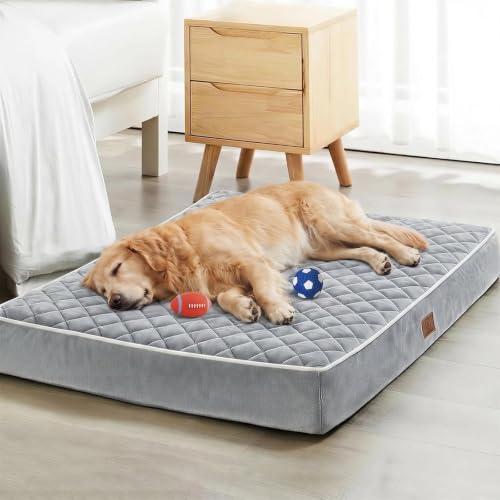 WNPETHOME WNPETHOME Orthopedic Waterproof Extra Large Senior Dogs Bed for Comfy…
View on Amazon ↗
Listing names and images come from Amazon and are rechecked against the live listings; last checked Nov 8, 2026. No prices shown; the current price is on the listing.
Scope and limits. This guide covers the orthopedic dog bed category as a whole, not any single model. It is written from general knowledge of foam, covers, and dog behavior, without consulting individual product documents, user reviews, or in person testing. Check the listing for exact foam density, dimensions, and wash instructions before you buy.