A no pull harness works by redirecting your dog's forward momentum instead of fighting it with a collar. The two decisions that matter most are where the leash clips and how the straps sit on your dog's chest and shoulders. Front clip designs turn the dog sideways when they pull, which is ideal for most strong pullers. Back clip designs are better for calm walkers or small dogs. The main tradeoff: front clips give more control but can tangle the leash or twist the harness if the fit is loose.
The Clip Point Changes the Whole Walk
A harness with a D ring on the chest, between the front legs, works differently from one with a ring on the back. When the leash clips to the chest and the dog pulls, the harness turns their shoulders sideways. They cannot brace against the leash the way they can with a back clip. This is the single most important feature for a dog that lunges at squirrels or greets every passerby.
Back clip designs are simpler and put no pressure on the chest. They suit dogs who already walk on a loose leash most of the time, or very small dogs where a front clip would hang too low and tangle their short legs. The back clip also keeps the leash clear of the dog's face during sniffing.
Dual clip harnesses have rings on both the chest and the back. This lets you start a training walk on the front ring, then switch to the back ring once the dog calms down. It also gives you a backup point if one ring bends or a strap wears through. The tradeoff is extra hardware and sometimes a slightly heavier harness.
| Design | Leash control | Comfort for dog | Best for |
|---|---|---|---|
| Front clip | Strong turning force | Chest pressure if dog lunges | Dogs who pull hard on walks |
| Back clip | Low; dog can lean | No chest pressure | Calm dogs, tiny breeds |
| Dual clip | High; flexible | Pressure only when using front ring | Training or mixed walking styles |
| Head halter style | Very high, steers head | Can irritate muzzle or eyes | Very strong pullers, short training sessions |
Compare the placement of the front D ring before buying. On some harnesses the ring sits high on the chest, which pulls less effectively. On others it sits low between the legs, which can chafe the inside of the front legs. A ring that sits at the breastbone level with a wide strap behind it is the most comfortable design for a strong puller.
Strap Width and Padding Decide Comfort
A no pull harness only works if your dog tolerates wearing it. Thin nylon straps concentrate force into a narrow line across the chest and under the armpits. That can chafe, especially on short coated breeds like pit bulls or boxers. Wider straps, around 1 to 1.5 inches for a medium dog, spread the load over more skin and muscle.
Padding helps only if it sits between the strap and the dog's body without shifting. Some harnesses use a thin foam layer that flattens after a few weeks. Others use a mesh lining that breathes but offers little cushion. Check the listing for the padding material and whether the chest strap is padded, not just the back panel. A padded chest strap matters most because that is where a front clip harness applies force.
Avoid harnesses with straps that run directly behind the front legs. That area has little fur and lots of movement. Even a soft strap can rub raw spots there if the harness is too tight or the dog has a deep chest. Look for a design where the belly strap sits further back, behind the ribcage, or where the chest strap is shaped to avoid the armpit.
Adjustability Keeps the Harness From Slipping
Dogs do not come in standard shapes. A greyhound has a deep chest and a tiny waist. A bulldog has a wide neck and a barrel chest. A corgi has short legs and a long back. A harness with only two adjustment points, usually one on the neck and one on the belly, will fit some of these dogs but not all.
More adjustment points let you fine tune the fit around the chest, behind the legs, and along the back. Four or five adjustment points are common on well designed no pull harnesses. This matters because a loose harness twists when the dog pulls against a front clip. A twisted harness puts the chest strap under one armpit, which is uncomfortable and reduces the turning effect.
Check how the straps adjust. Buckles that slide and lock with a triglide are easier to set once and leave alone. Velcro adjustments are quick but can collect fur and lose grip. Some harnesses have a neck opening that does not adjust at all, only the chest and belly. That works for dogs whose neck size is stable, but a growing puppy or a dog with a thick winter coat needs a neck that opens wider.
Which Dogs Should Skip a No Pull Harness
A dog who has never pulled on a leash does not need a front clip harness. A simple back clip harness or even a flat collar with a well trained dog is lighter and less fuss. Using a no pull harness on a calm dog can actually make walks worse because the extra straps and chest pressure are unnecessary.
Dogs with a history of neck or throat problems should not use a head halter style harness. The halter steers by the head and snout, which puts pressure on the neck if the dog lunges. A front clip body harness is safer for these dogs because it spreads force across the chest.
Very small dogs, under about 8 pounds, often find front clip harnesses bulky. The hardware hangs low and the chest strap can rub their elbows. A lightweight back clip harness or a simple step in harness is usually more comfortable. If your small dog pulls, try a very thin front clip design made for toy breeds rather than a scaled down medium dog harness.
Night Walks and Road Trips Change the Requirements
A no pull harness worn on a nighttime walk needs reflective stitching or a reflective patch. The dog is low to the ground and drivers cannot see a dark harness. Reflective material on the chest strap is especially useful because that is the part facing oncoming cars when the dog walks ahead of you.
For hiking or long walks on rough trails, look for a harness with a sturdy handle on the back. The handle lets you lift the dog over obstacles or steady them on a steep slope. It also gives you a quick grab point if the dog slips toward a drop. A handle on a front clip harness is not guaranteed, so check the listing.
Long road trips are different. A no pull harness is not a crash tested car restraint unless the manufacturer states that it passed a crash test standard. Look for that statement in the listing, not just a seat belt loop. A harness that merely has a loop for a seat belt is not proven to protect the dog in a sudden stop. For travel, you may want a dedicated car harness instead.
Reading a Listing Before You Buy
Start with the clip points. The listing should state clearly whether the harness has a front D ring, a back D ring, or both. If it does not say, assume it is a back clip only. Photos can be misleading because a D ring hidden under a flap or behind a strap is easy to miss.
Next, check the sizing chart. Measure your dog's chest girth at the widest point, usually just behind the front legs. Compare that number to the chart. If your dog falls between two sizes, go down a size for a no pull harness. A loose harness twists and slides, which defeats the front clip action.
Ask the seller two questions if the listing is unclear. First, where exactly does the front D ring sit when the harness is worn? Second, is the chest strap padded and how wide is it? A seller who cannot answer these questions may be reselling a generic harness without knowing the design. Also check the return policy. A harness that fits in the photo may not fit your dog, and you want the option to exchange.
No Pull Harness Questions, Answered
How does a no pull harness stop pulling?
A front clip harness turns the dog's chest and shoulders sideways when they pull against the leash. This breaks their forward momentum and makes pulling feel awkward. It does not hurt the dog; it just redirects their body. A back clip harness does not do this because the dog can lean into the leash with their full weight.
Is a no pull harness worth it for a small dog?
Only if the small dog actually pulls. Many toy breeds walk calmly and do better in a simple back clip harness that is lighter and less restrictive. If your small dog pulls, choose a front clip design made specifically for toy breeds with thin straps and a high chest ring so it does not rub the elbows.
Can a no pull harness be used as a car restraint?
Not unless the manufacturer states the harness passed a crash test standard such as those from the Center for Pet Safety. Most no pull harnesses are designed for walking only. A seat belt loop on a walking harness is not a safety feature. For car travel, use a dedicated crash tested car harness or a carrier.
Which is better, a front clip or a back clip harness?
For a dog that pulls, a front clip is better because it turns the dog sideways and reduces pulling. For a dog that already walks nicely, a back clip is more comfortable and puts no pressure on the chest. A dual clip harness gives you both options but adds a little weight and hardware.
What makes a no pull harness comfortable for a dog?
Wide, padded straps spread the force over a larger area instead of digging in. The chest strap should be padded because that is where a front clip harness applies pressure. Avoid straps that run directly behind the front legs, as that area chafes easily. Multiple adjustment points help the harness sit correctly without sliding.
Which No Pull Harness Fits Your Dog
A dog who pulls hard on every walk and has a standard body shape should get a dual clip harness with a padded chest strap and at least four adjustment points. The front ring gives you control for training, and the back ring works once the dog calms down. For a short legged breed like a corgi or a dachshund, skip the dual clip and pick a front clip only harness with a high chest ring and a belly strap that sits behind the ribcage, because a low hanging front ring will tangle their short legs.
Real no pull dog harness listings, so you can check the points in this guide against actual products. These are affiliate links: as an Amazon Associate we earn from qualifying purchases, at no extra cost to you.
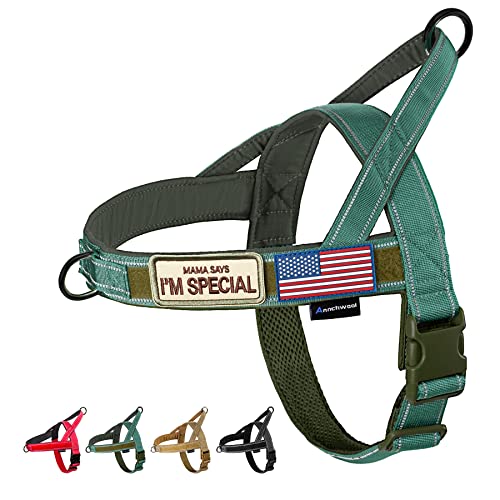 ANNCHWOOL Annchwool No Pull Dog Harness with Soft Padded Handle &…
View on Amazon ↗
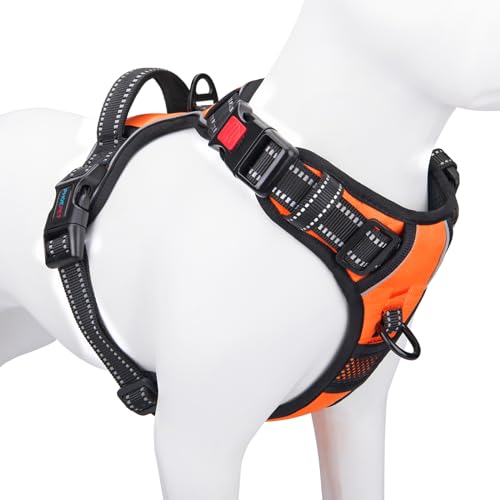 PHOEPET PHOEPET No Pull Dog Harness Medium Reflective Front Clip Vest…
View on Amazon ↗
 PETSAFE PetSafe Easy Walk Harness, No Pull Dog Harness, Medium, Raspberry…
View on Amazon ↗
Listing names and images come from Amazon and are rechecked against the live listings; last checked Nov 8, 2026. No prices shown; the current price is on the listing.
How to read this guide. This guide explains the design choices that separate one no pull dog harness from another, based on general knowledge of how harnesses fit and function. It does not cover individual models, and no product documents, reviews, or in person testing were used. Check any dimension or material claim on the product listing before you buy.