Formula dispensers separate powdered formula into premeasured servings so you can pour a bottle in seconds. The main decisions are capacity, how the powder dispenses, and how easy the parts are to wash. Parents who travel or do night feeds benefit most from a leak proof, stackable unit. Parents with a small kitchen may prefer a compact design, while those mixing on a counter might value a larger hopper style.
Where You Feed Decides the Capacity
A dispenser that holds one serving is enough for a short walk or a single newborn feed. A three or four chamber tower covers a half day out or several night feeds. A larger hopper style suits parents who mix many bottles at home, such as those shopping for baby feeding gear in a busy kitchen.
Think in feed count, not ounces. A newborn may take six to eight feeds a day, so a two chamber dispenser runs out quickly. Traveling parents often want one chamber per feed plus one extra in case of delays.
Working mothers who prep bottles before daycare may find a dispenser with four or more chambers cuts morning steps. The tradeoff is size: a tall tower takes more room in a diaper bag than a single cup.
Seal and Spout Behavior
The most common failure is a lid that pops open in a bag. Compare how the lid closes: a screw on lid is more secure than a snap on, but slower to open one handed. A silicone gasket or inner lip usually means a tighter seal, though it adds a part to wash.
The dispensing opening matters as much as the lid. A wide pour spout lets powder fall quickly into a bottle, but leaves more room for moisture to enter. A narrow spout with a sliding cover keeps powder drier, yet can clog if formula clumps.
For night feeds, choose a design you can open and pour without looking. A twist top with a marked chamber is easier than a cap that must be lined up. If you plan to carry it in a bag, test the closed lid by pressing on the top: a secure unit should not flex or release.
Chamber Design and Mixing Accuracy
Stacked tower dispensers keep each serving separate, so you can pour one chamber into a bottle without measuring. The downside is that formula can pack down in the chamber, giving you slightly more or less than the scoop amount. Tap the chamber before opening to settle the powder evenly.
A rotary dial dispenser stores all the powder in one body and releases a set amount as you turn it. This is fast, but the portion size is fixed. If your baby needs a half scoop or a changing amount, a chamber style gives more control.
A wide mouth single cup lets you scoop directly from the tin, which is ideal for weaning babies who take variable amounts. It does not preportion, so it saves less time than a tower. Some parents use a single cup as a travel refill and a tower for home.
Cleanup and Drying Are the Hidden Cost
Formula powder is oily and clings to plastic. Every dispenser needs a full wash after each day of use, but designs differ in how long that takes. A single cup with one wide opening rinses in seconds. A four chamber tower with small spouts may need a bottle brush and a full drying rack overnight.
Check whether the chambers separate completely. Some towers unscrew into individual cups, which dry faster. Others are one molded piece, which traps water in the bottom chamber. Moisture leads to clumped formula and a sour smell.
Dishwasher safe parts save time, but top rack only is common. High heat can warp a thin plastic lid, so hand washing the lid and seal often extends the life of the dispenser. Silicone parts dry slower than polypropylene, so plan for a second unit if you wash daily.
A common mistake is rinsing only the chamber and not the lid threads. Powder dust settles in the thread grooves, then hardens. Wipe the threads with a dry cloth or run them under water every wash.
What to Check in a Listing Before Buying
The listing should state the capacity in scoops or ounces, not just chambers. A four chamber tower that holds one scoop per chamber is different from one that holds two. Match that to your baby's current feed size.
Look for the material. Food grade polypropylene and silicone are standard, and BPA free is common. If the listing does not name the plastic, ask the seller before buying, especially for a newborn.
Check the lid type and whether spare parts are available. A gasket or O ring eventually stretches. If the seller does not list replacements, the whole dispenser becomes useless when the seal fails.
- Capacity in scoops, not just number of chambers
- Material and whether it is dishwasher safe
- Lid type: screw, snap, or sliding cover
- Whether the spout has a moisture cover
- Whether spare seals or gaskets are sold separately
Design Types Compared
| Design | Best for | Cleanup effort | Leak risk | Portion control |
|---|---|---|---|---|
| Single chamber cup | One feed on the go | Very low | Low with screw lid | You scoop each time |
| Stacked tower | Night feeds, half day out | Medium | Low if gasketed | Fixed per chamber |
| Rotary dial | Fast repeated feeds | High | Medium | Set by dial position |
| Large hopper | Full day at home | High | High if tipped | Measured by scoop |
A stacked tower is the most common starting point for newborn parents because it balances capacity and cleaning. A rotary dial suits a parent who makes many bottles in a row, such as a working mother prepping a day of feeds. A single cup is a useful backup for a diaper bag even if you own a larger dispenser.
Mistakes That Waste Formula or Sleep
One mistake is buying capacity you will not clean. A six chamber tower sounds convenient, but if washing it feels like a chore, you will skip it and the powder inside will clump. Buy the largest unit you will realistically wash after every use.
Another mistake is assuming all lids are leak proof. A snap on lid without a gasket can open in a full bag. Look for a positive click or a screw thread, and keep the dispenser upright in a side pocket.
Filling the chambers too far in advance is common. Formula powder absorbs moisture from the air, so a dispenser filled on Sunday may be damp by Wednesday. Fill only what you will use within 24 hours, or store the dispenser in a dry, sealed bag.
Some parents forget that a dispenser is not sterile. It holds dry powder, but any moisture creates a place for bacteria. Wash and fully dry the unit between fills, and do not use it for ready to feed liquid formula.
When a Dispenser Is Not What You Need
If you feed ready to feed liquid formula, a powder dispenser is useless. A cooler bag or a bottle with a premeasured liquid insert works better. If your baby is exclusively breastfed and you only need a small backup, a single travel friendly feeding accessory or a small container may be enough.
For a baby who is weaning and eats mixed foods, a dispenser for powder is less useful than a divided snack cup. The dispenser's job is accurate powder portioning, not solid food storage.
Parents who mix formula in a pitcher once a day may skip a dispenser entirely. A baby food maker guide shows how batch prep changes your morning routine, but for formula, a large mixing pitcher and a fridge bottle can replace a dispenser at home.
Long Term Costs and Consumables
A formula dispenser has no ongoing consumables beyond the formula itself. The main long term cost is replacing the unit when a seal fails or a lid cracks. Spending slightly more on a design with replaceable gaskets often saves money over buying a whole new dispenser.
Some parents buy two cheap dispensers instead of one better sealed unit. That works if you wash one while the other dries. If space is tight, one quality unit with a spare lid may serve better.
Plastic discolors over time, especially if washed in very hot water. This does not mean it is unsafe, but a cloudy chamber makes it harder to see clumps. Check the listing for heat tolerance if you use a sanitizer or boiling water.
Formula Dispenser Questions Parents Ask
Is a formula dispenser worth it for one baby?
Yes, if you mix bottles away from the kitchen or at night. Premeasuring saves only a few seconds per feed, but those seconds matter at 3 a.m. Or in a car. If you always feed at home with the formula tin nearby, a dispenser adds a step without much benefit.
Which formula dispenser is best for travel?
Look for a screw on lid with a silicone gasket, a narrow pour spout, and enough chambers for one feed per leg of the trip plus one spare. A tower style fits in a bottle pocket. Avoid a large hopper, which can spill if it tips over in a bag.
What is the difference between a formula dispenser and a formula container?
A dispenser portions the powder into separate chambers or a dial, so you pour a set amount without measuring. A plain container holds loose powder and requires a scoop. Dispensers are faster but harder to clean; containers are simpler but less convenient for night feeds.
Can I put a formula dispenser in the dishwasher?
Many are top rack dishwasher safe, but the lid and gasket often need hand washing. High heat can warp thin plastic and shorten the seal life. Check the listing for the specific material and temperature limit, and let all parts dry completely before refilling.
How do I stop formula from clumping in the dispenser?
Keep the dispenser completely dry before filling, store it in a cool dry place, and avoid filling it more than a day ahead. If clumps still form, tap the chamber before opening to break up the powder, and check the gasket for moisture.
Which Formula Dispenser Fits Your Feeding Routine
A parent who does night feeds and short trips should start with a three or four chamber stacked tower with a screw on, gasketed lid. It balances capacity, leak protection, and reasonable cleaning. A parent who mixes many bottles at once at home may prefer a large hopper style, accepting more cleanup for faster repeated pours. A single chamber cup is the right backup for a diaper bag, not the main dispenser for a newborn.
Real formula dispenser listings, so you can check the points in this guide against actual products. These are affiliate links: as an Amazon Associate we earn from qualifying purchases, at no extra cost to you.
 MUNCHKIN Munchkin Baby Formula Dispenser for Bottle Feeding, Pink, 9 Ounce
View on Amazon ↗
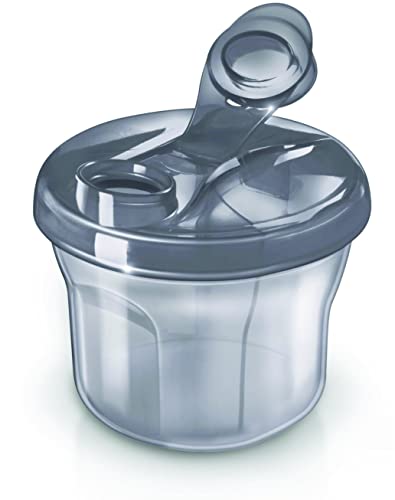 PHILIPS AVENT Philips Avent Formula Dispenser and Snack Cup, Grey | 3-Compartment…
View on Amazon ↗
 ACCMOR Accmor Baby Formula Dispenser On The Go, Rotating Formula Container…
View on Amazon ↗
Listing names and images come from Amazon and are rechecked against the live listings; last checked Nov 8, 2026. No prices shown; the current price is on the listing.
Scope and limits. This guide is written from general knowledge of formula dispenser designs and the physical problems they solve, not from testing individual models. It cannot tell you how a specific listing's lid, seal, or plastic will hold up, so verify those details on the product page before buying.