Two factors decide a tummy time mat: how firm the surface feels under your baby, and how easy the mat is to clean and store. Parents in a small nursery should prioritize a foldable, wipeable mat. A thicker padded mat helps longer floor sessions but takes more space. Skip the mat entirely if your floor is already carpeted or you have a firm play mat.
What a Mat Actually Changes for Floor Time
A tummy time mat changes how long your baby tolerates being on their belly. A firm but slightly cushioned surface lets a newborn push up without their elbows sinking. A mat that is too plush makes the work harder, which often shortens the session. Compare surface firmness before anything else.
Sensory features such as crinkle panels, mirrors, and high contrast patterns can hold attention. Those extras help for babies who fuss after a minute or two. For a baby who already does long floor sessions, the mat’s padding matters more than any attached toy.
Firmness and Padding Rank First
Surface firmness changes the result more than any other feature. A mat with too much give makes a newborn work harder to lift their head. A mat that is too hard feels uncomfortable on elbows and knees. Look for a middle ground: enough padding to soften a wood floor, but firm enough that hands do not sink.
Carpeted rooms already provide cushioning. In that case, a thin, wipeable mat over the carpet is usually enough. A thick mat on carpet can feel unstable for a baby learning to push up.
Cleanup Effort Sets the Daily Habit
Spit up, drool, and the occasional diaper leak land on this mat. A wipeable surface means you reset the mat in seconds. A fabric cover that needs a washing machine cycle may sit in the laundry basket for a day. Check whether the listing says the surface is waterproof or machine washable.
Some mats combine a wipeable top with a removable, washable cover. That design gives you both options. If you wash the cover often, check that it can go in a dryer. A cover that must air dry takes longer to return to the floor.
Small Nurseries Need a Fold or Roll Away Size
A mat that stays flat on the floor all day eats usable space. In a small nursery, choose a mat that folds into quarters or rolls up with a strap. Check the folded dimensions on the listing, not just the open size. A mat that folds to the size of a large towel fits behind a door or under a crib.
Foam tile mats can be taken apart and stacked. That works well if you want to store the mat in a closet or move it between rooms. Interlocking tiles also let you shrink the play area for a corner of the nursery. See our floor time mat guide for more on foldable and squeaky designs.
Gift Giving and the Six Month Stage
A tummy time mat is a common baby shower gift. For that purpose, a mat with sensory extras such as a mirror or crinkle textures feels more complete. A plain padded mat is still useful, but it may look less thoughtful as a gift.
By six months, many babies roll and start to push up on hands and knees. A small mat becomes less useful at this stage because the baby moves off it quickly. A larger mat or interlocking tiles that cover more floor work better. The mat’s role shifts from a contained spot to a soft landing zone.
Design Types and Their Tradeoffs
A thin foam tile mat wipes clean and stores small, but offers little cushioning. A quilted fabric mat feels soft and cozy, but needs regular washing and may slip on hard floors. A thick padded play mat cushions long sessions, but takes up more room and can be harder to wipe down.
A waterproof activity gym mat pairs a wipeable surface with overhead toys. That design keeps a baby entertained longer, but the arches add bulk and the mat itself is often thinner than a dedicated padded mat. Pick the design that matches where you will use it most.
Compare the main types side by side:
| Design type | Surface feel | Cleanup effort | Stored size | Best for |
|---|---|---|---|---|
| Thin foam tile mat | Firm, light cushion | Wipe clean | Small, stacks | Hard floors, small rooms |
| Quilted fabric mat | Soft, plush | Machine wash | Rolls medium | Carpet, cozy feel |
| Thick padded play mat | Cushioned, supportive | Wipe or wash | Large, bulky | Long floor sessions |
| Waterproof activity gym mat | Moderate padding | Wipe clean | Medium with arches | Sensory play, distraction |
The table shows the same tradeoff as the spectrum above: simpler cleanup lives on the left, longer floor time on the right. A quilted mat sits in the middle because it feels soft but demands laundry.
What to Check on the Listing Before You Buy
Open dimensions matter less than folded dimensions. Measure the floor space where the mat will sit and compare it to the open size. Then check the folded or rolled size against where you plan to store it. If the listing does not show folded dimensions, ask the seller.
Check the thickness in millimeters or inches. A mat under about half an inch thick offers little cushioning on hard floors. A mat over about one inch thick starts to feel plush, which may make pushing up harder for a newborn. Ask the seller about the foam density if the thickness is not listed.
Look for a non slip backing if the mat will sit on hardwood or tile. A smooth fabric mat can slide when a baby kicks. If the listing does not say the bottom grips the floor, assume it may move.
For washable covers, check the care label details in the listing. A cover that is machine washable but not dryer safe will be out of rotation longer. Ask the seller how the cover attaches, since a zipper that catches fabric is frustrating to remove.
When to Skip the Mat Altogether
A dedicated tummy time mat is not essential. A firm play mat, a folded blanket on carpet, or a yoga mat can serve the same purpose. If you already own a large foam play mat, adding a separate tummy time mat duplicates the function.
Skip a new mat if your baby is close to crawling. Once a baby moves around the room, a contained mat becomes irrelevant. Spend the money on a larger play surface or a baby gate instead. For related nursery decisions, see our bassinet stability guide.
Materials and Long Term Costs
Most mats use polyurethane foam, EVA foam, or polyester fiberfill. EVA foam tiles are lightweight and wipeable, but some have a noticeable smell when new. Polyurethane foam pads are denser and more supportive. Check that any foam is labeled free of phthalates and BPA.
There are no ongoing consumables for a tummy time mat. The main long term cost is replacement if the surface tears or the foam compresses. A mat with a removable cover can extend its life because you can wash the cover instead of replacing the whole mat.
Avoid mats with small attached pieces that can come loose. A mirror that detaches or a toy that tears off becomes a choking hazard. Check the stitching on any sewn on feature before first use.
Tummy Time Mat Questions New Parents Ask
How thick should a baby tummy time mat be?
Between half an inch and one inch is the useful range for most homes. Under half an inch feels hard on elbows over wood or tile. Over one inch can make a newborn sink slightly, which makes pushing up harder. If your floor is carpeted, a thinner mat over the carpet is fine.
What is the best surface for tummy time on hardwood floors?
A firm foam mat with a non slip backing works best on hardwood. The foam cushions elbows without letting hands sink. The non slip bottom keeps the mat from sliding when your baby kicks. A quilted fabric mat can work, but check that its bottom grips the floor.
Can I use a yoga mat for baby tummy time?
Yes, a clean yoga mat works for short sessions. It is firm, wipeable, and rolls up small. The main drawback is that most yoga mats are narrow, so a rolling baby quickly moves off the edge. A dedicated tummy time mat is wider and often has sensory features.
Is a tummy time mat necessary for a newborn?
No, it is not necessary. A folded blanket on a carpeted floor works for the first weeks. A mat becomes useful when you want a designated, wipeable spot or when your floor is hard. It also helps if your baby fusses and benefits from the visual contrast and textures.
Which tummy time mat is easiest to clean?
A thin foam tile mat with a waterproof surface is the easiest. You wipe it with a damp cloth and it is ready. A quilted fabric mat is the hardest because the whole cover needs a washing machine cycle. Some mats combine a wipeable top with a removable washable cover.
The Mat That Fits Most Nursery Floors
A parent in a small nursery with hard floors should choose a firm foam mat that folds small and wipes clean. That single mat covers newborn sessions and lasts into the six month stage. If your floors are already carpeted, skip the thick pad and buy a thin, wipeable mat with a non slip bottom instead.
Real baby tummy time mat listings, so you can check the points in this guide against actual products. These are affiliate links: as an Amazon Associate we earn from qualifying purchases, at no extra cost to you.
 FORTELLA Fortella Baby Play Gym & Mat, Tummy Time Mat for…
View on Amazon ↗
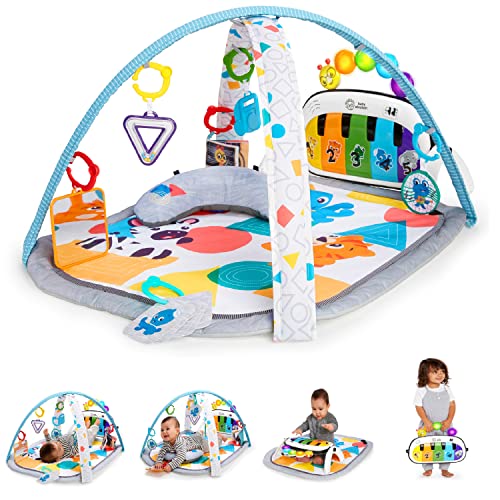 BABY EINSTEIN Baby Einstein 4-in-1 Kickin' Tunes Music and Language Play Gym…
View on Amazon ↗
 JOYPONY Joypony Baby Play Mat 71x59 Inches, Foldable Play Mats for…
View on Amazon ↗
Listing names and images come from Amazon and are rechecked against the live listings; last checked Nov 8, 2026. No prices shown; the current price is on the listing.
Scope and limits. This guide is written from general knowledge of tummy time mats as a product category. It does not describe any specific model, and no product documents, reviews, or in person tests were used. Any dimension or material claim should be checked on the listing before you buy.