Two factors separate a good bassinet from a risky one: how stable the base stays on your floor and how breathable the sleeping surface is. Choose a wide, low stand with a firm, snug mattress for a newborn. Choose a travel bassinet only for supervised naps. The main tradeoff is compactness against stability; the lightest models are also the easiest to tip.
The Base Decides What Happens at 3 A.M.
Before you look at fabrics or canopies, look at the footprint. A bassinet with legs set wider than the sleeping area is much harder to knock over than one with a narrow central post. The weight also matters: a heavier frame resists movement when you brush past it in a dim room.
Check whether the base locks. Some models rock or glide and can be locked into a fixed position; a lock is useful once your baby starts pushing up. If the base has wheels, confirm that they have brakes and that the brakes engage firmly.
On carpet, a small footprint can sink unevenly and create a slight tilt. On hard floors, a smooth base can slide. Compare the base against your own floor type rather than assuming a wide stance always works.
Mattress Fit Matters More Than Mattress Softness
The mattress must fit the frame without gaps. A gap wider than two fingers can trap a baby's face or limbs. Check the listing for the exact interior dimensions and compare them to the mattress dimensions; many bassinets are sold with a mattress, but replacements vary.
Firmness is the second check. A bassinet mattress should be firmer than an adult mattress, not plush. Press the center with your hand: it should spring back quickly and not leave a deep indent. A soft, thick mattress can create a pocket that interferes with breathing.
Do not add a second mattress or a thick pad to make the bassinet feel cozier. A folded blanket or an extra layer changes the sleeping angle and can create a gap at the edges. The safest setup is the one flat, firm surface that came with the frame.
Mesh Walls Change the Air Around a Sleeping Baby
Solid fabric walls look warmer, but they trap air and heat. Mesh walls allow air to move through the sleeping area and give you a clear sight line when you are lying down. This is most important for a baby under four months who cannot roll away from a stuffy corner.
Look for mesh on at least two full sides, ideally all four. A small mesh window near the top is mostly decorative. The mesh should be taut, not loose, and attached securely to the frame so a hand or foot cannot push it inward.
For bedside sleepers, mesh on the side facing your bed is not enough. If the other three sides are solid, the baby still sleeps in a warm pocket. Compare the total open area, not just the presence of mesh.
Four Bassinet Designs and Where Each One Fits
Traditional bassinets stand on fixed legs and stay in one spot. They are usually the most stable and the roomiest, but they take up floor space and do not fold. Choose one for a dedicated nursery corner where the bassinet does not need to move.
Bedside sleepers attach to the adult bed or sit flush against it with a drop down side. They make night feeds easier, but the connection must be secure and the gap between the sleeper and your mattress must be eliminated. They are a good fit when you want the baby within arm's reach without sharing your bed.
Gliding or rocking bassinets add motion to help a baby settle. They tend to have a wide base for safety, which makes them heavier and harder to carry between rooms. The motion is helpful for the first weeks, but a baby who learns to sleep only with motion can make the transition to a crib harder.
Travel bassinets fold flat and weigh little. They are convenient for grandparents' houses or overnight stays, but they are the least stable design and often have thinner mattresses. Use them for supervised naps and short trips, not as the main sleep space for months.
| Design | Stability | Portability | Best fit | Watch for |
|---|---|---|---|---|
| Traditional bassinet | High | Low | Nursery corner, long term | Floor space, heavy frame |
| Bedside sleeper | Medium high | Medium | Night feeds, small bedroom | Gap to adult bed, attachment |
| Gliding bassinet | High | Medium low | Colicky baby, open floor | Weight, motion dependence |
| Travel bassinet | Low medium | High | Trips, supervised naps | Thin mattress, tipping risk |
A bassinet that combines two designs, such as a bedside sleeper with a gliding base, may sound flexible. Check whether the combined features weaken the primary one: a gliding mechanism can loosen the bedside attachment, and a removable bassinet can make the base less stable.
Small Rooms and Apartments Reward a Narrow Stance
In a small bedroom, the bassinet competes with a dresser, a chair, and a path to the door. Measure the space where you will stand and bend, not just the footprint of the bassinet. A bedside sleeper often uses the same floor area as a nightstand, while a traditional bassinet needs a clear zone around all four sides.
Apartment living adds two checks: doorways and floor type. A bassinet you plan to move between a bedroom and a living room must fit through the door without tilting. On a hard floor, a bassinet with smooth feet can slide; look for rubberized or gripping feet.
First time parents often buy a bassinet with a large storage basket underneath. That basket is useful, but it can also make the base bulkier and harder to clean under. In a tight room, a slimmer profile may matter more than extra storage.
When a Bassinet Is the Wrong Choice
A bassinet is a short term sleep space. Most are outgrown by the time a baby can push up on hands and knees, often around four to six months. If you want one sleep product to last the first two years, a crib with a firm mattress is the better purchase.
Skip a bassinet if your bedroom is on a different floor from your main living space and you cannot carry the bassinet safely. Moving a bassinet up and down stairs daily is a tipping risk and a strain. A compact crib on each floor can be safer.
Skip a bassinet for a baby who already rolls or sits. The shallow walls and small sleep surface become a hazard once the baby can move. Check the weight and developmental limits on the listing, and stop using the bassinet before those limits, not after.
If you plan to cosleep in the same bed, a bassinet is the safer alternative, but only if it sits on a stable surface next to the bed. A bassinet placed on a soft mattress or a couch is not stable and should not be used.
Read the Listing for the Things the Photos Hide
Photos show the bassinet styled in a bright room, but they rarely show the base from below. Check the listing for the assembled weight, the footprint dimensions, and whether the frame is metal or plastic. A plastic joint at the base is a common failure point.
Ask the seller about the mattress thickness and whether a replacement is available. Also ask whether the fabric is removable and machine washable. A bassinet without a washable cover will smell like spit up within weeks.
Look for the relevant safety standard in the listing text. In the US, bassinets should meet the current CPSC bassinet standard. A seller that does not mention a standard or lists only a crib standard may not have tested the product as a bassinet.
Ignore claims like 'breathable mattress' or 'antireflux' unless the listing explains what that means. A 'breathable' label on a thick foam mattress is not the same as open mesh walls. An incline feature may be marketed as reflux relief, but an incline over 10 degrees is not recommended for unsupervised sleep.
Cleaning and Long Term Costs Are Part of the Price
A bassinet is used for months, not years, but it still gets dirty. Spit up, diaper leaks, and milk drips land on the mattress cover and the fabric walls. Choose a bassinet with a removable, machine washable cover, and check whether the mattress itself has a wipeable or washable layer.
Replacement parts are the main long term cost. A torn mesh panel or a cracked base joint usually means replacing the whole bassinet, because parts are not sold separately. Check whether the brand sells a replacement mattress or cover before you buy.
If you plan to store the bassinet for a second baby, clean it thoroughly and store it in a dry place. Mold can grow in the fabric if the bassinet is packed away damp. A bassinet stored in a garage or attic may also pick up dust and pests.
Which Features Are Real and Which Are Just Fabric
A canopy is mostly cosmetic. It blocks light and looks pretty in photos, but it can also trap warm air and collect dust. If you choose a bassinet with a canopy, make sure it attaches securely and does not drape into the sleeping area.
A built in night light or sound machine sounds useful, but it adds a cord or a battery pack near the sleeping area. A separate night light on a dresser is just as effective and easier to replace. The same applies to vibration units: they can help for a few minutes, but they are not a substitute for a stable, safe sleep surface.
A large storage basket is genuinely useful for diapers and wipes. Check that the basket does not make the base top heavy when full, and that it does not block the brake levers or the folding mechanism.
A drop down side is a real feature only if it locks securely in both positions. A side that slides down with one hand is convenient, but a side that does not lock in the up position creates a gap. Test the lock in the store or check the listing for a clear locking mechanism.
Bassinet Questions New Parents Ask Before Buying
How long can a baby sleep in a bassinet?
Most bassinets are safe until a baby can push up on hands and knees or reaches the weight limit, typically around four to six months. The exact limit varies by model, so check the listing. Stop using the bassinet before the baby hits the developmental or weight limit, not after.
Is a bassinet safer than a crib for a newborn?
A bassinet is not inherently safer than a crib; both are safe when they meet current standards and are used correctly. A bassinet is more convenient because it fits next to a bed and has a smaller sleep surface, which can feel cozier. A crib is the better choice if you want one sleep product for the first two years.
Can I put a bassinet on my bed next to me?
No, a bassinet should sit on a firm, flat, stable surface such as the floor or a proper bassinet stand. Placing it on a mattress or a couch creates a tipping risk and can block airflow. If you want the baby next to your bed, use a bedside sleeper that attaches securely to the bed frame.
What should I look for in a bassinet mattress?
Look for a firm mattress that fits the frame without gaps. Press the center: it should spring back immediately and not leave a deep indent. Do not add a second mattress or a thick pad, because that changes the sleeping angle and can create a gap at the edges.
Do I need a bassinet with mesh sides?
Mesh sides improve airflow and give you a clear view of the baby, which is especially important for a newborn who cannot roll away from a stuffy corner. Look for mesh on at least two full sides, ideally all four. A small mesh window near the top is mostly decorative and does not provide the same ventilation.
Which Bassinet Fits Your First Few Months
A parent setting up a small bedroom for a newborn should start with a bedside sleeper that has a wide, locking base and full mesh sides. It uses minimal floor space, keeps the baby within arm's reach for night feeds, and avoids the tipping risk of a travel model. For a household that moves the sleep space between rooms or travels often, a travel bassinet is the better pick, but only for supervised naps and short stays, not as the main sleep space for months.
Real baby bassinet listings, so you can check the points in this guide against actual products. These are affiliate links: as an Amazon Associate we earn from qualifying purchases, at no extra cost to you.
 SEMPHIS Baby Bassinet, 3 in 1 Bedside Bassinets for Baby, Bassinet…
View on Amazon ↗
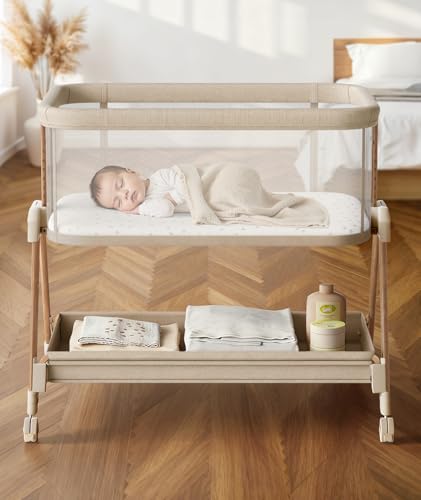 FODOSS Fodoss Baby Bassinets Bedside Sleeper - 3-in-1 Stable Bassinet for…
View on Amazon ↗
 BABYBOND BabyBond Bassinet Bedside Crib, Stable and Secure Crib for Newborns,…
View on Amazon ↗
Listing names and images come from Amazon and are rechecked against the live listings; last checked Nov 8, 2026. No prices shown; the current price is on the listing.
What this guide is. This guide explains bassinet designs and what to check on a listing based on general knowledge of the category. It does not evaluate individual models, so always verify the dimensions, weight limit, and safety standard on the specific listing before buying.