Focus on three things: how a small hand grips it, whether the sound is pleasant at close range, and how the finish holds up to chewing. A lightweight rattle with a slim bar or easy ring suits early grasping. A heavier, multi part rattle suits stronger hands but can frustrate a younger baby. The main tradeoff is between simple, cleanable shapes and detailed, feature rich ones.
Grip Shape Decides Whether It Gets Used
A six month old uses a palmar grasp: fingers wrap around an object and hold it against the palm. A rattle with a bar, slim ring, or rounded handle between 0.75 and 1.25 inches thick is easiest to close fingers around. Check the listing for a handle diameter in that range, or compare it to a marker pen.
Weight matters more than size. A rattle under 1.5 ounces is easy to lift and shake repeatedly. A heavier rattle builds strength but can tire a small arm quickly and gets dropped mid play.
Avoid shapes with a wide ball or block as the only grip point. Those require a more mature pincer or two hand hold and often end up ignored for months.
Sound That Stays Pleasant at Arm's Length
A baby shakes a rattle close to their own ear and yours. The sound level and tone matter more than the number of moving parts. A soft clack from wood beads or a muted bell is easier to tolerate during long floor sessions than a sharp, high pitched rattle.
Compare the sound by reading the listing description: 'soft rattle', 'gentle clatter', or 'muted bell' suggests a lower volume. Avoid rattles described as 'loud', 'bright', or 'crisp' if you plan to use it during quiet times or in a small nursery.
Some wooden rattles use a small internal bell. That adds a clear ring but also a metal part that can rust if the rattle is washed or left wet. Check whether the bell is sealed inside a wooden chamber or exposed.
Finish and Wood Type Against Drool
This product type goes in the mouth. Look for an uncoated hardwood like maple, beech, or birch, or a finish described as food safe, plant based, or natural oil. Avoid painted rattles unless the paint is explicitly certified non toxic and chip resistant.
Splinters come from soft wood, rough edges, or a cracked finish. Run a finger over the listing photos for visible end grain. A smooth, sanded edge on every hole and slot is the detail that separates a safe rattle from a risky one.
Sealed wood wipes clean but can trap moisture under the seal if it chips. Unfinished wood absorbs drool and can stain or swell. Both are fine if you dry the rattle after use and check for rough spots weekly.
Which Designs Fit Which Play Styles
A simple ring rattle works for tummy time: it is easy to grab while lying down, and it rolls a short distance to encourage reaching. A bar rattle with two graspable ends suits a baby who wants to pass it from hand to hand.
A multi disc or bead maze rattle offers more to look at and feel, which helps sensory development, but it is harder to clean and has more joints where moisture can sit. A single bell rattle offers a clear cause and effect: shake it, get a sound.
For a small nursery, a rattle that hangs from a play gym or stroller bar saves floor space, but check the attachment loop. A loop that is too short makes the rattle hard to pull toward the mouth.
The table below compares the main design types by what they do well.
| Design type | Grip ease | Sound level | Cleanup effort | Exploration value |
|---|---|---|---|---|
| Ring or bar | High | Soft clack | Low | Low |
| Single bell | High | Moderate ring | Medium | Medium |
| Multi disc | Medium | Loud clatter | High | High |
| Bead maze | Medium | Soft rattle | High | High |
A rattle that does one thing well often gets more daily use than one that tries to do everything.
Reading a Listing Before You Hand Over Money
Check the exact dimensions of the grip area, not just the overall length. A 6 inch rattle can still have a 2 inch thick ball that defeats a small hand. Compare the handle thickness to a standard wooden spoon handle.
Ask the seller two questions when the listing is unclear: what wood is used, and whether the finish is safe for mouthing. A seller who answers 'natural hardwood' but cannot name the species may be reselling an unbranded import.
Look for a photo of the rattle next to a hand or a common object. That reveals scale better than a product shot on white. If no scale is shown, assume the rattle is larger than it looks.
Check the weight if listed. Under 1.5 ounces is ideal for a six month old. Over 2.5 ounces is better for a baby over eight or nine months who has more arm control.
Who Should Skip a Wooden Rattle
Parents who want a dishwasher safe or boilable toy should choose silicone instead. Wood cannot be sterilized with heat without cracking or warping.
A baby who is teething hard and needs constant pressure may do better with a dedicated teething toy, which is shaped for the gums. A wooden rattle is a play object first, not a pain relief tool. For that need, see teething toy sizing guidance.
If you need a toy that stays quiet in a shared space, a fabric rattle or a soft block makes less noise. Wooden rattles always produce some sound when shaken or dropped.
For a family that travels light, a wooden rattle is durable but adds weight and bulk compared to a foldable fabric toy. It also rolls under car seats and pews.
Care That Keeps Wood From Failing
Wipe with a damp cloth and dry immediately. Soaking, dishwashing, or leaving the rattle in a wet diaper bag causes the wood to swell, crack, or grow mildew in hidden joints.
Re oil unfinished wood every few months with a food safe oil like coconut or mineral oil. That keeps the surface smooth and prevents it from drying out and splintering.
Check the rattle every week by running a finger over every edge and joint. A splinter or crack means the rattle should be retired, not sanded at home, because sanding changes the fit of moving parts.
Never use harsh cleaners or bleach on wood. Residue ends up in the baby's mouth.
Mistakes That Lead to a Rattle in the Toy Box
Buying by cuteness instead of grip. A carved animal rattle with a fat body looks lovely but may be impossible for a six month old to hold.
Assuming all wood is safe. Softwoods like pine dent and splinter. Unlabeled imported wood may have a finish that is not food safe.
Ignoring the sound. A rattle that is pleasant in a store video may be piercing at 6 a.m. In a quiet nursery.
Buying a rattle with small glued on parts. Eyes, ears, or decorative beads that are glued rather than carved or mechanically attached can come off in the mouth.
Wooden Rattle Questions Parents Actually Ask
Is a wooden baby rattle safe for a 6 month old?
Yes, if the rattle is made from a hardwood like maple or beech, has no small glued on parts, and uses a food safe finish. Check that the grip area is between 0.75 and 1.25 inches thick so a six month old can hold it. Avoid rattles with paint that can chip or exposed metal bells that can rust.
Which wooden baby rattle is best for sensory development?
A multi disc or bead maze rattle offers more textures, moving parts, and visual contrast than a simple ring. However, those designs are harder to clean and heavier. A single bell rattle provides clear cause and effect: shaking produces a sound. Pairing a simple rattle with a textured teething toy covers more sensory needs than one complex rattle.
What is the difference between a wooden rattle and a silicone teether?
A wooden rattle is primarily a play object that makes sound and encourages grasping. A silicone teether is designed for gum pressure and can be boiled or chilled. Wood cannot be sterilized with heat. Many parents keep both: a wooden rattle for play and a silicone teether for teething pain.
Should I buy a wooden rattle or a plastic one?
Wooden rattles are quieter, warmer to the touch, and free of plasticizers, but they require more care and cannot be machine washed. Plastic rattles are lighter, often cheaper, and dishwasher safe, but they can be louder and less durable. Choose wood if you want a natural material and are willing to hand wipe it.
How do I clean a wooden baby rattle?
Wipe the rattle with a damp cloth and dry it immediately with a towel. Do not soak it, put it in the dishwasher, or boil it. Re oil unfinished wood every few months with a food safe oil. Check for splinters or cracks weekly and retire the rattle if any appear.
Which Wooden Rattle to Hand Over First
A parent buying for a six month old who is just starting to grasp should pick a lightweight ring or bar rattle under 1.5 ounces with a soft clack sound and a food safe finish. That shape succeeds most often. If the same baby is already teething hard, choose a dedicated teething toy instead and add the rattle a month later when the gums calm down.
Real wooden baby rattle listings, so you can check the points in this guide against actual products. These are affiliate links: as an Amazon Associate we earn from qualifying purchases, at no extra cost to you.
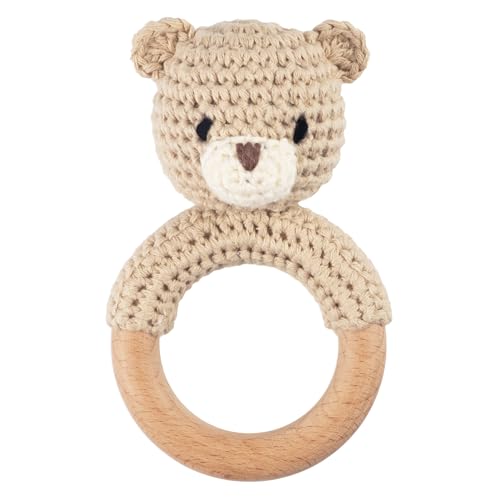 JOLIECRAFT Joliecraft Safari Animals Wooden Baby Rattle Toys Stuffed Crochet Rattle…
View on Amazon ↗
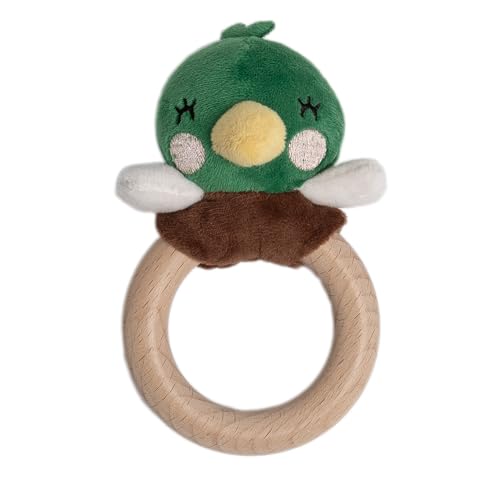 PEARHEAD Pearhead Mallard Duck Wooden Baby Teether | Soft Plush Lovey…
View on Amazon ↗
 LET'S MAKE let's make Wooden Baby Rattle 3 PCS Push Car Rattle…
View on Amazon ↗
Listing names and images come from Amazon and are rechecked against the live listings; last checked Nov 8, 2026. No prices shown; the current price is on the listing.
How to read this guide. This guide covers the wooden baby rattle category as a whole, not any specific model. It is written from general knowledge of how these toys are designed and used; no individual product documents, reviews, or tests were consulted. Check the grip thickness and weight on the listing before buying.