Focus on bowl height, stand stability, and bowl shape. Height should let the cat eat without crouching or stretching, stability matters with enthusiastic eaters, and a shallow, wide bowl protects whiskers. Skip elevated bowls for cats that prefer floor feeding or have mobility limits. The main tradeoff is comfort versus cleanup effort.
Start With the Height That Matches Your Cat's Frame
A bowl that sits too low makes a cat hunch and swallow awkwardly. One that sits too high forces stretching. Look for a rim height roughly level with the cat's lower chest or elbows. Compare the listed height to your cat's front leg length before buying.
Most adult cats do well with a rim 4 to 6 inches off the floor. Larger breeds may need more, smaller cats less. If your cat is still growing or you have multiple cats of different sizes, an adjustable stand gives more flexibility.
For senior pets, a modest lift often reduces neck and joint strain. But too much lift can make stepping up to the bowl harder. A small step or a low platform can help in multi pet homes where one cat needs a boost and another does not.
Stand Stability Decides Whether the Bowl Stays Put
A lightweight stand slides across the floor or tips when a cat leans in. Check the base width and overall weight in the listing. Wider, heavier bases resist nudging better. Rubber feet or a non slip bottom add friction on tile or wood floors.
For busy owners, a bowl that stays put means less mess to clean after each meal. For multi pet homes, a stable stand prevents one cat from knocking over another's food. Look for a low center of gravity rather than a tall, narrow design.
Some stands have a lip or recess that holds the bowl in place. That helps when a cat pushes food around. Check whether the bowl sits flush or wobbles inside the stand.
Bowl Shape and Depth Affect Whisker Comfort
Deep, narrow bowls press against a cat's whiskers and can cause whisker fatigue. A shallow, wide bowl lets the cat eat from the center without touching the sides. Look for bowls with a wide opening and gently sloped sides.
Stainless steel is easy to sanitize and resists odors. Ceramic is heavier and less likely to slide, but it can chip. Plastic is light and cheap, yet scratches can harbor bacteria. Choose a material you can clean thoroughly.
Some elevated bowls have a slight tilt. That can help a cat reach the last bits of food, but it may also cause wet food to slide. Compare the inside slope and depth in the product photos.
Design Types Trade Comfort Against Cleanup
| Design type | Posture support | Cleanup effort | Suits |
|---|---|---|---|
| Fixed low stand | Minimal lift | Very easy | Cats that prefer floor level |
| Adjustable height | Finds the right lift | Moderate | Growing or multi cat homes |
| Tilted bowl | Aids neck angle | Moderate | Cats that leave food at the back |
| Full dining station | Best ergonomics | More parts | Owners who want storage too |
A fixed low stand is usually the simplest to wipe down. An adjustable stand has more joints and crevices. A full dining station with storage adds drawers or shelves that collect crumbs and fur.
For small kitchens, a compact fixed stand takes less counter or floor space. For travel, a foldable or one piece stand packs better than a bulky station.
Skip Elevated Bowls When Your Cat Disagrees
Not every cat accepts a raised bowl. Some cats prefer to crouch and eat from the floor. If your cat already eats comfortably from a low dish, an elevated bowl may not add value.
Cats with arthritis or limited mobility may find stepping up to a higher bowl harder. A bowl placed on the floor or on a very low mat can be easier. Watch how your cat approaches food before switching.
For travel, a collapsible bowl on the ground is often more practical than carrying a stand. For busy owners, a simple floor bowl is quicker to refill and wash. Consider the alternatives in other pet feeding guides if an elevated bowl does not fit your situation.
Materials and Care Costs Add Up Over Time
Stainless steel bowls usually last longest and resist rust. Ceramic bowls can break if dropped. Plastic bowls wear down and may need replacing sooner. Compare the material of both the bowl and the stand.
Dishwasher safe bowls save time. Some stands are not dishwasher safe and must be wiped by hand. Check the listing for care instructions before you buy.
Replace bowls when they show deep scratches or cracks. For ceramic, check for chips that can hold bacteria. A worn plastic bowl should be swapped for a new one rather than deeply scrubbed.
Read the Listing for the Numbers That Matter
Look for the rim height, bowl diameter, and bowl depth in the product details. If those numbers are missing, ask the seller before ordering. A photo alone can mislead you about scale.
Check the stand's base width and weight. A listing that only shows a side view hides how stable the stand is. Look for a top down or angled photo that shows the footprint.
Confirm the bowl is removable and how it locks into the stand. A bowl that is hard to remove makes cleaning slower. For multi pet homes, see if extra bowls can be purchased separately.
Common Mistakes That Send a Bowl Back
Buying the tallest stand without measuring the cat is the most common error. A bowl that is too high can cause more strain than a floor bowl. Measure your cat's chest height and compare it to the rim height.
Choosing a narrow, deep bowl because it looks neat is another mistake. Cats prefer wide, shallow openings. A deep bowl can make a cat stop eating before it is full.
Ignoring the stand's stability because the bowl looks pretty leads to spills. A heavy ceramic bowl on a light wooden stand can still tip. Check the total weight and base width together.
Which Features Actually Help and Which Are Noise
Height adjustment matters when you have multiple cats or a growing kitten. A tilt can help a cat with a flat face reach food. Non slip feet matter on hard floors. Those are practical features.
Built in storage sounds useful but often adds bulk and cleaning work. Decorative paws or engraved names do not change how the cat eats. Focus on the bowl and stand, not the extras.
Antibacterial claims on plastic bowls are hard to verify. A smooth, non porous surface like stainless steel or glazed ceramic is easier to keep clean. Marketing language about posture benefits should be checked against the actual height and angle.
Questions Buyers Ask About Elevated Cat Bowls
Is an elevated cat bowl better for digestion?
There is no strong evidence that raising a bowl improves digestion for most cats. The main benefit is posture comfort, especially for older cats or those with neck or joint issues. A modest lift can reduce hunching. But if the bowl is too high, it can make eating harder. Match the height to your cat's chest.
Which elevated cat bowl is best for a senior cat?
For a senior cat, look for a low to moderate lift, around 4 to 5 inches for most adults. A wide, shallow bowl reduces whisker contact and makes food easier to reach. A stable stand with non slip feet prevents sliding. Avoid tall stands that require stepping up, which can be painful for arthritic cats.
What is the right height for an elevated cat bowl?
The rim should sit roughly level with the cat's lower chest or elbows. For most adult cats that is 4 to 6 inches off the floor. Measure your cat while it stands. If the bowl is too low, the cat hunches. If too high, the cat stretches. Adjustable stands help if you are unsure.
Should I buy an elevated cat bowl for a multi pet home?
An elevated bowl can help if one cat needs a lift and another does not, but you may need separate feeding spots. A stable stand prevents one cat from tipping another's food. If your cats eat at different heights, consider two bowls at different levels rather than forcing both to use the same stand.
Is it worth paying more for a ceramic elevated bowl?
Ceramic is heavier and more stable than plastic, and it resists odors. But it chips and breaks if dropped. Stainless steel is lighter, nearly unbreakable, and easy to sanitize. Pay more for ceramic only if you want the weight and look. Otherwise stainless steel with a sturdy stand is a better value.
What to Pick for Your Cat's Eating Style
A cat that eats calmly and has no mobility issues does well with a fixed stand about 5 inches high, a wide stainless steel bowl, and a non slip base. That setup is easy to clean and stable enough for daily meals. For a multi cat home with different sizes, or a kitten still growing, an adjustable height stand with a removable bowl is the better pick. It costs a bit more and has more parts to wipe, but it adapts as your cats change. Skip the elevated bowl entirely if your cat already eats comfortably from the floor.
Real elevated cat bowl listings, so you can check the points in this guide against actual products. These are affiliate links: as an Amazon Associate we earn from qualifying purchases, at no extra cost to you.
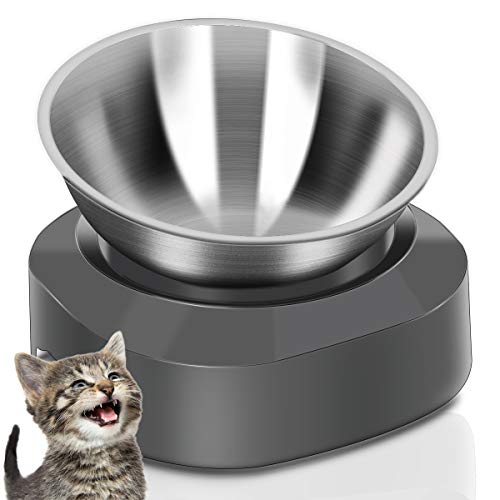 AYADA AYADA Raised Cat Food Bowl Stainless Steel 15 Degree Tilt…
View on Amazon ↗
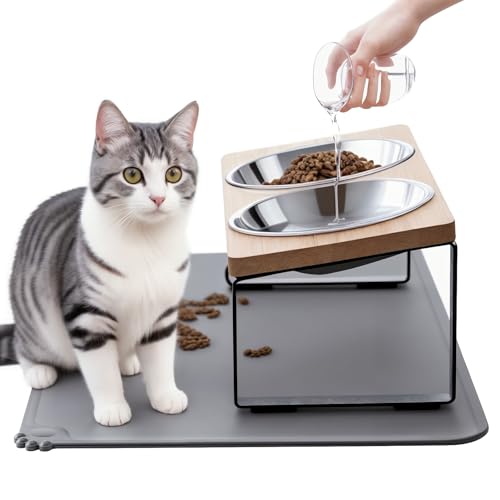 SUMMARK Upgraded Elevated Cat Bowls with Food Mat,15°Tilted Stand Anti Vomiting…
View on Amazon ↗
 WELLBRO Wellbro Elevated Cat Bowls, Wide Stainless Steel Cat Food Bowls…
View on Amazon ↗
Listing names and images come from Amazon and are rechecked against the live listings; last checked Nov 8, 2026. No prices shown; the current price is on the listing.
About this guide. Use this guide as a checklist to hold against any elevated cat bowl listing. It is written from general category knowledge, not from testing individual models, so verify each dimension and material on the product page before you order.