Focus on cable length, head shape, and drum type. A short sink auger clears traps and branch lines but cannot reach a main sewer clog. A longer drum auger handles main lines but is unwieldy under a bathroom sink. Buy the smallest tool that reaches your clog.
Match the Reach to the Drain
Cable length is the first filter. A bathroom sink trap sits two to three feet from the drain opening. A tub drain may run four to six feet to its trap. A kitchen sink branch line can run ten to fifteen feet before joining the main stack. A toilet or main line clog can sit fifty feet or more down the pipe.
Buying more length than you need creates a handling problem. The extra cable coils, kinks, and fights you inside a small cabinet. Buying too little length means the head never touches the clog. Compare the distance from the drain opening to the likely blockage, then add a foot or two of working slack.
For sinks and tubs, a 15 to 25 foot cable usually covers the trap and the first section of branch line. For floor drains and cleanouts that lead to the main sewer, look for 50 feet or more, often in a sectional design that lets you add cable as you go.
- Sink or tub trap: 15 to 25 feet is enough.
- Kitchen branch line: 25 to 50 feet reaches the stack.
- Main line or cleanout: 50 feet or more, often sectional.
Head Shape Does the Actual Clearing
The head at the end of the cable determines what the auger can do. A bulb or corkscrew head is the standard choice for hair, soap scum, and paper clogs inside a pipe. It bores into the blockage and pulls it back out. A cutter head, often called a spade or sawtooth cutter, is meant for roots and hard deposits in larger lines. It cuts through material but can damage soft or old pipes if used carelessly.
A drop head or funnel head helps the cable navigate a sharp turn, such as a tub drain with a tight P trap. A straight coil head works in straight runs but can hang up on bends. Check the listing for the head style and match it to the material you expect to remove.
Some augers include interchangeable heads. That adds flexibility but also adds cost and a small part to lose. If you only clear one type of drain, a fixed head is simpler.
- Bulb or corkscrew head: hair, soap, paper.
- Cutter or spade head: roots, hard scale, larger pipes.
- Drop head: navigates tight P traps and bends.
Drum, Canister, or Hand Spinner
| Design | Cable control | Best for | Main drawback |
|---|---|---|---|
| Hand spinner | Manual, limited | Sink and tub traps | Short reach, wrist fatigue |
| Drum auger | Smooth feed | Sinks, tubs, branch lines | Heavier, more storage space |
| Power drill auger | Variable speed | Long branch lines | Can kink cable under torque |
| Sectional machine | Add sections as needed | Main sewer lines | Heavy, slow setup |
A drum auger holds the cable inside a rotating drum. Turning the handle feeds cable out and pulls it back without the cable coiling on the floor. This is the most controlled design for a homeowner clearing a sink or tub. A canister style is similar but lighter and often cheaper, though it may not feed as smoothly.
A hand spinner is a plastic or metal housing the size of a large salt shaker. It holds six to ten feet of thin cable. It clears a pop up stopper or a sink trap but nothing deeper. A power drill auger attaches to a cordless drill and can drive 25 feet or more of cable, but the drill's torque can kink the cable if it hits a hard stop.
Manual Effort Versus Powered Speed
Manual augers cost less and give you direct feel for what the cable hits. That feel helps you tell a bend from a blockage. The tradeoff is wrist and forearm fatigue, especially in a long run or a tough clog.
A drill powered auger removes most of the physical work. The drill spins the cable while you control feed pressure. The risk is losing that tactile feedback. A drill can push a cable past a bend or into a pipe joint before you notice resistance.
For occasional sink and tub clogs, a manual drum auger is enough. For a house with recurring kitchen line clogs or a long branch run, a drill powered model saves time and effort. If you have a main line that clogs more than once a year, a sectional machine or a plumber is the practical answer.
What Actually Matters in a Listing
Check the cable diameter. Thinner cables, around 1/4 inch, fit sink and tub drains and navigate tight bends. Thicker cables, 3/8 inch or 1/2 inch, are for toilets, floor drains, and main lines. A cable that is too thick will not fit through a sink strainer or a pop up assembly.
Look at the cable material. Most cables are spring steel, which flexes without kinking. Some are coated to resist rust. A bare steel cable left wet will rust and shed flakes inside the drum. Rinse and dry the cable after each use.
The grip matters more than it looks. A rubberized grip or a T handle gives you leverage when the head bites into a clog. A small plastic handle is fine for a six foot spinner but not for a 25 foot drum.
Ignore marketing phrases like 'unbreakable cable' or 'clears any clog'. No cable is unbreakable, and no auger clears every clog. What matters is the length, the diameter, the head shape, and whether the drum feeds smoothly.
When a Plunger or a Plumber Is the Better Call
A plunger clears clogs near the drain opening by pushing and pulling water. A drain auger clears clogs the plunger cannot reach. If a sink, tub, or toilet drains slowly but not fully blocked, try a plunger first. If the plunger fails or the clog returns, an auger is the next step.
Skip the auger if the clog is in a main line under a slab or outside the house. Those clogs often need a larger machine with a root cutter, or a plumber with a camera to find the actual problem. Using a small auger on a main line can push the clog farther down or wrap the cable around a root.
Also skip the auger if you have old galvanized pipes or fragile fixtures. A cutter head can scratch or break old pipe. In those cases, a plumber with the right equipment is cheaper than repairing a cracked line.
For electricians and kitchen or bathroom renovations, a drain auger is a useful support tool but not a substitute for proper drain layout. A renovation that repeatedly clogs usually has a slope or venting problem, not a blockage an auger can fix.
Care That Keeps the Cable Working
Rinse the cable with clean water after every use, especially if you cleared a kitchen line with grease. Let it dry before you retract it into the drum. Grease and soap left on the cable harden and make the next feed sticky.
Wipe the drum interior with a dry cloth occasionally. Check the cable for kinks or flattened spots. A kinked cable will not feed smoothly and can snap under torque. If you see a kink, replace the cable rather than trying to straighten it.
Store the auger hanging or on its side in a dry place. Standing it on the drum can bend the cable where it exits the housing. A light coat of machine oil on the cable, wiped off before use, slows rust on bare steel.
Storage and Handling Shape the Choice
A 50 foot sectional machine takes up real floor space and weighs more than a person wants to carry up basement stairs. A 25 foot drum auger hangs on a garage hook. A hand spinner fits in a bathroom vanity drawer.
Think about where you will store the tool and how often you will carry it. A tool that is too heavy to lift out of a basement will not get used when a clog happens at 9 p.m. A tool that is too small will not clear the clog you bought it for. Choose the smallest auger that reaches your longest likely drain run, then make sure you have a dry place to keep it.
Questions That Come Up Before You Buy a Drain Auger
How do I know what length drain auger I need?
Measure from the drain opening to the likely clog. A sink or tub trap is usually within six feet. A kitchen branch line can run 15 to 25 feet to the stack. A main line from a cleanout can be 50 feet or more. Add a foot or two of slack, and choose the shortest cable that reaches.
Can a drain auger damage my pipes?
A bulb or corkscrew head is gentle on pipes when used slowly. A cutter head can scratch or crack old galvanized or fragile plastic pipe. A drill powered auger can push a cable through a joint if you do not stop at resistance. Use the mildest head that clears the clog and stop when you feel hard resistance.
What is the difference between a drain auger and a plumbing snake?
The terms are often used for the same tool. In practice, a drain auger usually means a self contained drum or canister with a crank handle. A plumbing snake can mean a bare cable you feed by hand or a larger machine. For a homeowner, a drum auger is the more controlled choice for sinks and tubs.
Is a drill powered drain auger worth the extra cost?
It is worth it if you clear a long kitchen branch line or a recurring tub clog several times a year. The drill does the spinning and you only control feed pressure. For a single sink trap clog, a manual hand spinner or short drum auger costs less and gives better feel for what the cable hits.
Which drain auger works for a toilet?
Use a closet auger, which has a short rigid section and a protected bend to fit the toilet trap. A standard sink auger can scratch the porcelain or get stuck in the trap. A closet auger reaches the toilet's internal trap without damaging the bowl.
A Simple Pick for Sinks and Tubs
Someone clearing a slow bathroom sink or tub a few times a year should buy a manual drum auger with a 25 foot cable and a bulb head. It reaches past the trap, feeds without tangling, and stores on a hook. If your clogs are in a long kitchen branch line or a floor drain, choose a drill powered auger with at least 50 feet of cable instead.
Real drain auger listings, so you can check the points in this guide against actual products. These are affiliate links: as an Amazon Associate we earn from qualifying purchases, at no extra cost to you.
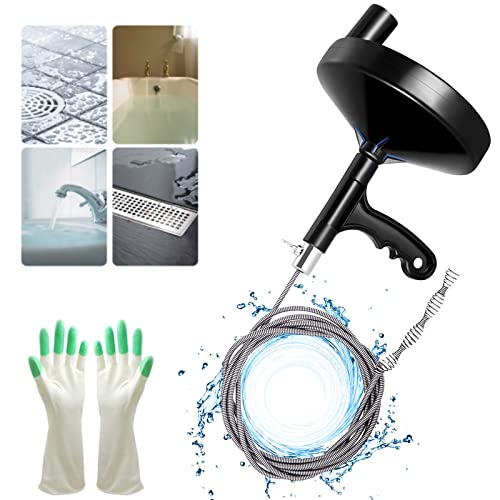 DRAINSOON Drain Auger 25 Ft with Gloves, Heavy Duty Plumbing Snake…
View on Amazon ↗
 BACEYIOU Drain Auger, Clog Remover with Drill Adapter, 25 Feet Flexible…
View on Amazon ↗
 COBRA Cobra 84250 84000 Drum Auger, for Use with Most Sink,…
View on Amazon ↗
Listing names and images come from Amazon and are rechecked against the live listings; last checked Nov 8, 2026. No prices shown; the current price is on the listing.
What this guide is. This guide covers the drain auger category as a whole, explaining cable length, head shape, and drum design without naming individual models. It is written from general category knowledge, and you should verify any dimension or material on the product listing before buying.