The two things that decide most of this purchase are where you will use the bowl and how much it must hold. A soft silicone bowl works for walks and shoulder bags, while a stiffer bowl with a wide base suits car travel and multi pet homes. The main tradeoff is packability against stability: the smallest bowls tip most easily.
Where You Use It Changes the Whole Design
A bowl clipped to a leash for a 20 minute walk has different needs from one that lives in a car door pocket for weekend trips. For walks, pick the lightest bowl that folds small enough to ignore. For car travel, prioritize a wide base and a rim that keeps its shape so water does not slosh onto the seat.
Small kitchens and apartments push the same logic: the bowl should nest or fold down to almost nothing. A bowl that stays on the floor as a full time water dish is a different purchase from a bowl that appears only at meals. Decide which job comes first.
Multi pet homes add a second constraint. Two dogs sharing one bowl means more volume and more bumps. Look for a bowl with a low center of gravity and a lip that resists folding when a snout pushes against it.
- Walks and day hikes: smallest packed size, clip or carabiner loop
- Car travel: wide base, stiff rim, easy to wipe dry
- Home use in a small kitchen: folds or nests, but stable enough for daily meals
- Multi pet homes: larger capacity, low and wide, harder to knock over
Capacity Before Cuteness
A bowl that holds less than a cup of water will frustrate a thirsty medium dog. For walks under an hour, 12 to 24 ounces is often enough. For long hikes, car trips or two pets, look for 32 ounces or more. Compare the listed capacity to the amount your pet drinks in one sitting.
Food bowls need less volume than water bowls, but the same rule applies: a bowl too small means a second pour, which is awkward on a trail. Check the listed volume and picture the food amount your pet gets at a meal.
Senior pets may drink more often and may not want to bend far. A larger bowl that stays full longer can help, and a bowl with a slightly raised or rigid rim is easier for a stiff neck to reach without collapsing the side.
The Rim Decides Most Spills
The weakest point on a collapsible bowl is where the wall meets the air. A floppy rim folds under a dog's chin and dumps the water. A stiffer rim, sometimes reinforced with a plastic or metal ring, holds the opening round while the lower body flexes.
Check how the bowl is described. A bowl with a 'rigid rim' or 'structured top' will resist collapse better than a plain silicone cup. The tradeoff is packability: a stiffer rim does not fold into as small a disc.
Some bowls use a drawstring or clip to hold the rim open. That works, but it adds a step and can pinch fingers. A naturally stiff rim is the simplest way to keep water where it belongs.
Silicone, Fabric or Hard Shell: Three Ways to Fold
| Bowl style | Packed size | Stability | Cleanup | Best for |
|---|---|---|---|---|
| Soft silicone | Smallest | Low | Easy rinse | Walks, day hikes, shoulder bags |
| Fabric with liner | Small | Low to medium | Wipe or rinse | Light travel, occasional use |
| Rigid rim silicone | Medium | Medium to high | Easy rinse | Car trips, meals on the go |
| Hard shell folding | Largest | High | Dishwasher safe | Multi pet homes, long stays |
Soft silicone bowls are the classic design and the most packable. They also tip most easily. A fabric bowl with a waterproof liner packs slim and weighs almost nothing, but the liner can hold odors and the bowl needs a flat surface.
A rigid rim silicone bowl splits the difference: it folds partway but keeps its mouth open. A hard shell folding bowl is the most stable and often dishwasher safe, but it takes real space in a bag. Match the style to your main use case.
What to Check on the Listing
Start with the folded and open dimensions, not just the volume. A 24 ounce bowl can fold to a half inch disc or a two inch puck depending on the rim and base. Look for listed measurements and picture where it will ride: a jacket pocket, a dog walking bag, a glovebox.
Check the material grade. Food grade silicone is the standard for soft bowls. For fabric bowls, look for a removable or sealed liner. For hard shells, check whether the hinges and seals are dishwasher safe. If the listing does not say food grade or BPA free, ask the seller before buying.
The clip or carabiner loop matters more than it looks. A loop sewn into the rim lets you hang the bowl wet without it falling. A separate carabiner that clips through a small hole is fine, but a flimsy loop can tear.
Ask the seller two questions when in doubt: whether the bowl stands on grass or only on hard floors, and how it is meant to be dried. A bowl that traps water in seams will mildew in a backpack.
Cleanup and Long Term Costs
Collapsible bowls need more cleaning than a ceramic bowl because they spend time in bags and cars. Soft silicone rinses clean and dries quickly. Fabric liners can hold smells, so look for a removable liner or plan to hand wash it after wet food.
Hard shell bowls often go in the dishwasher, which is a real advantage for daily use. Check the hinge area: a bowl with a removable hinge or a simple clamshell design cleans more easily than one with hidden crevices.
There is no ongoing consumable cost for most bowls, but a fabric liner may need replacing after a year of heavy use. A silicone bowl can last for years if it is not chewed. The main long term cost is replacing bowls that tip over and spill, so spending a little more on a stable rim often pays off.
Mistakes That Send Bowls Back
Buying the smallest bowl for the biggest dog is the most common error. A toy breed can drink from a cup sized bowl, but a retriever needs real volume. Check the listed capacity against your pet's thirst, not against the product photos.
Assuming every collapsible bowl stands up outdoors is another mistake. Many soft bowls fold when set on grass or gravel. If you plan to use it on trails, look for a bowl described as having a rigid rim or a wide, weighted base.
Ignoring the clip or loop seems minor until the bowl is wet and you have to put it back in a pocket. A bowl with a good hanging point is easier to live with than one you have to carry in your hand.
When to Skip a Collapsible Bowl
If your pet eats and drinks only at home, a regular stainless steel or ceramic bowl is easier to clean and more stable. Collapsible bowls make sense when space or portability matters, not as a permanent home dish.
For a pet that chews, a soft silicone bowl may not survive. A hard shell folding bowl is more resistant, but even those have plastic hinges. A wider range of pet feeding gear includes chew resistant alternatives.
For air travel with a nervous pet, a bowl that collapses at the wrong moment can add stress. In that case, a small rigid bowl or a bowl designed for crate use may be more reliable than the most packable option.
Collapsible Bowl Questions Worth Asking
Is a collapsible pet bowl worth it?
It is worth it if you regularly feed or water your pet away from home. The bowl pays off on walks, hikes, car trips and hotel stays. If your pet only eats at home, a standard bowl is cheaper and more stable.
What is the best material for a collapsible pet bowl?
Food grade silicone is the best general choice because it is light, folds small and rinses clean. Hard shell bowls clean better and stand up to chewing, but they weigh more and pack larger. Fabric bowls are lightest but hold odors.
Which collapsible pet bowl is best for a car?
Look for a rigid rim or a hard shell bowl with a wide base. These stay open on car seats and mats and do not slosh water when the car moves. A soft silicone bowl is too floppy for most car use.
How do I clean a collapsible pet bowl?
Rinse a silicone bowl with hot water and mild soap after each use, then let it dry fully before folding. Hard shell bowls are often dishwasher safe. For fabric bowls, remove the liner if possible and wash it by hand to avoid mildew.
Can I use a collapsible bowl for food and water?
Yes, but rinse it between uses. Food residue can sour in folds and seams. If you often switch between food and water, pick a bowl with a smooth interior and no hidden crevices.
Which Collapsible Bowl Fits Your Routine
Someone who walks a medium or large dog a few times a week and wants a bowl that disappears into a pocket should start with a food grade silicone bowl around 24 ounces with a built in hanging loop. It packs smallest and rinses fastest. The wrong choice for that buyer is a hard shell bowl, which is too bulky for a casual walk. A family that keeps a bowl in the car for two dogs should instead pick a rigid rim or hard shell bowl around 32 ounces so water stays put on the seat.
Real collapsible pet bowl listings, so you can check the points in this guide against actual products. These are affiliate links: as an Amazon Associate we earn from qualifying purchases, at no extra cost to you.
 KURGO Kurgo Collaps-A-Bowl, Barn Red | Collapsible Travel Dog Bowl, Holds…
View on Amazon ↗
 PETBONUS PetBonus 2-Pack Silicone Collapsible Dog Bowls, BPA Free Dishwasher Safe,…
View on Amazon ↗
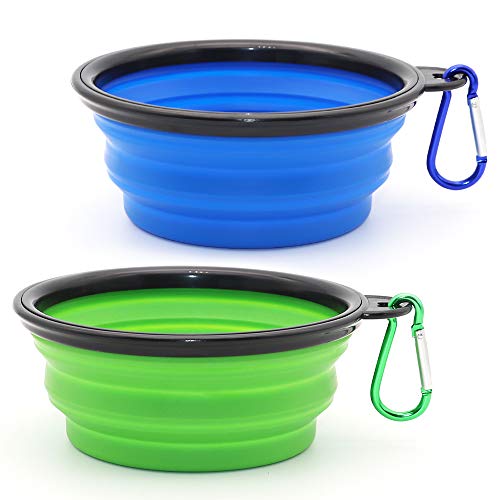 SLSON Dog Bowl Pet Collapsible Bowls, 2 Pack for Cats Dogs,…
View on Amazon ↗
Listing names and images come from Amazon and are rechecked against the live listings; last checked Nov 8, 2026. No prices shown; the current price is on the listing.
About this guide. This guide is written from general knowledge of how collapsible pet bowls are designed and used, not from testing individual products. It cannot tell you whether a specific listing's dimensions or material claims are accurate, so check those on the product page before buying.