A cat window perch works when the mount fits your window and the pad feels secure to your cat. Start with the mounting type: suction cups, a sill support, or a frame that clamps to the wall. Then check the weight limit and the pad material. Buyers in rentals or small apartments often prefer suction or sill mounts, while heavier or multiple cats need a reinforced frame. The main tradeoff is between easy installation and long term stability.
The Mount Decides Whether the Perch Stays Put
Three mounting styles dominate cat window perches. Suction cup models press directly onto the glass and are the easiest to move. They work best on large, clean, single pane windows. Check that the cups are thick and that the perch has four cups or more, because each cup adds holding surface.
Sill mounted perches rest on the window sill and often add a small support leg against the wall below. They do not rely on suction, so they can hold more weight. However, they only work if your sill is deep enough and the window frame allows the perch to sit level.
Frame mounted perches screw into the wall studs or window frame. They are the most secure option for heavy cats or multiple cats. The tradeoff is installation: you need tools, and the perch leaves holes if you remove it. Renters should check their lease before choosing this style.
| Mount type | Holding strength | Installation | Best for |
|---|---|---|---|
| Suction cup | Moderate | Tool free, removable | Small cats, renters |
| Sill mount | Good | No drilling, sits on sill | Medium cats, deep sills |
| Frame mount | High | Screws into wall | Heavy or multiple cats |
Match the mount to your window, not just your cat. A window with a narrow sill or a sliding pane may rule out a sill mount. A window with a textured or tinted film may not hold suction cups well.
Weight Limits and How Cats Actually Use a Perch
A listed weight limit is a static number. A cat jumping onto the perch adds force beyond its body weight. For a single average cat, look for a perch rated for at least double the cat's weight. For multiple cats, add their weights together and double that.
Senior cats and indoor cats may use the perch more gently, but a playful jump still stresses the mount. Busy owners should not have to reattach a perch every day, so a higher weight rating also means less maintenance.
If the perch will hold two cats at once, the pad must be wide enough for them to share without pushing each other off. A narrow perch invites conflict and falls.
Pad Materials and the Comfort That Keeps a Cat Coming Back
The pad is what your cat feels for hours. A soft fleece or plush cover encourages longer lounging. A thin foam pad over a hard board may be fine for short sunbathing but uncomfortable for all day naps.
Removable, machine washable covers matter more than the outer fabric. Cat hair and occasional accidents build up. A cover you can unzip and wash keeps the perch from becoming a smelly spot your cat avoids.
Look for pads with a non slip base or straps that hold the pad to the board. If the pad slides when the cat jumps on, the perch feels unstable even when the mount is secure.
- Plush or fleece top for warmth and grip
- Removable cover for washing
- Non slip base or straps to keep the pad in place
Small Apartments and the Space a Perch Saves
A window perch gives an indoor cat vertical space without taking up floor area. In a small apartment, that is the main appeal. A cat tree may not fit, but a perch uses the window as a shelf.
Check the perch depth and width against your window. A perch that blocks the window from closing is a problem. A perch that covers the window latch makes the window unusable.
For busy owners, a perch provides passive entertainment. A cat can watch birds and street activity while you are away. Place it near a window with real activity, not a blank wall or an air shaft.
The View and the Sunlight Decide Whether Your Cat Uses It
Cats choose a perch based on what they can see and feel. A window facing a bird feeder, a tree, or a busy sidewalk gets more use than a window facing a quiet wall. Sunlight also matters, especially in cooler months.
A perch that gets direct afternoon sun may become too hot in summer. Check whether the pad material breathes or traps heat. A removable pad lets you swap in a cooler cover for warm weather.
Some cats prefer height for security. A perch mounted higher on the window gives a better view and feels safer. But a senior cat or a cat with mobility issues may struggle to reach a high perch. Mount it at a height your specific cat can access without strain.
Installation Mistakes That Send a Perch to the Floor
The most common mistake is mounting a suction cup perch on a dirty or textured window. Clean the glass with rubbing alcohol and let it dry before pressing the cups on. Even a little dust or grease breaks the seal.
Another mistake is ignoring the weight distribution. A perch that tilts forward under a cat's weight puts all the stress on the front edge. Check that the support arm or suction cups are spaced to keep the platform level.
Some buyers mount the perch too close to a curtain or blind. The cat's claws catch the fabric, or the blind blocks the view. Leave clearance around the perch so the cat can jump on and off without obstacles.
Reading a Listing Before You Buy
Start with the mount type and the weight limit. If the listing does not state a weight limit, ask the seller. A vague claim like 'holds most cats' is not a specification.
Check the perch dimensions against your window. Measure the glass width and the sill depth. A perch that is too wide for the glass will not sit flat, and a perch that overhangs the sill will feel unstable.
Look at the materials in the photos. Thin plastic brackets and small suction cups are signs of a weaker mount. Thick metal brackets and large, deep suction cups suggest better holding power.
Ask the seller about the window types the perch works with. Some suction cups fail on double pane or low E glass. Some sill mounts need a sill at least a certain depth. A good listing will state these limits.
When a Window Perch Is Not the Answer
Skip a window perch if your windows are small, high, or covered with blinds that cannot be opened. A perch needs a clear, accessible window to work. Without that, it becomes an unused shelf.
If your cat is very large or you have several heavy cats, a window perch may not hold them safely. In that case, a floor cat tree or a wall mounted shelf system is a better choice. Compare the weight ratings honestly before you buy.
Renters who cannot drill and have no deep sill may find that suction cups are the only option. But suction cups need regular re pressing. If you are not home to check them, a floor perch or a cat tree may be more reliable.
Cat Window Perch Questions, Answered
Is a cat window perch safe for my cat?
A window perch is safe when the mount matches the window and the weight limit covers your cat's weight plus jump force. A suction cup perch can fail if the glass is dirty or the cups are old. Check the cups weekly and replace them if they look cracked or stiff. A frame mount is the safest for heavy cats, but it requires proper installation.
Which cat window perch is best for multiple cats?
For multiple cats, choose a frame mounted perch or a sill mount with a high weight limit. Add the cats' weights together and double that number to find a safe rating. The perch should also be wide enough for two cats to sit without conflict. Suction cup models usually hold less weight and are riskier for multiple cats.
What is the difference between suction, sill, and frame mounts?
Suction cup mounts press onto the glass and are tool free but hold less weight. Sill mounts sit on the window sill and often add a support leg, holding more weight without drilling. Frame mounts screw into the wall or window frame and are the most stable. Choose based on your window type, your cat's weight, and whether you can drill holes.
Should I buy a cat window perch for a senior cat?
Yes, if you mount it low enough for the cat to reach without a difficult jump. A senior cat may avoid a perch that is too high or that wobbles on landing. Choose a perch with a soft, thick pad and a stable mount. A ramp or a nearby step can help a senior cat get up and down safely.
How do I keep a suction cup cat perch from falling?
Clean the window glass with rubbing alcohol and let it dry completely. Press each suction cup firmly from the center outward to remove air bubbles. Re press the cups every few weeks, because temperature changes can loosen them. If the cups are old or stiff, replace them. Avoid mounting on textured or tinted glass.
Which Perch Fits Your Window and Your Cat
A renter with one small cat and a clean, large window gets the most from a suction cup perch with a washable fleece pad. It installs in minutes and leaves no marks. A household with two heavy cats or a deep window sill should instead choose a sill mounted perch with a support leg and a high weight limit, because it holds more weight without the risk of suction failure.
Real cat window perch listings, so you can check the points in this guide against actual products. These are affiliate links: as an Amazon Associate we earn from qualifying purchases, at no extra cost to you.
 ZAKKART Zakkart SnugCloud Foldable Cat Window Perch (Cream White, M) |…
View on Amazon ↗
 ZORATOO Zoratoo 2PC Cat Window Perch, Foldable & Cordless with Metal…
View on Amazon ↗
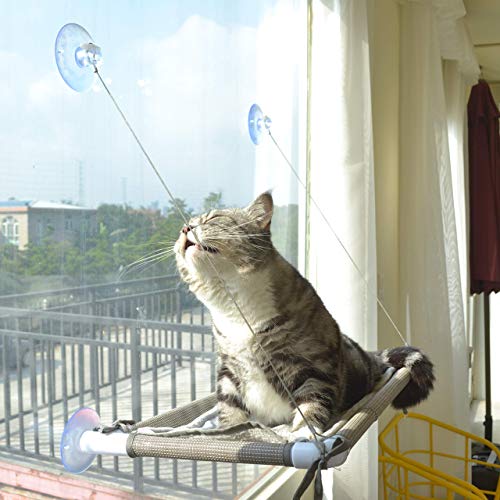 PEFUNY PEFUNY Cat Window Hammock – Mess-Free Waterproof Cats Window Perch…
View on Amazon ↗
Listing names and images come from Amazon and are rechecked against the live listings; last checked Nov 8, 2026. No prices shown; the current price is on the listing.
About this guide. Use this guide as a checklist to hold against any listing you open. It describes the category, not individual models, and no product documents, reviews, or tests were used, so you should verify every dimension and weight limit on the seller's page.