Start with the sound the fountain makes, because a motor hum or splashing water decides whether your cat approaches it and whether you tolerate it in your home. Then weigh cleaning effort against water capacity. A quiet, easy to rinse model suits most indoor cats, while a larger, noisier fountain works for a busy owner with multiple cats.
Noise Comes From Three Separate Parts
A cat water fountain makes sound in three places: the pump motor, the falling water, and the filter or reservoir. Compare the listing's decibel rating if one is given, but treat that number as a starting point because it is often measured in a quiet room at a set distance.
Submersible pumps tend to run quieter than external ones, but any pump gets louder as water drops below the minimum line. A low water level exposes the impeller and creates a rattle or hum. Check whether the listing states a minimum fill line and whether the pump shuts off automatically when water runs low.
The water path matters as much as the motor. A gentle slide down a ramp is quieter than a stream that falls several inches into a pool. If the fountain will sit in a bedroom or a studio apartment, favor a design where water touches a surface quickly rather than free falling through air.
Cleaning Effort Is the Cost You Pay Every Week
Every fountain needs a full clean at least once a week. Bacteria grows in standing water, and cat saliva accelerates the slime that forms on plastic, ceramic, and stainless steel surfaces. The difference between designs is how many parts you must take apart and scrub.
A basic bowl with a small pump may have only two or three pieces. A multistage tower can have a reservoir, a lid, a spout, a ramp, a filter housing, and a pump with a foam guard. Each crevice can harbor biofilm, and a dishwasher safe design reduces the friction of weekly cleaning.
Check the listing for how the pump opens. Some pumps have a snap off faceplate that exposes the impeller; others require a screwdriver or a firm twist. If the pump is difficult to open, you will clean it less often, and the fountain will get louder and dirtier over time.
The Water Path Shapes How Much Your Cat Drinks
Cats notice moving water, but not every moving pattern appeals to every cat. A bubbling top, a falling stream, and a shallow slide each attract different temperaments. A timid cat may avoid a tall falling stream because the splashing feels unpredictable, while a curious cat may bat at it and drink more.
A shallow, wide drinking area lets a cat drink without its whiskers touching the sides. Whisker fatigue makes some cats stop drinking from narrow bowls. Fountains with a broad basin or a gentle ramp reduce that pressure and may encourage a senior cat or a flat faced breed to drink longer.
The stream height also affects evaporation and splatter. A tall stream aerates the water and can cool it slightly, but it splashes more and leaves mineral deposits on nearby surfaces. A low stream keeps water contained but may not create enough visual movement to interest a cat that ignores still water.
Capacity Sets the Refill Rhythm for Your Household
Water capacity is not just about how often you refill. A small fountain may hold 40 to 60 ounces, which can drop below a safe pump level within a day for two cats or in a dry, heated apartment. A larger fountain may hold 100 ounces or more and stay above the minimum line for several days.
A busy owner with multiple cats should favor a higher capacity and a wider basin, because the water level falls faster with more drinkers and more evaporation. A single indoor cat in a cool home can manage with a smaller capacity and a more frequent refill routine.
Check the listing for the reservoir shape as well as the total volume. A tall, narrow reservoir may hold a lot of water but expose the pump sooner as the level drops. A wide, shallow basin keeps water accessible longer but evaporates faster in a warm room.
Material Changes Taste, Weight, and Long Term Durability
Plastic fountains are light and often the least expensive, but soft plastic can absorb odors and scratch over time, which gives bacteria more places to hide. Ceramic fountains are heavy, stable, and often easier to clean, but a chip or crack can make them unsafe. Stainless steel resists odors and scratches but may show water spots and cost more.
A cat that develops chin acne may react to plastic, so a ceramic or stainless steel basin can be a better choice. The weight of ceramic also matters: a senior cat or a person with limited strength may struggle to move a full ceramic fountain to the sink for cleaning.
Look for a listing that states the material clearly, including whether the pump housing and filter box are plastic even when the bowl is ceramic or steel. The parts that touch water continuously matter most for taste and bacterial growth.
Filters Are a Recurring Cost, Not a One Time Feature
Most fountains use a replaceable filter to catch hair, dust, and food particles. A filter needs replacing every two to four weeks, and the cost adds up over a year. Check whether the fountain uses a proprietary filter shape or a common size, because a proprietary filter locks you into one brand's supply.
Some fountains use a foam prefilter around the pump plus a carbon filter in the water path. Others use only a foam block. A foam only design traps large debris but does little for taste or odors. A carbon filter improves taste but must stay wet and be replaced on schedule or it becomes a bacterial source.
Ask the seller or check the listing for the filter's expected life and whether a multipack is available. If the filter is hard to find or frequently out of stock, a fountain that works without a filter may be a better long term choice, even if the water needs more frequent changing.
How to Read the Listing Before You Commit
Start with the pump specifications: voltage, wattage, and whether it runs on USB or a wall adapter. A USB pump may be convenient near a desk but often has lower flow than a wall powered pump. Check whether the cord length is stated and whether the cord has a chew resistant cover if your cat bites cables.
Then check the cleaning instructions in the listing. If it says 'hand wash only' for the pump, expect more effort than a dishwasher safe design. If the listing does not say how to open the pump or replace the filter, ask the seller before buying, because a missing answer often means a difficult routine.
Finally, compare the water capacity against the number of cats and the room temperature. A listing that advertises a 100 ounce capacity but a 20 ounce minimum pump level gives you only 80 ounces of usable water between refills. Ask for the minimum fill line if it is not stated.
Who Should Skip a Fountain and Use a Bowl Instead
A cat that already drinks plenty from a still bowl may not need a fountain. The moving water and pump add cleaning work and a recurring filter cost without a clear benefit. A cat with a strong preference for still water may ignore the fountain entirely.
A household with frequent power outages or an owner who travels often may find a fountain unreliable. If the pump stops while you are away, the cat may be left with only the water trapped in the basin, which can become stagnant. A wide, heavy ceramic bowl refilled daily is simpler and safer in that situation.
A cat with a history of urinary issues may benefit from increased water intake, and a fountain can help, but it is not a substitute for veterinary care. If your cat drinks excessively or stops drinking, consult a veterinarian rather than relying on a fountain to fix the problem.
Which Fountain Design Fits Your Space and Your Cats
Compare the main design types by how they sound, how much you must clean, and how many cats they suit. The table below groups them by the water path, not by brand or price.
| Design type | Noise profile | Cleaning effort | Best for |
|---|---|---|---|
| Basic bowl with pump | Quiet hum, no falling water | Low: few parts to rinse | Single cat, small apartment, timid drinker |
| Filtered falling stream | Audible splash from height | Moderate: filter and spout to scrub | Curious cat, owner who wants filtration |
| Multistage tower | Louder: pump plus multiple streams | High: many crevices and parts | Multiple cats, busy owner, large space |
| Bubbling top or ramp | Very quiet, water touches surface | Low to moderate: flat surfaces rinse fast | Senior cat, whisker sensitive cat, bedroom |
A small apartment usually calls for the quietest design, because the fountain shares the room with your sleep and your work. A multicat home can justify a louder tower if the higher capacity means fewer refills and the noise is confined to a kitchen or laundry room.
For a senior cat, a low, wide ramp or bubbling top is easier to access than a tall stream, and a gentle water sound is less startling. For a busy owner, a dishwasher safe design with a large reservoir reduces the weekly burden more than any smart feature.
Cat Water Fountain Questions Owners Ask Before Buying
Is a cat water fountain better than a bowl?
A fountain can encourage a cat to drink more because moving water attracts attention and stays aerated. But it adds a pump, a filter, and weekly cleaning. If your cat already drinks enough from a bowl, a fountain is extra work without a clear benefit. For a cat that ignores still water or has urinary issues, a fountain may be worth the upkeep.
Which cat water fountain is quietest?
The quietest designs use a submersible pump and a water path that slides down a ramp or bubbles through a shallow top rather than falling through air. Check the listing for a decibel rating and a stated minimum fill line. Any pump gets louder when the water level drops too low, so a larger reservoir helps keep the noise down.
How often should I clean a cat water fountain?
A full cleaning at least once a week is the standard. Dump the water, scrub all surfaces, and open the pump to rinse the impeller. In warm rooms or with multiple cats, twice a week is safer. A dishwasher safe design makes this routine faster, but the pump usually still needs hand washing.
Can a cat water fountain make my cat sick?
A dirty fountain can harbor bacteria and cause chin acne, urinary irritation, or digestive upset. Plastic surfaces that are scratched are harder to sanitize. Replace the filter on schedule, use filtered or tap water as directed, and never let the water drop below the pump's minimum line. If your cat shows signs of illness, see a veterinarian.
What makes a cat water fountain easy to clean?
Look for a design with few parts, a wide opening, and a pump that snaps open without tools. A dishwasher safe bowl or basin saves time, but the pump and filter housing usually still need hand washing. Avoid fountains with narrow crevices, hidden chambers, or a spout that cannot be removed.
The Fountain Pick That Fits Most Indoor Cats
For a single indoor cat in a small apartment, a bubbling top or ramp design with a submersible pump and a wide, shallow basin is the quietest and easiest to keep clean. It encourages drinking without a loud splash and rinses fast. If you have multiple cats or a busy schedule, choose a larger filtered falling stream or tower instead, accepting more noise and cleaning for a higher capacity and less frequent refilling.
Real cat water fountain listings, so you can check the points in this guide against actual products. These are affiliate links: as an Amazon Associate we earn from qualifying purchases, at no extra cost to you.
 VEKEN Veken Innovation Award Winner Stainless Steel Cat Water Fountain, 108oz,…
View on Amazon ↗
 NEAREAL Cat Water Fountain Stainless Steel: 74oz/2.2L Cat Fountain for Drinking…
View on Amazon ↗
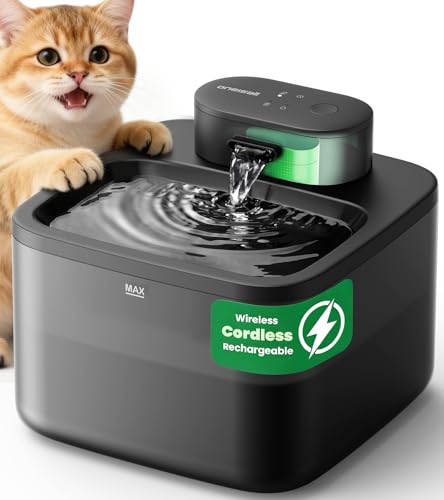 ONEISALL oneisall 2.2L/74oz Wireless Cat Water Fountain | True Cordless,Ultra Quiet…
View on Amazon ↗
Listing names and images come from Amazon and are rechecked against the live listings; last checked Nov 8, 2026. No prices shown; the current price is on the listing.
About this guide. This guide covers the cat water fountain category in general, not any individual model. It is written from broad product knowledge without reading reviews or handling specific units, so confirm any dimensions, decibel ratings, and filter sizes on the listing before you buy.