Cat tunnels split into three broad designs: crinkle fabric, mesh with a steel spring frame, and rigid modular tubes. A crinkle tunnel suits cats that pounce on sound and movement. A mesh tunnel suits cats that like to hide and watch. A rigid tunnel suits cats that sprint through at full speed. The main tradeoff is durability against quiet: crinkle fabric tears faster but is quieter than rigid plastic.
Play Style Decides the Tunnel Before the Price
A cat that stalks toys from a doorway wants a tunnel that crackles. Crinkle fabric gives that sound, which turns a pounce into a chase. A cat that naps in cardboard boxes may ignore a crinkle tunnel because the noise overstimulates it. Watch how your cat hunts before you buy.
Sprinters need a tunnel that stays open. A mesh tunnel with a steel spring frame pops back after a cat barrels through. A rigid modular tube stays open on its own, so a fast cat never hits a collapsed wall. Think of the tunnel as a track, not a bed.
Crinkle, Mesh, or Rigid: What the Materials Actually Do
Crinkle tunnels usually have a polyester shell around a layer of crinkly film. The film makes the sound but also makes the fabric stiffer. Check the listing for the shell material: a heavier polyester denier resists claw snags better than thin lining. Seams are the weak point, so look for reinforced stitching where the tunnel bends.
Mesh tunnels rely on a spring steel coil sewn into the fabric. The coil gives the tunnel its shape and lets it fold flat for storage. Mesh lets cats see movement outside, which some cats find reassuring and others find too exposed. A mesh tunnel with a removable cover gives you both options.
Rigid tunnels are the heavy option. They often come as interlocking plastic or cardboard tubes. Plastic tubes clean with a wipe, while cardboard tubes can be scratched to shreds and replaced cheaply. Rigid tubes do not fold, so they need permanent floor space.
| Design | Best for | Noise | Durability |
|---|---|---|---|
| Crinkle fabric | Pouncers and kickers | Loud crackle | Low to medium |
| Mesh with steel frame | Lurkers and casual players | Soft rustle | Medium to high |
| Rigid modular tube | Sprinters and large cats | Echoes | High |
If your cat chews fabric, skip crinkle and mesh. Rigid plastic or cardboard tubes survive teeth better. If your cat weighs over 15 pounds, a steel frame mesh tunnel may sag in the middle, so a rigid tube or a shorter crinkle tunnel with a wide opening works better.
Measure the Floor Before You Measure the Cat
A straight tunnel can be 3 to 4 feet long. In a small apartment, that length blocks a walkway. An S shaped or curved tunnel fits into a corner and gives the cat two entrances that point different ways. Check the product dimensions when the tunnel is fully extended, not the folded size.
Some tunnels connect to other tunnels or to tent cubes. That modularity sounds useful, but each connector adds a seam that can catch claws. If you plan to add pieces, buy from the same design family so the zipper or hook sizes match.
Indoor Cats Need a Tunnel That Does Not Become a Cave
Indoor cats use tunnels for ambush play, but a tunnel with only one opening can feel like a trap. Two or three openings let a cat escape when startled. Look for a tunnel with openings at both ends and at least one side window. A side window also lets you dangle a toy through the top.
Large breeds and senior cats need a wider opening. A 10 inch diameter works for most cats, but a 12 to 14 inch opening suits Maine Coons or heavy cats. Senior cats may avoid tunnels with high, narrow entrances because stepping over the lip hurts their hips. A tunnel with a low, wide opening is easier to enter.
What Sellers Leave Out of the Listing
Check the listed weight of the tunnel. A very light tunnel under a pound will slide across hard floors during fast play. A heavier tunnel stays put on tile but is harder to move for cleaning. If your floors are hardwood, look for a tunnel with non slip pads or plan to place it on a rug.
Ask the seller two questions before buying. First, is the tunnel machine washable or spot clean only? Second, does the steel spring frame have a protective cover at the ends? Exposed spring ends can scratch floors and catch cat fur.
Long Term Costs Hide in the Seams
Crinkle tunnels are cheap to replace but may last only a few months with a rough cat. Mesh tunnels cost more upfront but the steel frame often outlasts the fabric, and some brands sell replacement covers. Rigid plastic tunnels have the lowest long term cost because they rarely need replacing, but they take up the most space.
Cardboard tunnels are a consumable. They satisfy scratching instincts and can be recycled, but expect to replace them every few weeks. If you want a tunnel that doubles as a scratcher, cardboard is the only material that works without damaging the tunnel itself.
Puppies and Senior Dogs Rarely Need a Cat Tunnel
A tunnel sized for a cat is too narrow for most dogs. Puppies under 10 pounds may enjoy a rigid plastic cat tunnel as a training obstacle, but a fabric tunnel will collapse under a puppy's weight. Senior dogs with joint pain should avoid low tunnels entirely. If you want a tunnel for a dog, look at agility tunnels designed for dogs, which are wider and reinforced.
The use cases for small apartments and indoor cats overlap. In a small apartment, choose a foldable mesh tunnel you can store under a sofa. For indoor cats, choose a tunnel with at least two openings and a side window so the cat does not feel cornered.
Marketing Words That Do Not Change the Tunnel
Phrases like 'interactive' and 'self play' mean nothing on their own. A tunnel is interactive only if you put a toy inside or dangle one through a window. 'Self play' tunnels often have a hanging ball, which some cats ignore. The tunnel itself does not move, so the play value comes from what you add.
BPA free and non toxic are useful for rigid plastic tunnels because cats may chew the edges. For fabric tunnels, these labels matter less than whether the dye runs when washed. 'Machine washable' only matters if the steel frame is removable; check that detail before you trust the label.
For more context on pet furniture that fits a small space, see other pet supply guides.
Cat Tunnel Questions Buyers Actually Ask
Is a cat tunnel worth it for an indoor cat?
Yes, if your cat already chases toys or hides under furniture. A tunnel gives an indoor cat a defined ambush spot and a place to retreat. Cats that are very sedentary or easily startled may ignore a tunnel entirely. Start with an inexpensive crinkle tunnel and see if the cat enters it within a week.
What size cat tunnel should I buy?
Measure your cat from nose to tail and add 12 inches. Most cats fit a 10 inch diameter tunnel. Large breeds need 12 to 14 inches wide. For length, a 3 foot tunnel is enough for most cats to run through, but a 4 foot tunnel gives a sprinter room to build speed.
Can a cat tunnel go in the washing machine?
Only if the listing says the steel frame is removable or the tunnel is made entirely of fabric without a rigid coil. A tunnel with a sewn in spring steel frame should be spot cleaned only. Machine washing a steel frame tunnel can bend the coil and tear the fabric.
Which cat tunnel is best for a large cat?
A rigid plastic or cardboard tunnel with a 12 inch or larger opening is best for a cat over 12 pounds. Crinkle and mesh tunnels with steel frames can sag under a heavy cat, making the middle collapse during a sprint. Check the tunnel's weight rating if the listing provides one.
How do I get my cat to use a new tunnel?
Leave the tunnel in a room the cat already uses, with both openings clear. Toss a treat or a favorite toy just inside one opening. Do not push the cat in. Cats often investigate a new object at night, so give it a few days before deciding the cat dislikes it.
Which Cat Tunnel to Put in the Cart
A cat that sprints, pounces, and shreds cardboard boxes needs a mesh tunnel with a steel spring frame and at least two openings. The frame pops back after rough play, and the mesh gives your cat a hiding spot without total darkness. For a cat that prefers quiet naps and gentle stalking, a rigid cardboard tube is the better pick: it doubles as a scratcher and costs little to replace when it wears out.
Real cat tunnel listings, so you can check the points in this guide against actual products. These are affiliate links: as an Amazon Associate we earn from qualifying purchases, at no extra cost to you.
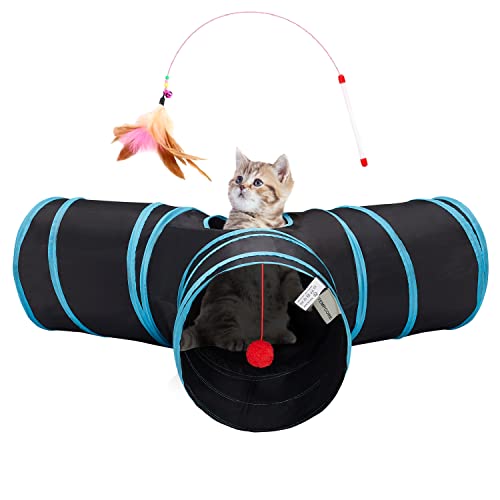 TEMPCORE Tempcore Pet Tunnel Tube Cat Toys, Cat Tunnels for Indoor…
View on Amazon ↗
 SHELDAMY Sheldamy Cat Tunnel, S-2-Way Cat Tunnels for Indoor Cats, Collapsible…
View on Amazon ↗
 ASPCA ASPCA Cat Tunnel with Rattle Toy – Interactive Collapsible Cat…
View on Amazon ↗
Listing names and images come from Amazon and are rechecked against the live listings; last checked Nov 8, 2026. No prices shown; the current price is on the listing.
How to read this guide. This guide is written from general knowledge about cat tunnel construction and cat behavior, not from examining any specific model. It cannot tell you how a particular listing's seams or spring frame will hold up, so check the product dimensions and materials on the page before ordering.