The Janome Arctic Crystal suits someone who wants a sturdy mechanical machine for garments and light quilting, with 15 stitches and a metal frame. The Chunara and JUCVNB models fit buyers who want a free arm and both foot pedal and button control, while the KPCB Tech and CraftBud bundles include fabric and tools for immediate practice. The Marirao adds dual power options. The main tradeoff is between a compact full size machine like the Janome and smaller portable models that trade stitch range and durability for a lower learning curve and included starter kits.

Janome Arctic Crystal Sewing Machine
Best for: Beginners who want a sturdy machine for garments and light quilting
- 15 built in stitches and a 4 step buttonhole handle clothing repairs, home décor, and patchwork.
- Weighs 13 lbs with a small footprint, so it stores easily and can go to classes.
- Interior metal frame adds stability for smoother stitching on layered fabrics.
Keep in mind: No included fabric or starter kit, so you supply your own materials.
Check price on Amazon ↗
Chunara Mini Electric Sewing Machine
Best for: Beginners who want a free arm for sleeves and pant legs
- Free arm design reaches into sleeves, pant legs, and other cylindrical items.
- 12 built in stitches include straight and zigzag for different project needs.
- Automatic thread rewind, thread cutter, tension dial, and sewing light simplify use.
Keep in mind: Listing does not state machine weight, so confirm portability if you plan to move it.
Check price on Amazon ↗
JUCVNB Mini Portable Sewing Machine
Best for: Teaching a child or grandchild with simple controls and video help
- Weighs 2.3 kg and measures 12.6 x 5.9 x 11.8 inches for easy storage.
- Foot pedal or button control, plus AC adapter or 4 AA batteries for portable use.
- Printed threading guides and a QR code link to a tutorial video.
Keep in mind: Never use batteries and AC adapter at the same time to avoid motor damage.
Check price on Amazon ↗
CraftBud Mini Sewing Machine Kit
Best for: Kids and adults who want a complete starter kit with fabrics
- 122 piece kit includes 50 fabric squares, 16 threaded bobbins, thread, scissors, and more.
- Built in light, foot pedal, adjustable speed, and expandable table are included.
- Small size makes it a first machine for kids and adults learning together.
Keep in mind: Listing does not state stitch count, so check the guide book for stitch options.
Check price on Amazon ↗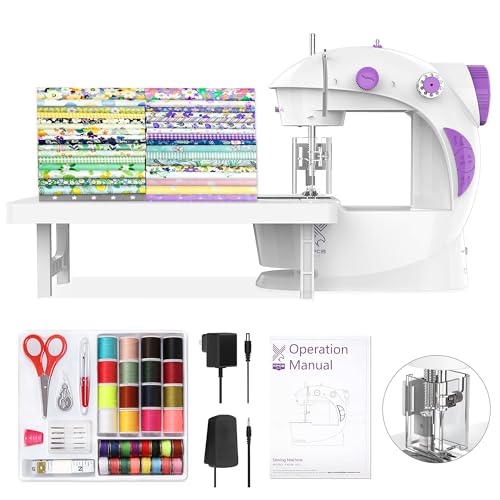
KPCB Tech Mini Sewing Machine with Fabrics
Best for: Practice sewing with included cotton fabrics and tutorial videos
- 20 pieces of 8 x 8 inch cotton fabric in different patterns for patchwork and practice.
- Finger guard and dual speed (slow and standard) add safety for a starter.
- Double thread design can sew up to 5 layers of fabric without manual knot ending.
Keep in mind: Mini size limits project scale; confirm throat space if you plan larger items.
Check price on Amazon ↗
Marirao Mini Sewing Machine with Fabric Kit
Best for: Portable use with battery power and a large included fabric and thread kit
- 50 fabric pieces and 32 thread spools come in the kit for immediate projects.
- Dual power: AC adapter or 4 AA batteries for sewing away from an outlet.
- Foot switch and button switch give two control options; threading marks are printed on the body.
Keep in mind: Battery and AC adapter cannot be used at the same time; watch the video before first use.
Check price on Amazon ↗Product names and images come from the Amazon listings and are rechecked against them (last checked Nov 8, 2026). The highlights restate each listing's own bullet points as published on Nov 8, 2026. Prices change often, so we do not show them. These are affiliate links: as an Amazon Associate we earn from qualifying purchases, at no extra cost to you.
Stitch Options and Project Range
The Janome Arctic Crystal offers the widest stitch selection with 15 built in stitches and a 4 step buttonhole. That covers clothing repairs, home décor, patchwork, and light quilting. If you plan to hem pants, sew a simple skirt, or piece a small quilt, this range gives room to grow without switching machines.
The Chunara and JUCVNB models each list 12 built in stitches, including straight and zigzag. That is enough for basic seams, simple decorative touches, and mending. The JUCVNB listing describes positions for stitch length, decorative patterns, lock stitches, and curved stitching, which helps a beginner understand what the dial does.
The KPCB Tech, CraftBud, and Marirao listings do not state a stitch count. The KPCB Tech mentions double thread capability for up to 5 layers, and the CraftBud focuses on the included kit rather than stitch variety. If specific stitch types matter, check those listings or ask the seller before buying.
For a first machine, more stitches are not always better. A beginner may only use straight and zigzag for months. But if you want buttonholes or decorative options, the Janome is the only listing that explicitly includes a 4 step buttonhole.
| Model | Built in Stitches | Buttonhole | Free Arm | Included Fabric | Power Options |
|---|---|---|---|---|---|
| Janome Arctic Crystal | 15 | 4 step | Yes | No | AC adapter (implied) |
| Chunara Mini | 12 | Not listed | Yes | No | AC adapter (implied) |
| JUCVNB Mini | 12 | Not listed | Not listed | No | AC adapter or 4 AA batteries |
| CraftBud Mini | Not listed | Not listed | Not listed | 50 pieces 10x10 in | Not listed |
| KPCB Tech Mini | Not listed | Not listed | Not listed | 20 pieces 8x8 in | AC adapter (US) |
| Marirao Mini | Not listed | Not listed | Not listed | 50 pieces | AC adapter or 4 AA batteries |
Size, Weight, and Portability
The Janome Arctic Crystal weighs 13 lbs and has a small footprint. It is portable enough for classes or retreats but heavier than the mini machines. If you have a dedicated sewing spot, that weight adds stability. If you need to store it in a closet between uses, the 13 lbs is still manageable for most adults.
The JUCVNB weighs 2.3 kg (about 5 lbs) and measures 12.6 x 5.9 x 11.8 inches. The Marirao is nearly identical at 2.4 kg and 12.2 x 5.9 x 11.8 inches. Both are easy to lift, pack, and set up on a small table. The KPCB Tech and CraftBud do not list weight or dimensions, but their titles call them mini, so they likely fit a similar footprint.
The Chunara listing does not state weight or size. Its free arm design suggests a slightly larger body than a basic mini, but you would need to confirm dimensions if shelf space is tight. All of these machines are smaller than a full size computerized model, which makes them appealing for apartments, dorms, or craft corners.
Portability also depends on power. The JUCVNB and Marirao can run on 4 AA batteries, so you can sew where there is no outlet. The KPCB Tech includes a US adapter. The Janome and Chunara listings imply standard AC power but do not mention battery use.
Included Kits and Learning Support
The CraftBud bundle is the largest listed: 50 fabric squares, 16 threaded bobbins, 4 spare bobbins, 5 needles, 16 thread spools, clips, thimble, needle threader, seam ripper, scissors, tape measure, chalk pencil, and a foldable 12 inch ruler. That removes the first shopping trip for supplies.
The Marirao kit includes 50 fabric pieces and 32 thread spools, plus the machine. The KPCB Tech includes 20 pieces of 8 x 8 inch cotton fabric and a 42 piece tool kit with bobbins, scissors, measuring tape, thimble, needle threader, and needles. Both give a beginner enough to start practicing seams and small projects immediately.
For learning help, the KPCB Tech listing promises tutorial videos that are always updating. The JUCVNB has printed threading guides on the body and a QR code to a video. The Janome listing mentions tutorial videos and a bobbin diagram. The CraftBud includes a guide book. The Chunara and Marirao listings do not mention videos, though the Marirao offers one on one contact support.
If you are teaching someone else, the JUCVNB explicitly positions itself for teaching a daughter or granddaughter, with button control and simple threading marks. The CraftBud says its small size makes it easier for kids and adults. The KPCB Tech adds a finger guard, which is a safety plus for young sewists.
Who Should Skip These Picks
Skip all of these if you plan to sew heavy materials like denim, canvas, or multiple layers of upholstery fabric regularly. The listings describe beginner machines for light fabrics, patchwork, and simple home décor. The KPCB Tech says it can sew up to 5 layers, but that is still light to medium weight.
If you need a wide range of decorative stitches, automatic buttonholes, or a large throat space for quilting, look at a full size computerized machine. None of these listings mention computerized stitch selection or a wide harp space. The Janome is the closest with 15 stitches and a 4 step buttonhole, but it is still a mechanical beginner model.
Buyers who want a machine that can sew continuously for hours without motor strain may find these mini machines limiting. The listings do not state duty cycles or motor power. For frequent, long sewing sessions, a heavier machine with a metal frame like the Janome is a safer bet, but even that is not a production machine.
Also skip these if you need a machine that arrives ready to sew without any threading practice. Every listing assumes you will learn threading and setup. The JUCVNB, KPCB Tech, and Marirao all tell users to watch a video or read the manual first. If you want a fully automatic threading system, these are not the right picks.
What to Confirm Before Buying
Check the power adapter type and voltage for your country. The KPCB Tech listing specifies a US adapter. The JUCVNB and Marirao list AC adapter or 4 AA batteries, but do not state the adapter plug type. If you are outside the US, confirm the plug or plan to use batteries.
Confirm the machine's stitch length and width adjustment if you need precise seams. The Janome listing says you can adjust stitch width and length. The JUCVNB mentions positions 1 to 4 adjust stitch length. The other listings do not state whether stitch length is adjustable. For garment sewing, adjustable stitch length matters.
Look at the throat space or harp area if you plan to sew cuffs, small bags, or quilt blocks. Only the Chunara listing explicitly mentions a free arm for cylindrical items. The Janome also lists a free arm design. The mini machines likely have a smaller harp space, but their listings do not state the measurement.
Read the return policy and warranty. The Marirao listing says each machine is manually tested and may arrive with a small cloth thread from testing, which is normal but worth knowing. The KPCB Tech offers manuals in multiple languages. If you are a complete beginner, a seller with responsive support can save frustration.
How the Shortlist Was Put Together
These six picks were chosen from real Amazon listings for beginner sewing machines. The selection covers a spread of designs: a compact full size mechanical machine, a free arm mini, and four portable minis with different kit sizes and power options. This range lets a buyer compare what each design actually offers.
The comparison uses only the features stated in each listing: stitch counts, included accessories, power options, weight, and size where given. No in person testing was done, and no units were handled by us. That means every fact in the product cards comes directly from the seller's own listing text.
Because listing details vary, some attributes are marked "Not listed" in the table. That is intentional. A missing spec is itself useful information: it tells you to check with the seller or look at the product photos before buying.
For a deeper look at choosing a first sewing machine, see the selection guide for first sewing machines in small spaces.
Questions to Ask Before You Pick
Do I need a free arm on a beginner sewing machine?
A free arm helps you sew cylindrical items like sleeves, pant legs, and cuffs without bunching the fabric. The Chunara and Janome listings mention a free arm. If you plan to hem pants or sew children's clothes, a free arm saves time. If you only sew flat projects like placemats or simple bags, you can skip it.
What is more important for a beginner: stitch count or included accessories?
For a first machine, included accessories often matter more because they let you start practicing immediately. A kit with fabric, thread, bobbins, and scissors removes setup friction. Stitch count matters when you want buttonholes or decorative stitches. The Janome offers 15 stitches and a buttonhole, while the CraftBud offers a large kit but no stated stitch count.
Can I run these machines on batteries?
Only the JUCVNB and Marirao listings state battery power via 4 AA batteries. The KPCB Tech includes a US adapter. The Janome and Chunara listings do not mention battery use. If you want to sew at a park, in an RV, or away from outlets, choose a battery capable model and remember not to use batteries and AC power at the same time.
Which Machine Fits Your First Project
A beginner who wants a durable machine for garment sewing and light quilting should get the Janome Arctic Crystal. Its 15 stitches, 4 step buttonhole, and metal frame support growth beyond the first few projects. Someone teaching a child or wanting a grab and go kit should choose the CraftBud Mini Sewing Machine Kit for its 122 piece set with fabrics, threads, and tools. If portability without an outlet is the priority, the JUCVNB Mini Portable Sewing Machine runs on AA batteries and weighs only 2.3 kg, making it easy to pack for classes or trips.
About this guide. The picks were chosen by comparing the features stated in each real Amazon listing: stitch counts, included kits, power options, weight, and size. The shortlist includes a compact full size machine and several mini designs to show the range of beginner options. No units were handled or used, and the comparison relies only on listing text, not in person experience.