Shape, fiber, and size decide most of what a watercolor brush set can do. Match the brush shapes to your surface: rounds for detail, flats for washes. Natural hair holds more water but costs more and needs care; synthetics stay springy and affordable. Buy a small set with the shapes you will actually use, not a large one with weak filler brushes.
Match the Brush Shape to the Mark
Round brushes are the default for watercolor. A pointed round makes fine lines, small details, and controlled washes with the same brush. Flat brushes lay even washes and make crisp edges. A flat is easier for a beginner to load evenly and harder to turn into a muddy puddle.
For tabletop miniatures, look for small rounds with a sharp point, often in sizes 0, 1, and 2. A tiny liner or spotter helps with eyes, straps, and edge highlights. Kids crafts need larger rounds and flats that survive scrubbing, not ultra fine points.
Check the listing for shape names, not just brush numbers. A size 4 round from one maker can be wider or longer than a size 4 from another. Photos that show the tip next to a coin or ruler help more than the number.
Natural, Synthetic, or a Blend
Natural hair, usually sable, squirrel, or goat, holds more water and releases it slowly. That gives longer, softer washes and smoother blends. It also costs more, needs more careful cleaning, and can lose its point if stored damp or pressed into a cup tip down.
Synthetic brushes hold less water, so paint dries faster on the paper. They keep a firm point longer and cost less. For outdoor sketching, a synthetic or blend set is easier: it dries quickly, tolerates being packed, and is cheap enough to replace.
A blend of natural and synthetic fiber often gives the best value. You get more water holding than pure synthetic and more snap than pure natural. For a first set, a blend is a safe middle ground between price and feel.
- Natural hair: soft flow, high price, more care.
- Pure synthetic: firm snap, low price, less water.
- Blend: middle water holding, middle price, forgiving.
The Table That Sorts Sets by Surface
Your painting surface changes which set makes sense. A brush that is perfect for smooth cotton paper can be too soft for miniatures or too small for kids crafts. Use this table to sort sets by what you paint on.
| Set style | Fiber feel | Tip shape | Best surface |
|---|---|---|---|
| Detail miniature set | Synthetic or blend | Very small pointed rounds | Primed plastic or resin |
| Student all rounder | Blend | Mixed rounds and a flat | Cotton or cellulose paper |
| Outdoor sketching set | Synthetic | Travel rounds with caps | Small watercolor blocks |
| Kids craft set | Synthetic | Large rounds and flats | Mixed craft paper |
A miniature set can paint on paper, but its tiny rounds hold so little water that a large wash becomes slow and streaky. A kids craft set can paint a miniature, but the large tip will not fit inside small armor panels. Pick the set for the surface you paint most.
How to Read a Watercolor Brush Listing
Look for the fiber name, not just 'soft' or 'professional'. A listing that says sable should say whether it is pure sable or a sable blend. A listing that says squirrel should say whether it is blue squirrel, which is common in wash brushes, or another fiber.
Check the ferrule, the metal band that holds the hair. A smooth brass or nickel ferrule is less likely to loosen than a cheap painted one. A loose ferrule lets water inside the handle and makes the brush wiggle while you paint.
Ask the seller about the handle length if you paint at an easel or with a loose grip. Short handles fit close work like miniatures. Long handles suit standing at an easel. The listing photo may not show the true scale, so ask for the length if it is not printed.
Set Size Is Not Value
A 12 brush set looks like a better deal than a 4 brush set, but only if the extra shapes fit your work. Many large sets pad the count with duplicate rounds in sizes you will not notice or a flat that is too wide for your paper.
A better first set is three or four brushes: a size 4 or 6 round, a size 1 or 2 round for detail, and a half inch flat for washes. That covers most beginner work. Add a liner or a larger flat only when a specific project asks for it.
For miniatures, two good small rounds do more than eight brushes that cannot hold a point. A cheap brush that splits at the tip ruins fine lines no matter how many you own. Quality per brush beats quantity per set.
The Care Mistake That Kills a Set Early
Leaving brushes tip down in a water cup bends the hair permanently. The weight of the handle presses the tip against the bottom of the cup and curls it. Rinse and lay brushes flat or hang them tip down to dry.
Soap matters. Dish soap strips natural oils from hair and makes it brittle. Use a mild brush soap or a gentle hand soap for natural hair. Synthetic brushes are more forgiving, but dried paint in the ferrule still ruins their shape.
Never let paint dry in the ferrule. Watercolor reactivates with water, but paint packed at the base of the hair pushes the fibers apart and makes the brush lose its point. Rinse until the water runs clear, then reshape the tip with your fingers while it is damp.
Who Should Skip a Watercolor Brush Set
If you paint only miniatures with acrylics, a dedicated miniature brush set in synthetic fiber may serve better than a watercolor set. Miniature brushes are shorter, firmer, and designed for precise control on small surfaces. Watercolor rounds can be too soft for pushing thick acrylic paint.
If you paint large loose washes on full sheets, a single large squirrel or goat mop brush may beat a set of small rounds. One quality mop holds more water than three small brushes combined and lays a wash with fewer streaks.
If you are trying watercolor for the first time and do not want to commit, a single round and a single flat are enough to start. A set only becomes worth it when you have used those two and know which other shapes you want.
- Acrylic miniatures: buy a miniature brush set instead.
- Large washes: one mop brush may beat a full set.
- First try: two brushes are enough to start.
Long Term Costs Hide in the Fiber
The cheapest set often costs more over time. A low cost synthetic set loses its point after a few months of regular painting. You then buy another set, and another. A mid priced blend or natural set that holds its point for years costs less per painting session.
Natural hair brushes need brush soap, which is a small ongoing cost. They also need more careful drying. If you paint outdoors or with kids, that care time is a real cost. Synthetics tolerate rougher handling and dry faster.
Replacement is normal. Even good brushes wear out. A brush that no longer holds a point can still be a wash brush or a texture brush. Before throwing a set away, use the worn brushes for masking fluid, rough texture, or mixing paint.
Watercolor Brush Set Questions, Answered
Is a watercolor brush set worth it for a beginner?
A small set of three or four brushes is worth it if you plan to paint more than once. A large set is not worth it at first. Two rounds and one flat cover most beginner exercises, and you will learn which shapes you actually reach for before spending more.
Which watercolor brush shape should I buy first?
Start with a round brush, around size 4 or 6, because it makes both fine lines and small washes. Add a smaller round for detail and a half inch flat for even washes. Those three shapes cover most early watercolor work better than a set of many similar rounds.
What is the difference between natural and synthetic watercolor brushes?
Natural hair holds more water and releases it slowly, which gives softer blends and longer washes. Synthetic hair holds less water but keeps a firmer point and costs less. A blend gives some of each, which is why many student sets use blended fiber.
How do I compare two watercolor brush sets?
Compare the actual shapes in each set, not the brush count. Check the fiber name and whether the ferrule is smooth. Look at tip photos for a sharp point. A three brush set with the shapes you need beats an eight brush set with duplicates and weak tips.
Can I use watercolor brushes for acrylic miniatures?
You can, but a dedicated miniature brush set works better. Miniature brushes are shorter and firmer, which gives more control on small surfaces. Watercolor rounds can feel too soft for pushing thick acrylic paint and may lose their point faster under that load.
The Brush Set to Start With
A beginner painting on paper should start with a small blend fiber set: one size 4 or 6 round, one size 1 or 2 round, and a half inch flat. That trio handles details, lines, and washes without wasting money on duplicate shapes. A miniature painter needs a different pick: two small synthetic rounds in sizes 0 and 1, which hold a point better under acrylic paint and fit inside small armor panels.
Real watercolor brush set listings, so you can check the points in this guide against actual products. These are affiliate links: as an Amazon Associate we earn from qualifying purchases, at no extra cost to you.
 GOLDEN MAPLE Watercolor Brushes Professional Set, 10 Artist Brushes Watercolor Paint Brushes,…
View on Amazon ↗
 FUUMUUI Watercolor Brushes Professional, Fuumuui 10Pcs Synthetic Squirrel Hair Water Color…
View on Amazon ↗
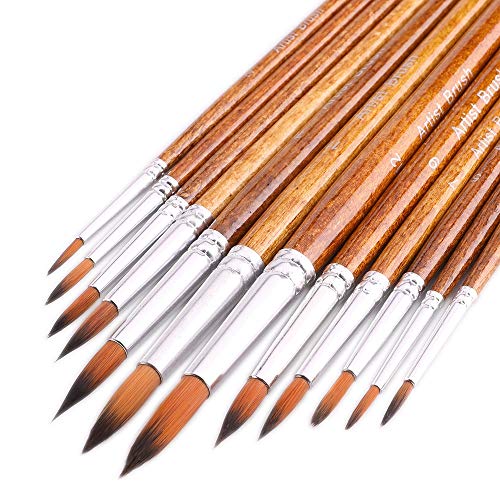 FENORKEY Watercolor Paint Brushes FENORKEY 12Pcs Round for Watercolor, Acrylic &…
View on Amazon ↗
Listing names and images come from Amazon and are rechecked against the live listings; last checked Nov 8, 2026. No prices shown; the current price is on the listing.
What this guide is. This guide covers watercolor brush sets as a category, not individual models. It is written from general knowledge of brush shapes, fibers, and care, so check any listed dimensions on the product page before buying.