Two factors decide most travel guide purchases: how you move between places and how much you want planned for you. A fixed base and a love of wandering favors a compact, map heavy guide with neighborhood depth. A packed multi stop itinerary favors a practical guide with transport details and book ahead advice. The main tradeoff is depth versus portability.
Match the guide to how you spend your days
Start by writing down three things you will actually do most days. That list matters more than the destination name on the cover. A guide for a food focused weekend in Lisbon and one for a hiking week in the Dolomites should look almost nothing alike.
If you return to the same base each night, choose a guide organized by neighborhood. You want short walking loops, cafe clusters, and opening hours for one compact area. If you change hotels every two nights, choose a guide organized by route. You want train times, connection notes, and what sits between the big sights.
How you like to plan is the second filter. Do you book dinner and museum slots before you leave, or do you prefer to wander and see what opens up? A guide full of reservation phone numbers and timed entry advice rewards the first style. A guide with long, unhurried neighborhood essays rewards the second.
Map quality is the fastest quality check
Open any travel guide to a random middle page and look at the map. If the map is small, gray, and missing street names, the whole book was likely built from a desk. A good map shows the walking route between the train station and the old town, not just a dot for each.
Check whether the map marks metro entrances, public toilets, and steep hills. Those details separate a map you actually unfold from one you ignore. A guide with a pull out map or a laminated cover map costs more to produce, which tells you the publisher invested in field work.
Compare two guides for the same city side by side. If one marks a funicular and the other does not, trust the one that shows the hill. Physical geography does not change, but a lazy map omits it. A good map also names the neighborhoods in large type, so you can orient yourself without a phone.
Update cycle and edition date
Travel guides age badly. A restaurant that was excellent three years ago may now be a phone repair shop. Before buying, find the copyright page and check the most recent printing date. For fast changing cities, a guide printed more than two or three years ago will mislead you on prices, hours, and transport tickets.
Some publishers update every year, some every three to five years, and some simply reprint the old text with a new cover. A new cover on old content is a classic trap. Check whether the introduction mentions a recent event, a new metro line, or a changed museum policy. That is the fingerprint of a real update.
For slow changing destinations, such as national parks or ancient sites, an older guide may still be fine. Trails erode and visitor centers move, but a Roman ruin stays put. For food and nightlife, freshness matters most. For history and geography, depth matters more than the print date.
Depth against portability
| Guide type | Best for | Weight | Neighborhood detail | Transport help |
|---|---|---|---|---|
| City pocket guide | A weekend in one city | Light | High | Basic |
| Regional guide | A week across two or three towns | Medium | Medium | Good |
| Country guide | A two or three week road trip | Heavy | Low | Strong |
| Multi country guide | Route ideas across a continent | Heavy | Very low | Skeletal |
A thick guide earns its weight only if you will use its transport tables and hotel listings. If you mainly want walking routes and cafe recommendations, a slimmer guide with better maps will leave your bag lighter and your feet happier.
Some travelers solve the tradeoff by tearing out the pages they need. That works with a cheap paperback but not with a heavy hardcover. If you plan to carry the guide all day, check the actual weight and the page size before you buy.
Features that matter and features that are marketing
Real features change how you use the book. A pull out map, a waterproof cover, a phrase list with phonetic spellings, and a neighborhood index all make a guide easier to use on the street. A guide with a ribbon bookmark and a durable binding survives being shoved in a daypack.
Marketing features sound useful but rarely are. 'Insider tips' often means the same cafe listed in three other guides. 'Hidden gems' means places the publisher could not fit in the main text. 'Curated by locals' is unverifiable. Photographs are lovely but add weight and go out of date fast.
Check the back cover for what the guide actually contains. A list of 'walking tours with maps', 'phrasebook section', or 'transport hub diagrams' tells you the publisher built a practical tool. A cover full of adjectives tells you the publisher built a mood.
Read a listing like a checklist, not a story
A travel guide listing is a sales page. Ignore the adjectives and scan for the hard facts: page count, publication date, number of maps, and whether it includes a pull out map. If the listing does not state the edition or the print date, ask the seller before you buy.
Check the table of contents if the listing shows it. Does the structure match your trip? A guide with 40 pages on shopping and 10 pages on hiking is a mismatch for a walking holiday. A guide with a long chapter on 'day trips from the city' suits a fixed base better than a road trip.
Ask the seller two questions when the listing is thin. First, what is the most recent printing date? Second, does this edition include a pull out map or a street atlas? The answers tell you whether the guide is a current tool or a warehouse leftover.
Who should skip a printed guide entirely
If you travel with a smartphone and a data plan, you may not need a printed guide at all. Offline maps, translation apps, and booking platforms replace large parts of the traditional guidebook. What they do not replace is the curated judgment: which neighborhood to stay in, which route makes sense, which sights are worth the queue.
Some travelers do better with a phrasebook and a map than with a full guide. If you are visiting family, staying in one home, and eating where they eat, a 400 page guide is dead weight. A small phrasebook and a good offline map cover almost everything.
Digital guides and ebook versions solve the weight problem but create a new one. A phone runs out of battery, a screen is hard to read in bright sun, and a digital guide is hard to flip through quickly. If you choose digital, download the offline version before you leave and carry a power bank.
Long term costs and the used book option
A travel guide is a consumable, not a reference book. Most guides are useful for one or two trips, then the restaurant list and transport details go stale. Buying the newest edition at full price only makes sense if you travel soon and to a fast changing city.
Used bookshops and library sales are full of travel guides that are one or two editions old. For a hiking or history trip, a used guide at a fraction of the price may be perfectly fine. For a food or nightlife trip, the used guide will steer you to restaurants that closed.
Some libraries lend travel guides, which is a sensible first step. Borrow the guide, test it on a weekend trip, and only buy if you will use it again. A guide you borrow and photocopy a few pages from costs nothing and weighs nothing on the way home.
Mistakes that send a guide back to the shelf
The most common mistake is buying a guide for the country when you are visiting one city. A country guide covers the capital in 30 pages and the rest in 300. For a city break, a city guide or a regional guide serves you better.
Another mistake is buying a guide for the trip you wish you were taking, not the trip you are taking. If you have three days, a guide full of two week itineraries is a frustration. Match the guide to the actual number of nights, not the dream version.
Buying the newest edition without checking what changed is a subtler mistake. Publishers sometimes reprint an old guide with a new cover and a new date. Check whether the introduction mentions any recent event, new museum, or changed transport system. If it reads like it could have been written five years ago, it probably was.
Travel Guide Questions Worth Asking Before You Pack
How do I know if a travel guide is up to date?
Check the copyright page for the most recent printing date. For fast changing cities, a guide older than two or three years will mislead you on prices, hours, and transport. Look in the introduction for a mention of a recent event or new metro line. A new cover on old text is a common trick.
Which is better for a city break, a city guide or a country guide?
A city guide is better. A country guide covers the capital in a few dozen pages and spends the rest on other regions. A city pocket guide goes deep on neighborhoods, walking routes, and cafes. For a weekend in one city, the smaller, more focused book wins.
Can I just use my phone instead of a printed travel guide?
For maps, translation, and bookings, a phone often works better. What a phone does not replace is curated judgment: which neighborhood to stay in, which route makes sense, which sights are worth the queue. If you skip the printed guide, download offline maps and carry a power bank.
Is a used travel guide worth buying?
For a hiking or history trip, yes. Trails and ruins change slowly, so a guide one or two editions old is often fine. For a food or nightlife trip, no. The restaurant list will be stale. Used guides are best for destinations where the landscape matters more than the phone numbers.
What should I check on a travel guide listing before buying?
Check the page count, publication date, number of maps, and whether it includes a pull out map. Look at the table of contents to see if the structure matches your trip. If the listing does not state the edition or print date, ask the seller before you buy.
Which Travel Guide Fits Your Trip
A traveler spending a long weekend in one city with a loose plan and a love of wandering should pick a compact city guide with a pull out map and recent edition date. That guide earns its space in a daypack and rewards aimless afternoons. A traveler on a two week multi stop itinerary should instead pick a regional guide with strong transport tables and book ahead advice, even if it weighs more. The city guide would leave you stranded between towns; the regional guide gets you to the next platform on time.
Real travel guide listings, so you can check the points in this guide against actual products. These are affiliate links: as an Amazon Associate we earn from qualifying purchases, at no extra cost to you.
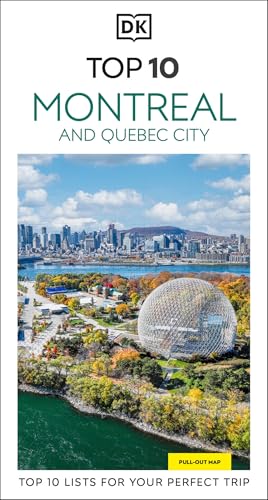 DK DK Top 10 Montreal and Quebec City: Top 10 lists…
View on Amazon ↗
 LONELY PLANET The Travel Book: A Complete Guide to Every Country in…
View on Amazon ↗
 WORKMAN PUBLISHING Rick Steves Italy (Rick Steves Travel Guide)
View on Amazon ↗
Listing names and images come from Amazon and are rechecked against the live listings; last checked Nov 8, 2026. No prices shown; the current price is on the listing.
What this guide is. Use this guide as a checklist to hold against any travel guide listing, not as a verdict on a particular title. It is written from general knowledge of how travel guides are made and used, not from reading individual guidebooks or reviews, so verify any page count or publication date on the listing before you buy.