A travel backpack works when the harness fits your torso and the packed size meets airline limits. Two choices matter most: opening style, clamshell or panel versus top loading, and how much structure you want. Buyers who pack cubes and open the bag fully prefer a clamshell. Buyers who want a lighter bag for day use often accept a top loader.
Airline Sizers Decide What You Can Carry
Most travel backpacks are designed around carry on limits, but airlines disagree on the exact inches. Check the depth, because a bag that is 9 inches deep fits more overhead bins than one that is 11 inches deep. A soft sided bag can compress into a sizer, while a rigid frame cannot.
Look for a stated carry on size, often close to 22 by 14 by 9 inches. That number alone is not enough. Some bags measure that way only when empty, and a full pack can bulge past the limit. Compare the listed depth against the airline you fly most.
Weight matters before you pack anything. A bag that weighs 4 pounds leaves more allowance for clothes and shoes than one that weighs 6 pounds. For budget airlines with a 7 kilogram carry on limit, every pound of bag is a pound of clothes you cannot bring.
A stowable hip belt helps when the bag must slide into a sizer. A thick padded belt adds comfort but can catch on the edges. If you fly several airlines, choose a bag with a removable belt or a sleeve that tucks it flat.
Students and city sightseeing trips often work with a smaller size, around 30 to 35 liters. That size fits under a seat on many planes and is easier to carry on a train or into a cafe. A larger 40 to 45 liter bag works for a weeklong trip but may need an overhead bin.
Clamshell, Panel, or Top Loading Access
The opening style changes how you live out of the bag. A clamshell opens like a suitcase, with two halves that zip apart. That layout suits travelers who use packing cubes and unpack at each stop. It is also the easiest style to search when a small item falls to the bottom.
A panel loader has a U shaped zipper around the front. It offers most of the clamshell access with a little less hardware and weight. Many panel loaders also have a quick access pocket on top, which helps for a passport or a boarding pass.
A top loader is the classic backpack shape: one main compartment with a drawstring or zipper at the top. It is often lighter and more weather resistant because there are fewer seams. The downside is that items at the bottom are hard to reach without unpacking.
Daily commuting and busy parents often prefer a panel or top loader with a separate laptop sleeve. You can grab a laptop without opening the main compartment. For international flights, a clamshell makes repacking at a hotel easier.
If you carry a laptop, check how the sleeve sits. A false bottom, where the sleeve stops an inch or two above the bag floor, protects the laptop when you drop the bag. A sleeve that sits directly against the bottom transfers impact to the computer.
Torso Fit and the Hip Belt Check
A travel backpack carries weight on your shoulders unless the hip belt takes over. The belt should sit on your hip bones, not around your waist. If the torso length is wrong, the belt rides too high or too low and the shoulder straps dig in.
Check the torso length range in the listing. Some bags come in one size that fits torsos from 16 to 21 inches. Others offer two sizes, which matters for short or tall travelers. A bag with an adjustable torso length can fit more people in a household.
Shoulder straps should curve without gaps at the top of your shoulders. Load lifters, small straps above the shoulders, pull the top of the bag closer to your back. That small adjustment moves weight from your shoulders to your hips.
A sternum strap keeps the shoulder straps from sliding outward. This helps people with narrow shoulders and anyone walking through a crowd. A whistle built into the sternum buckle is a small safety feature for hiking sections of a trip.
Ventilation matters more in hot climates. A trampoline style back panel, with a mesh sheet held away from the bag, lets air move across your back. It adds some bulk but reduces sweat on a long walk from the station.
Packing Cubes Change the Whole Layout
Packing cubes turn a travel backpack into a set of drawers. They fit best in a clamshell or panel loader, where the opening is wide enough to slide them in flat. A top loader works with cubes too, but you may need to pull several out to reach the one at the bottom.
Look for a main compartment that is one large rectangle, not split by awkward dividers. Some travel backpacks have a divider that turns the main space into two shallow sections. That works for shoes and laundry but fights against large cubes.
Compression straps inside the main compartment keep cubes from shifting. A bag without them lets the load settle into a lump at the bottom. External compression straps also help, but they can catch on baggage carousels.
If you travel with a second pair of shoes, a separate shoe compartment keeps dirt off your clothes. A wet pocket with a drain hole works for a swimsuit or a damp towel. These small compartments add weight, so consider whether you will use them.
For one bag travel, choose cubes that match the bag width. If the bag is 14 inches wide, two 7 inch cubes or one 14 inch cube will fill the space with no wasted gap.
Laptop Sleeves and Quick Access Pockets
A laptop sleeve on the back panel keeps the weight closest to your spine. That is the most stable place to carry a heavy computer. A sleeve in the front pocket puts the weight farther from your body and makes the bag feel heavier.
Look for a sleeve that fits your laptop size with a little room for a case. A 15 inch laptop often needs a sleeve marked for 16 inches. A sleeve that is too tight makes you fight the zipper every time.
Quick access pockets at the top of the bag hold a passport, phone, or boarding pass. A pocket on the hip belt is handy for a phone or a small wallet, but it can get in the way when you sit down.
A side handle lets you carry the bag like a briefcase for short moves, such as from a car to a hotel desk. A top handle should be padded enough for a full bag. These handles also help when you lift the bag into an overhead bin.
If you carry a tablet, a dedicated sleeve keeps it from sliding against a laptop. A document sleeve works for a folder or a magazine. These flat pockets add little weight and keep small items from disappearing.
Materials That Survive Baggage Handling
Travel backpacks face rough treatment: overhead bins, car trunks, and baggage carousels. The fabric matters more than the brand. A high denier nylon or polyester resists abrasion better than a thin, fashion focused fabric.
Check the denier number in the listing. A 400D or 600D fabric is common for travel bags. A 1000D fabric is heavier and tougher, often used on the bottom panel. A bag with a lighter body and a tougher bottom balances weight and durability.
Water resistance comes from a coating or a laminate. A DWR coating makes water bead on the surface, but it wears off over time and needs reapplication. A laminate or a waterproof zipper offers more protection for electronics.
Lockable zippers matter for international flights and hostels. Look for zipper pulls with holes that fit a small padlock. A lock does not stop a determined thief, but it slows down an opportunistic one.
A rain cover adds weight and takes up space. For city travel, a water resistant fabric is often enough. For a walking trip in a rainy region, a cover keeps the whole bag dry and also hides the zippers.
Weight and Structure: What You Carry Every Day
The bag's empty weight is the first thing you lift. A 2 pound bag feels different from a 5 pound bag after an hour. A framed bag with a hip belt carries a heavy load better, but the frame itself adds weight.
A frameless bag relies on your packing to hold its shape. It works well with cubes and a laptop, which act as a frame. Without those, the bag sags and the load pulls on your shoulders.
An internal frame, often a plastic sheet or an aluminum stay, keeps the back panel straight. That transfers weight to the hip belt. A frame also protects a laptop from being bent when the bag is overpacked.
For a weekend trip or a student's daily carry, a lighter bag without a frame is often the right choice. For a weeklong trip with books or camera gear, a framed bag with a hip belt prevents back strain.
Consider the bag's weight per liter. A 40 liter bag that weighs 3 pounds is efficient. A 35 liter bag that weighs 5 pounds is carrying extra hardware you may not need.
Comparison: Opening Styles at a Glance
| Opening style | Packing access | Weight and hardware | Best for |
|---|---|---|---|
| Clamshell | Full suitcase style opening | Heavier, more zippers | Hotel stays, packing cubes |
| Panel loader | Wide U shaped front | Mid weight, fewer zippers | Mixed travel, quick access |
| Top loader | Single top opening | Lightest, fewest seams | Day trips, minimal packing |
A clamshell suits a traveler who unpacks fully at each stop. A panel loader balances access and weight for most one bag trips. A top loader wins when the bag doubles as a daypack and you pack light.
No opening style is wrong by itself. The mistake is choosing a clamshell for a daily commute where you never open the main compartment, or a top loader for a two week trip with cubes and a laptop.
Travel Backpack Questions Before You Buy
What size travel backpack counts as a carry on?
Most airlines accept a bag around 22 by 14 by 9 inches, but budget airlines often allow less. Check the depth first, since a full bag can bulge past the limit. A soft sided bag compresses into a sizer more easily than a framed one.
Is a clamshell travel backpack worth the extra weight?
It is worth it if you pack cubes and open the bag fully at each stop. The clamshell zipper and extra fabric add weight, but you save time searching for items. If you mostly carry the bag between transit points and never unpack, a lighter top loader works better.
How do I fit a travel backpack to my torso?
Measure from the bump at the base of your neck to the top of your hip bones. Match that number to the bag's torso range. The hip belt should sit on your hip bones, not your waist. Load lifters above the shoulders pull the top of the bag closer to your back.
Can a travel backpack replace a suitcase?
Yes, for trips where you move often and pack light. A 35 to 40 liter bag holds about a week of clothes with cubes. A suitcase rolls better on smooth floors, but a backpack wins on stairs, cobblestones, and crowded transit.
Does a travel backpack need a hip belt?
A hip belt matters when the packed weight exceeds about 15 pounds. Below that, your shoulders can handle the load for short walks. For a heavy load or a long walk from the station, a padded belt on your hip bones prevents back strain.
The Carry On Decision in One Bag
A traveler who flies with a week of clothes and packs cubes should start with a clamshell or panel loader around 35 to 40 liters. Check the torso fit and the packed depth against your usual airline. For a student or commuter who carries a laptop and a few essentials daily, a top loader around 28 to 32 liters with a false bottom laptop sleeve is the lighter, simpler pick.
Real travel backpack listings, so you can check the points in this guide against actual products. These are affiliate links: as an Amazon Associate we earn from qualifying purchases, at no extra cost to you.
 TOMTOC tomtoc Travel Backpack 40L, TSA Carry On Bag Flight Approved,…
View on Amazon ↗
 SHRRADOO SHRRADOO Extra Large Travel Laptop Backpack for Men, Work College…
View on Amazon ↗
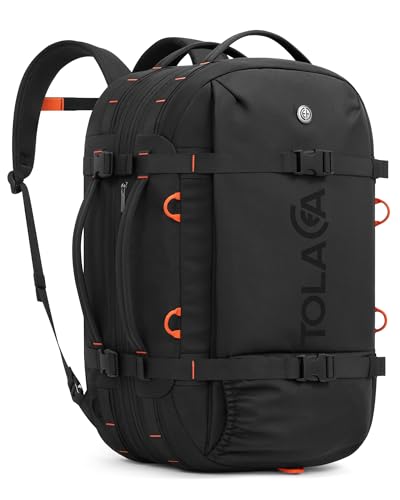 TOLACCEA Tolaccea Travel Backpack 40-50L, 16" Laptop Carry On Duffle for…
View on Amazon ↗
Listing names and images come from Amazon and are rechecked against the live listings; last checked Nov 8, 2026. No prices shown; the current price is on the listing.
How to read this guide. This guide explains travel backpacks as a category, from general knowledge of how the designs work. It cannot tell you how a specific listing fits your body or your airline, so check the listed dimensions and torso range before you order.