Metal type, finish, and band profile decide most of the outcome. Nickel free or plated choices suit sensitive skin and occasional wear, while solid sterling or gold filled pieces hold up better daily. The main tradeoff is between lower upfront cost and longer term appearance, since thin plated bands can tarnish or bend with constant contact.
Metal Decides Skin Reaction and Tarnish Speed
Nickel is the most common cause of contact irritation, and many inexpensive stackable rings use nickel in the base metal or plating. For sensitive skin, look for listings that state nickel free, or choose sterling silver, gold filled, or solid gold. A ring can still be plated with nickel under a thin top layer, so check the full material disclosure rather than just the word hypoallergenic.
Tarnish happens when the metal reacts with air, moisture, or skin products. Sterling silver tarnishes faster than gold, but it can be polished back. Plated base metal tarnishes and cannot be restored once the plating wears through. If you stack rings daily, solid or gold filled options keep their color longer with less maintenance.
For bridesmaids or gift sets, a matched metal type prevents one ring from tarnishing while the others stay bright. Mixed metal stacks are a style choice, but mismatched durability can leave one band looking dull within weeks.
Finish Changes the Look and the Feel
A high polish finish reflects light and shows scratches quickly. A brushed or matte finish hides small marks better, but it can look less formal. Hammered or textured finishes add visual interest and also disguise wear, which makes them practical for rings worn every day.
Plated rings with a bright finish often look impressive in photos but lose their edge fast. Check whether the listing mentions a protective coating, and remember that any coating wears off with hand washing, lotion, and friction against other rings.
For a stack, mixing finishes can create depth, but a uniform finish is easier to keep looking intentional. If one ring is high polish and the next is heavily textured, the contrast may read as accidental rather than styled.
Band Profile Keeps a Stack From Biting or Spinning
A flat band sits flush against the next ring and feels stable. A domed or rounded band leaves a small gap and can roll slightly, which some people find distracting. A twisted or braided profile looks delicate but creates uneven pressure points against neighboring rings.
Thin bands, under about 1.5 millimeters wide, are comfortable for small fingers but bend easily. If you plan to wear three or more rings together, choose a slightly thicker band for the bottom ring so it supports the stack without warping.
Check the inner edge. Rings with a comfort fit, meaning a slightly rounded interior, slide over the knuckle more easily and feel less tight during the day. A sharp inner edge can dig in, especially when several rings press against the same spot.
| Band style | Stack feel | Wear pattern | Suits |
|---|---|---|---|
| Flat profile | Sits flush, stable | Shows scratches on top | Everyday stacks |
| Domed profile | Small gap, rolls a bit | Wears on the crown | Solo or two ring stacks |
| Textured profile | Grips neighbors, no slip | Hides marks well | Active daily wear |
| Thin delicate band | Light, can bend | Dents at contact points | Occasional wear |
For small wrists or small fingers, a lower stack height matters more than band width. Three very thin flat bands can feel lighter than one wide domed ring, even if the total metal is similar.
Sizing a Stack Is Different From Sizing One Ring
Each ring you add changes how the whole group fits. Rings sit at different points on the finger, and the knuckle is often wider than the base. If you size every ring to your exact finger measurement, the top rings may feel tight when pushed up against the others.
A common approach is to buy the bottom ring in your true size and the upper rings a quarter or half size larger. This lets the stack slide without pinching. If you have small wrists but average fingers, wrist size does not affect ring fit, so focus on finger circumference.
Before buying a set, trace your finger on paper at the end of the day, when fingers are slightly larger. Compare that measurement to the listing's size chart, and check whether the seller offers half sizes. A ring that is slightly loose can be resized or worn on a different finger, but one that is too tight cannot be comfortably stacked.
Read the Listing for Metal Thickness, Not Just Style
Photos show the design, but the listing details tell you how long it will last. Look for the metal type, plating thickness if plated, and whether the ring is hollow or solid. Hollow rings cost less but dent easily and cannot be resized.
Ask the seller two questions when the listing is vague: what is the base metal, and how thick is the plating in microns. A plating under one micron wears off quickly with daily wear. For solid metals, ask about the gram weight, since a very light ring is likely thin and prone to bending.
Check whether the listing states the ring width in millimeters. A ring described as dainty may be anywhere from 1 to 2 millimeters wide, and that difference changes how the stack feels. If the width is not listed, ask before ordering.
For gift giving, a set that comes with a ring dish or pouch is easier to present, but the metal type still matters more than the packaging. A pretty box does not stop tarnish.
Care Costs More Than You Expect
Stackable rings collect soap, lotion, and skin oils in the gaps between bands. Cleaning them requires removing the whole stack, which is more work than cleaning a single ring. A soft brush and mild dish soap work for most metals, but plated rings need gentler handling.
Sterling silver needs occasional polishing, and a polishing cloth costs a few dollars and lasts for months. If you buy a plated set, expect to replace it within a year or two of regular wear, while solid gold or gold filled rings can last for decades with basic care.
Store stacks separately from harder jewelry, since harder stones or metals can scratch softer bands. A fabric lined box or individual pouches prevent most of that damage. If you travel, a small case with separate slots keeps rings from tangling, similar to how a good jewelry case layout protects earrings and bracelets.
Who Should Skip Stackable Rings
Stackable rings are not the right choice if you work with your hands in water, dirt, or frequent glove changes. Rings catch on gloves, trap moisture, and the stack shifts constantly. A single thicker band or a silicone ring is more practical for that kind of work.
If you have arthritis or finger swelling that changes through the day, a fixed stack can become uncomfortable. Adjustable rings or open shank designs offer more forgiveness, though they do not stack as neatly.
For someone who wants one ring to wear forever without thinking about it, a solid gold or platinum band in a simple profile is a better investment than several thin plated rings. The stackable style works best for people who enjoy changing and rearranging their jewelry.
Gifting a Stack Without Missing the Metal
Bridesmaids and gift recipients often receive stackable rings that look lovely in the box but irritate skin within a day. When buying for someone else, choose nickel free sterling silver or gold filled unless you know they wear solid gold. A set of three thin rings in a single metal is safer than a mixed metal set, since one metal type is easier to match with their existing jewelry.
For a gift, include a note about the metal and care, especially if the rings are plated. Many people do not know that plated rings should be removed before hand washing or applying lotion. That small note extends the life of the gift.
If the recipient has small fingers, avoid sets that only come in one size. Look for listings that offer half sizes or a size range. A ring that is too large will slide around and annoy, while one that is too small cannot be worn at all. For more ideas on jewelry that fits small wrists and fingers, see adjustable bracelet fit guides.
Stackable Ring Questions Worth Asking Before You Order
Which stackable rings are best for sensitive skin?
Look for rings labeled nickel free, or choose sterling silver, gold filled, or solid gold. Avoid plated base metal unless the listing states the base is nickel free. Titanium and niobium are also good options for very reactive skin, though they are less common in fashion stackable styles.
Can I wear stackable rings every day?
Yes, if you choose a durable metal and a comfortable band profile. Solid sterling silver, gold filled, or solid gold hold up to daily wear, while thin plated rings may tarnish or bend within months. Remove the stack for hand washing, swimming, and heavy work to extend its life.
How many stackable rings should I wear together?
Start with three. Three rings let you see how the profiles and widths interact without feeling bulky. Two rings can slide apart and look sparse, while five or more start to feel heavy and may pinch. Adjust based on your finger length and comfort.
Is it worth buying gold plated stackable rings?
For occasional wear or trying a trend, yes. Gold plated rings cost much less than solid gold and look similar at first. For daily wear, the plating wears off quickly, exposing the base metal and sometimes causing skin irritation. Gold vermeil, which is thicker gold over sterling silver, is a better middle ground.
Do stackable rings tarnish faster than single rings?
They can, because the rings trap moisture and skin products between them. A single ring gets more air circulation. Clean the stack regularly and dry the rings thoroughly after washing your hands. Choose solid gold or gold filled if you want minimal tarnish.
Which Stackable Rings Fit Your Daily Wear
Someone who wears rings all day and has sensitive skin should start with a set of three flat profile sterling silver rings in a brushed finish. That combination resists tarnish better than plated base metal, feels stable on the finger, and hides small scratches. For a bridesmaid or occasional gift where budget matters more, choose a single gold vermeil ring with a comfort fit instead. That one ring reads as intentional, costs less than a solid gold set, and avoids the irritation risk of cheap base metal.
Real stackable rings listings, so you can check the points in this guide against actual products. These are affiliate links: as an Amazon Associate we earn from qualifying purchases, at no extra cost to you.
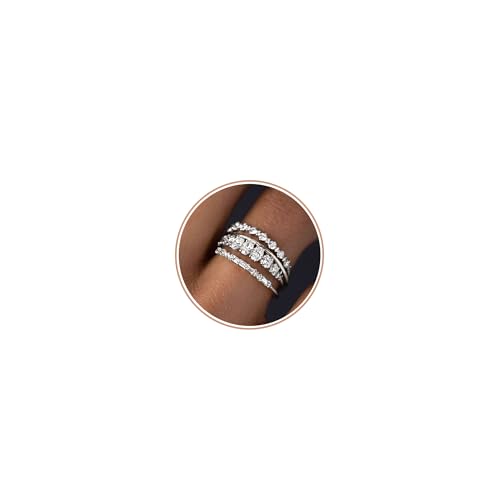 TOBENY TOBENY Silver Rings for Women Non Tarnish Stackable Wedding Engagement…
View on Amazon ↗
 CHICUTIE CHICUTIE 47Pcs Silver Knuckle Rings Set For Women Stackable Joint…
View on Amazon ↗
 17KM 17KM 16 PCS Silver Chunky Rings Set for Women, 14k…
View on Amazon ↗
Listing names and images come from Amazon and are rechecked against the live listings; last checked Nov 8, 2026. No prices shown; the current price is on the listing.
About this guide. This guide is written from general knowledge about stackable ring materials, finishes, and fit, without reading reviews or handling any units. No individual product documents or tests were used. Ring width, metal composition, and sizing vary by listing, so check the specific measurements before ordering.