The valve type and the pump head decide whether a portable pump works at all. High volume suits wider commuter and gravel tires, while high pressure suits narrow road tires. A hose makes pumping easier on the valve, but adds bulk. Check your valve first, then match volume to tire width.
Check the Valve Before Anything Else
Road and many commuter bikes use Presta valves, the thin stem with a locknut at the tip. Cruisers, kids bikes, and many hybrids use Schrader valves, the same shape as a car tire. Check your tube before you shop because a pump head that fits one does not always fit the other.
Some pump heads are reversible: one side for Presta, one for Schrader. Others use a universal head that seals on both without flipping parts. Compare the listing photos and read the head description. A pump that needs a separate adapter for your valve adds a small part that can get lost on the road.
If you ride more than one bike, a universal or reversible head covers both valve types. If you only ride one bike, a single valve head is fine and often seals a little more cleanly.
High Volume or High Pressure
The pump barrel decides how much air moves per stroke. A wider, shorter barrel moves more air but tops out at a lower pressure. A narrower, longer barrel reaches higher pressure but needs more strokes to fill a wide tire.
Match the pump to the tire. A 32 mm or wider commuter, gravel, or hybrid tire needs volume more than high PSI. A 25 mm road tire needs pressure, often above 80 PSI, so a high pressure pump is the better match.
The pressure rating on the listing is a maximum, not a promise. A pump rated to 120 PSI may still be exhausting to use above 80 PSI because the barrel is small. Compare barrel length and diameter when the listing shows them, and think about how often you actually fix a flat.
| Pump style | Air per stroke | Best tire width | Carry style |
|---|---|---|---|
| Mini pump, direct head | Low | Up to 35 mm | Jersey pocket or mount |
| Mini pump with hose | Low to medium | Up to 40 mm | Jersey pocket or mount |
| Frame pump | Medium to high | 25 to 45 mm | Frame mount |
| Portable floor style | High | Any width | Bag or basket |
A frame pump is the middle ground: more air per stroke than a mini pump, but still small enough to mount to the frame. It suits riders who want a pump on the bike at all times without filling a jersey pocket.
A portable floor style pump has a foot peg or fold out base and a T handle. It is easier to use but too bulky for most jersey pockets. It fits a pannier, trunk bag, or basket.
A Hose Protects the Valve Stem
A direct head pump screws or presses straight onto the valve. Every pumping stroke pushes and pulls the valve stem sideways. Over time that can bend the stem or tear the tube at the base, especially on Presta valves with the locknut open.
A short hose between the pump body and the head isolates the valve from the pumping motion. The hose lets you brace the pump against the ground or your leg while the head stays still. That makes the pump easier to use and gentler on the tube.
The tradeoff is packed size. A hose adds length and a little weight. For a pump that lives in a jersey pocket, a direct head is smaller. For a pump that lives on the frame or in a bag, the hose is worth the extra room.
The Gauge Question
A built in pressure gauge tells you when to stop pumping. Without one, you judge pressure by squeezing the tire, which is unreliable on narrow road tires where a few PSI changes the ride.
Gauges on mini pumps are small and can be hard to read, but they still beat guessing. Some pumps place the gauge at the base, others near the head. A gauge near the head is easier to read while the pump is on the valve.
If you ride a wide tire at lower pressure, a gauge matters less. If you ride a road tire, a gauge is close to essential. You can also carry a separate small gauge, but a built in one removes a step at the roadside.
Mount and Carry Shape
Most portable pumps come with a bracket that bolts under a bottle cage. Check that the bracket fits your frame and does not block the cage bolts. Some brackets use velcro straps or zip ties instead, which work on frames without spare bolts.
Think about where the pump will actually live. A pump in a jersey pocket needs to be short and light. A pump on the frame can be longer. A pump in a pannier can be a portable floor style with a foot peg.
The pump should stay put over rough pavement. A bracket that rattles or lets the pump slide out is a common frustration. Compare how the pump locks into its bracket, and check whether the bracket includes a strap as a backup.
Materials and Small Parts That Fail
The barrel is usually aluminum or plastic. Aluminum is heavier but resists cracking if the pump gets dropped or squeezed in a bag. Plastic barrels are lighter but can crack at the threads or the head joint.
The head is the most common failure point. Look for a head with replaceable rubber gaskets or O rings, because the seal wears out before the barrel does. A pump with no replacement parts becomes useless when the gasket hardens.
Check how the head attaches to the hose or barrel. A threaded connection is more secure than a press fit. If the listing does not say, ask the seller whether the gaskets are replaceable and what material the head body uses.
Skip the Portable Pump Only in Two Cases
A portable pump is the right tool for fixing a flat away from home, but it is not the best tool for every rider. If you only ride short distances in a city with frequent transit options, a CO2 inflator and a couple of spare cartridges are smaller and faster.
If you ride tubeless tires, a portable pump alone may not seat a tire that has come off the rim. A tubeless repair kit with plugs plus a pump or CO2 is the safer setup. The pump still tops up pressure after a plug, but it is not the primary tool.
For home use, a full size floor pump is better in every way: more air per stroke, a stable base, a large gauge. A portable pump is for the road, not for the garage. If you only pump tires at home, buy a floor pump instead.
Other cycling accessories follow the same logic: a bike light mount that stays put on rough roads matters as much as a pump that stays in its bracket.
How to Read a Portable Pump Listing
Start with the valve type in the title or description. If it says Presta only, Schrader only, or both, that is the first filter. Then check the maximum pressure and the barrel dimensions if shown. A longer barrel usually means fewer strokes to reach a given pressure.
Look at the photos for the head design. A reversible head shows two openings. A universal head shows one opening with a rubber seal inside. Check whether a hose is included and how long it is, because a very short hose barely reduces valve stress.
Ask the seller two questions when the listing is thin. First, what is the barrel material and length? Second, are the head gaskets replaceable and available? A pump that cannot be repaired is a short term purchase.
Do not pay extra for a claimed stroke count or inflation speed. Those numbers depend on tire size, rider strength, and technique, so they are marketing, not a spec you can compare. A pump that reaches pressure in fewer strokes for one rider may not for another.
The same careful reading applies to other gear you mount on the bike. A phone mount that holds over bumps needs the same attention to clamp and fit.
Portable Pump Questions, Answered
Is a portable bike pump worth it?
Yes, if you ride farther than you are willing to walk. A portable pump turns a flat tire from a trip ending event into a ten minute repair. It is less convenient than a floor pump at home, but it is the only pump that rides with you. The main cost is space and weight, which is small compared to being stranded.
What is the difference between Presta and Schrader valves?
Presta valves are thin, have a locknut at the tip, and are common on road and many commuter bikes. Schrader valves are thicker, match car tire valves, and are common on cruisers, kids bikes, and some hybrids. A pump head must match the valve type or use a reversible or universal design.
How do I choose a portable bike pump?
First match the pump head to your valve type. Then match the pump volume to your tire width: a high volume pump for wide tires, a high pressure pump for narrow road tires. Finally decide whether you want a hose for easier pumping or a direct head for a smaller packed size.
Can a portable pump inflate a road bike tire to full pressure?
Yes, if it is a high pressure pump with a narrow barrel and enough length. The maximum pressure rating tells you the ceiling, but reaching 100 PSI with a short mini pump takes many strokes and significant arm effort. A frame pump or a mini pump with a hose makes the job easier than a tiny direct head pump.
Which is better, a mini pump or a frame pump?
A frame pump moves more air per stroke and is easier to use, but it is longer and heavier. A mini pump fits in a jersey pocket and is lighter, but it takes more strokes and can stress the valve stem more. Choose a frame pump if it fits your frame and you value easier inflation; choose a mini pump if packed size matters most.
The Pump That Fits Your Valve and Your Ride
A commuter on 32 mm or wider tires who wants a pump that lives on the frame should pick a frame pump with a universal head and a hose. It moves enough air without exhausting you, and the hose protects the valve. A road rider on 25 mm tires who carries everything in jersey pockets should instead pick a high pressure mini pump with a gauge, accepting the extra strokes for the smaller size.
Real portable bicycle pump listings, so you can check the points in this guide against actual products. These are affiliate links: as an Amazon Associate we earn from qualifying purchases, at no extra cost to you.
 ETENWOLF ETENWOLF S0 Mini Bike Pump, 20s Fast Inflate Bicycle Pump…
View on Amazon ↗
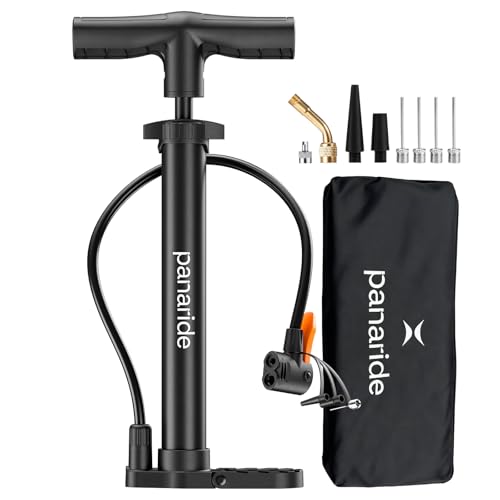 PANARIDE Panaride P120 Compact Bike Floor Pump, Portable Manual Bicycle Tire…
View on Amazon ↗
 TIAKIA Tiakia Mini Bike Pump, 260PSI High Pressure for Road &…
View on Amazon ↗
Listing names and images come from Amazon and are rechecked against the live listings; last checked Nov 8, 2026. No prices shown; the current price is on the listing.
What this guide is. This guide covers the portable bicycle pump category as a whole, not specific models. It is written from general knowledge of pump design and valve types, without reading individual product reviews or testing any units. Confirm the valve type, barrel length, and bracket fit on the listing before you buy.