Two factors decide most bike phone mount choices: where it clamps and how it holds the phone. Commuters on rough city streets need vibration damping and a tight grip. Road riders who glance at navigation want a stem or out front mount that keeps the screen readable. The main tradeoff is security against convenience: quick release designs are easier to use but can loosen over rough miles.
The mount point sets how you see and feel the road
Handlebar mounts put the phone near your grips, so your thumb can reach it without moving your hand far. This position works for city commuting where you stop often. On bumpy streets, the bar transmits more shock than a central mount point.
Stem mounts sit over the headset, keeping the phone centered and closer to your line of sight. Because the stem sees less leverage than the bar ends, vibration is often lower. A centered phone also balances weight, which matters for quick steering corrections.
Out front mounts extend the phone ahead of the stem, similar to a bike computer. This keeps your eyes near the road while you check navigation. The rigid arm can amplify high frequency vibration, so look for a design with rubber isolation if you ride chip seal or cobblestones.
How the phone is held decides whether it stays
Clamp style mounts squeeze the phone from the sides or corners. Corner clamps with spring tension hold more firmly than simple side jaws, because they resist twisting. Check that the clamp opens wide enough for your phone case and closes small enough for your phone without a case.
Silicone band mounts stretch a band over each corner of the phone. The band holds the phone against a back plate and absorbs some road buzz. Removing the phone takes a few seconds, which is fine for long rides but annoying for frequent stops.
Magnetic mounts use a metal plate on the phone or case. They are the fastest to attach and remove, but a strong magnet can still let the phone rotate on rough descents. If you choose magnetic, use a case with a built in metal plate rather than an adhesive plate that can peel.
Some mounts combine a clamp with a silicone safety band. That gives a backup if the clamp loosens. For any design, look for a locking mechanism that requires a deliberate action to release, not just a friction fit.
Vibration damping protects more than the screen
Modern phone cameras use optical image stabilization with tiny moving parts. Constant handlebar vibration can damage that mechanism over time. A mount with rubber or silicone isolation reduces the amplitude that reaches the phone.
Damping also keeps navigation readable. Without it, the screen blurs at speed and you have to slow down to read a turn. Compare mounts by the amount of rubber between the bar clamp and the phone cradle.
For road cycling on smooth pavement, a rigid mount is acceptable. For city commuting over potholes and train tracks, choose a mount with visible rubber bushings or an elastomer layer. If you ride a mountain bike or gravel, a dedicated damping system is worth the extra bulk.
Reading a listing before you buy
Start with the clamp diameter range. Most handlebars are 31.8 mm, but some commuter bikes use 25.4 mm or 22.2 mm. A mount that only fits 31.8 mm will not work on a thinner bar without a shim.
Check the phone width range, not just screen size. A mount rated for phones 58 to 85 mm wide covers most models, but a thick case can push the width beyond the maximum. Measure your phone with its case on.
Look at the mounting hardware. A single bolt clamp is easier to install, but a two bolt clamp spreads pressure and resists rotation. If the listing does not show the bolt pattern, ask the seller before buying.
For out front mounts, confirm the arm length and whether it clears your stem and cables. A short arm may put the phone too close to the stem cap. A long arm can bounce more. The listing should state the arm length in millimeters.
Ask the seller about the release mechanism. A good answer describes a lock that clicks or a button that must be pressed. Avoid mounts where the phone simply slides in with no positive lock, because those can eject the phone on a hard landing.
Mistakes that end with a phone on the pavement
Buying by phone brand instead of phone width is the most common mistake. Two phones with the same screen size can differ by several millimeters in width, especially with different cases. Always check the width range.
Ignoring the handlebar diameter wastes a purchase. A 31.8 mm clamp on a 25.4 mm bar will never tighten properly, and the phone will rotate downward on the first bump.
Choosing a magnetic mount for rough roads is a risk. The magnet holds fine on smooth paths, but a pothole can create enough force to twist the phone off the plate. Reserve magnetic mounts for short, smooth commutes.
Forgetting about the charging port is a small but real annoyance. Some mounts block the bottom port, so you cannot run a cable to a power bank on long rides. Look for a mount with an open bottom or a pass through cutout.
Mounting the phone to the top tube instead of the bar or stem puts it where your knees can hit it. A top tube mount also makes the screen harder to read while riding. Keep the phone on the bar, stem, or out front.
Features that matter and features that are noise
A locking release matters. Without it, the phone is held only by friction and can slide out over time. This is the single most important safety feature on any mount.
Rubber or silicone contact points matter. They grip the phone without scratching it and absorb small vibrations. Hard plastic against a glass back can slip, especially when wet.
A weather resistant design matters for commuters. Rain can seep into a clamp and reduce grip, or corrode metal springs. Look for stainless steel hardware and sealed pivots.
A built in power bank is marketing noise for most riders. It adds weight to the handlebar and puts strain on the mount. A separate battery in a top tube bag is more reliable.
A 360 degree rotation feature is useful only if you switch between portrait and landscape navigation. Most riders keep the phone in portrait for turn by turn directions. A simple tilt adjustment is enough.
Quick release is often marketed as a must have, but it trades away security. If you leave your bike locked outside, a quick release mount makes it easy for a thief to take the mount along with the phone.
Who should skip a bike phone mount
Road racers who train with power and cadence should use a dedicated bike computer instead. A phone is heavier, less aerodynamic, and its battery drains faster with the screen always on. A bike computer mount keeps the device lower and more stable.
Mountain bikers on technical trails should not put a phone on the bar. The impact forces are too high for most clamps, and a crash will destroy the phone. Use a top tube bag or a backpack pocket instead.
Anyone who rides in heavy rain for hours should consider a waterproof case with a bar mount rather than an open clamp. Water can force its way into the phone's ports and speakers even if the mount itself is fine.
If you only need audio directions and never look at the screen, a handlebar bag with a clear top pocket is a simpler option. You do not need a rigid mount to hear turn prompts from a pocket.
Comparing the main mount styles
| Mount style | Grip security | Vibration level | Best for |
|---|---|---|---|
| Clamp, handlebar | Medium to high | High | City commuting, quick stops |
| Silicone band | High | Medium | Rough roads, long rides |
| Magnetic | Low to medium | High | Short smooth errands |
| Out front, stem | High | Medium to low | Road riding, navigation |
Clamp mounts cover the widest range of phone sizes, but the grip depends on the clamp design. Silicone bands are the most forgiving on rough roads because the band stretches and absorbs shock. Magnetic mounts are the least secure over bumps but the fastest to use. Out front mounts reduce vibration by moving the phone to a stiffer part of the bike.
Long term costs and care
A good mount should last several seasons with no replacement parts. The parts that wear first are the silicone bands and the clamp springs. Check the listing for whether replacement bands are sold separately, because a band that loses elasticity cannot hold the phone.
Clean the clamp and the phone contact points every few weeks. Road grit gets into the mechanism and accelerates wear. A rinse with water and a soft brush is enough; avoid lubricants that attract dirt.
If you ride in winter, salt from treated roads will corrode steel hardware. Look for stainless steel bolts and anodized aluminum parts. After a wet ride, dry the mount with a cloth to prevent rust.
The phone case is part of the system. A thick silicone case can reduce grip on a clamp mount because the clamp cannot get a firm purchase. A thin, textured case works better. For magnetic mounts, use a case with the metal plate molded in rather than stuck on.
Bike phone mount questions riders ask before buying
How do I know if a bike phone mount fits my phone?
Measure your phone's width in millimeters with the case on, then compare that to the mount's stated width range. Most mounts list a range like 58 to 85 mm. If your phone is near the upper limit, the clamp may be too tight. If it is below the lower limit, the phone will slide.
Is a bike phone mount worth it for short commutes?
For a commute under 20 minutes on smooth roads, a simple clamp mount is worth it if you need navigation or want to see notifications. For very short errands where you know the route, a pocket or bag works fine. A mount adds value when you would otherwise stop to check the phone.
Will a bike phone mount damage my phone camera?
Over time, handlebar vibration can damage the optical image stabilization in some phone cameras. A mount with rubber or silicone damping reduces this risk. For motorcycles and very rough roads, a dedicated vibration damper is a good idea. For bicycles on pavement, a well damped mount is usually sufficient.
Which is better for road cycling, a stem mount or an out front mount?
An out front mount puts the phone in your line of sight like a bike computer, which is better for navigation at speed. A stem mount is more compact and often lighter, but you have to look down further. If you ride in a group, an out front mount keeps your head up and your hands near the brakes.
Can I use a bike phone mount with a thick phone case?
Some clamp mounts cannot open wide enough for a thick rugged case. Silicone band mounts are more forgiving because the band stretches. Magnetic mounts work with any case thickness if the case has a metal plate or you add one inside. Check the mount's maximum width and compare it to your cased phone.
A bike phone mount pick for two kinds of riders
A commuter who rides cracked city streets and checks navigation at red lights should buy a silicone band mount on the handlebar. The band holds through potholes, and the phone comes off fast enough for a quick stop. A road cyclist who follows a route at speed should instead choose an out front mount with rubber isolation, because the centered position keeps the screen readable without looking down.
Real bike phone mount listings, so you can check the points in this guide against actual products. These are affiliate links: as an Amazon Associate we earn from qualifying purchases, at no extra cost to you.
 KINIZUXI Kinizuxi Motorcycle Phone Mount Tether 6 Pack Silicone Bands for…
View on Amazon ↗
 ZICINER Ziciner 3 PCS Bike Phone Mount Holder Band, Elastic Smart…
View on Amazon ↗
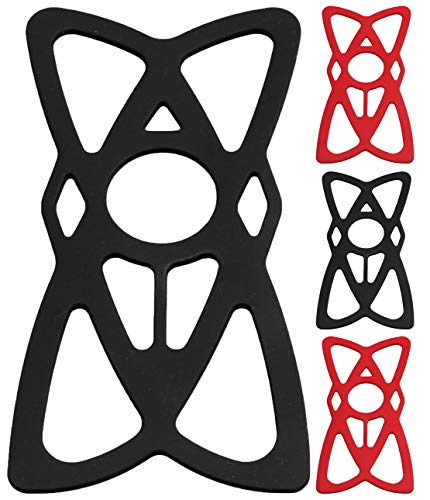 NALAKUVARA NALAKUVARA Phone Mount X Holder Grip Tether Rubber Strap Silicone…
View on Amazon ↗
Listing names and images come from Amazon and are rechecked against the live listings; last checked Nov 8, 2026. No prices shown; the current price is on the listing.
How to read this guide. Use this guide as a checklist to hold against any product listing, not as a verdict on a specific model. It reflects general knowledge about bike phone mounts as a category, with no testing of individual products; verify the clamp diameter and phone width range on the listing before you buy.