Focus on three things: material, thickness, and grip. A mat that cushions your knees often weighs more and costs more. A grippy open cell mat helps sweaty practices, but closed cell mats resist moisture and clean up faster. Match the mat to your floor type and how much you carry it.
Material Sets the Feel and the Maintenance
Most yoga mats fall into a few material families. PVC mats are dense, grippy, and cheap, but they off gas and are not biodegradable. TPE, or thermoplastic elastomer, is a lighter synthetic that feels softer and is often marketed as eco friendlier, though recycling depends on local facilities.
Natural rubber mats grip well and have a springy feel, but they are heavy and can smell strongly at first. Cork mats get grippier when your hands are slightly damp, which suits hot yoga. Cotton and jute mats are thin and breathable, but they offer almost no cushioning.
Check the listing for a material name rather than just a color or pattern. The material predicts how the mat will break in, how it smells, and whether it will flake after months of use.
- PVC: grippy, durable, can have a plastic smell.
- TPE: lighter weight, softer, less cushioning than PVC.
- Rubber: excellent grip, heavy, may smell at first.
- Cork: grip improves with moisture, good for hot yoga.
- Cotton or jute: thin and breathable, minimal padding.
Thickness Is a Tradeoff Between Cushion and Stability
A thicker mat protects your knees, hips, and wrists, especially on a hard floor. But extra thickness can make balancing poses feel wobbly because your feet sink slightly. A thin mat keeps you connected to the floor and is easier to roll, but it may hurt on concrete or tile.
Typical mats range from about 3 to 8 millimeters thick. A 3 to 4 millimeter mat suits travel and experienced practitioners. A 5 to 6 millimeter mat is a common middle ground for home use. An 8 millimeter mat works for seniors, beginners with sensitive joints, or anyone practicing on a hard surface.
Consider your floor type. Carpet hides some need for cushioning but can make a thin mat bunch up. Hardwood, tile, or concrete call for more thickness unless you add a folded blanket under your knees.
Grip Comes From Texture and Moisture
Grip is what keeps your hands and feet from sliding in downward dog or warrior poses. Open cell mats absorb sweat and become grippier when wet, which is why they suit hot yoga. Closed cell mats repel moisture, so they stay cleaner and dry faster, but they can get slippery once you sweat.
Texture matters too. A raised or dotted surface adds mechanical grip, while a smooth mat relies on the material itself. Some mats are sticky when dry but turn slick with moisture. If you sweat a lot or practice in a warm room, look for a mat that lists wet grip or moisture absorption.
You can improve grip with a towel or by cleaning the mat regularly. But if the material itself is slippery, no amount of cleaning will fix it. Check the listing for terms like wet grip, open cell, or non slip texture.
Roll Size and Weight Decide Where the Mat Lives
A mat that never gets rolled up is a mat that gets tripped over. If you live in a small apartment or need to carry the mat to a class, weight and roll diameter matter. A heavy rubber mat can weigh 5 pounds or more, while a travel mat may weigh under 2 pounds.
Thicker mats roll into a wider cylinder and take up more closet or shelf space. Some mats fold instead of roll, which can be easier to tuck into a bag but may crease over time.
Measure your storage spot before buying. A standard mat is about 24 inches wide and 68 to 72 inches long. Rolled diameter varies from about 4 to 8 inches depending on thickness and material.
| Mat type | Cushioning | Weight | Grip in sweat | Suits |
|---|---|---|---|---|
| Travel mat | Minimal | Very light | Varies | Commuting, small storage |
| Standard PVC | Moderate | Medium | Good when dry | Home practice on carpet |
| Thick foam | High | Heavy | Varies | Seniors, hard floors |
| Natural rubber | Moderate to high | Heavy | Good | Regular practice, grip focus |
| Cork | Moderate | Medium | Improves when damp | Hot yoga, sweaty hands |
A mat that is easy to carry may not be the one that feels best under your knees. Decide which matters more before you compare listings.
Closed Cell vs Open Cell Changes How You Clean It
Closed cell mats do not absorb water or sweat, so you can wipe them down with a damp cloth and they dry quickly. Open cell mats soak up moisture, which helps grip but means they hold onto bacteria and odor if not cleaned regularly.
For an open cell mat, you may need a mat cleaner spray or a gentle soap and water rinse, and you must let it air dry completely before rolling it up. Storing a damp open cell mat can lead to mildew.
If you practice daily or sweat heavily, a closed cell mat is easier to maintain. If you prioritize grip in hot conditions, accept the extra cleaning effort.
Who Should Skip a Yoga Mat Altogether
A yoga mat is not the right tool for every floor workout. If you do high impact moves like jumping or burpees, a thicker exercise mat or a gym flooring tile provides more shock absorption and a wider surface.
If you mostly do Pilates or floor stretching on carpet, a large towel or a thin foldable mat may be enough. If you have balance issues and practice on a thick rug, a mat can actually make you less stable by sliding or bunching.
For outdoor practices on grass or sand, a dedicated outdoor mat with a textured bottom or a simple blanket may work better than a standard indoor mat, which can pick up dirt and twigs.
Mistakes That Lead to a Mat You Hate
Buying the thickest mat you can find is a common mistake. Extra cushioning feels good at first, but it can make standing poses harder to hold. Your feet sink, your ankles wobble, and you end up fighting the mat instead of using it.
Ignoring the floor you practice on is another. A mat that works on carpet may slide on hardwood. A mat that grips well on tile may be too sticky on a rubber gym floor.
Choosing a mat by color or pattern alone means you may end up with a material that smells, flakes, or turns slippery. Read the material line in the listing and match it to your practice style.
How to Read a Listing Before You Buy
Look for three facts in the listing: the material, the thickness in millimeters, and the length and width. If any of those are missing, ask the seller. A mat that does not list its thickness is often too thin to cushion.
Check the care instructions. If the listing says wipe clean only, the mat is likely closed cell. If it says air dry or avoid folding, that tells you about durability. Ask the seller whether the mat is open cell or closed cell if the listing does not say.
Watch for vague terms like eco friendly or non toxic without a material name. Those words do not tell you how the mat will perform. A specific material, a thickness, and a grip description are the minimum you need to compare two mats.
Yoga Mat Questions Worth Asking Before You Spend
Is a thicker yoga mat better for beginners?
A thicker mat helps beginners who feel knee or wrist pain, especially on hard floors. But if it is too thick, balancing poses become harder because your feet sink. A 5 to 6 millimeter mat is a safe starting point for most beginners. If you are on carpet, you can go thinner.
Which yoga mat is best for hot yoga?
Hot yoga calls for a mat that grips when wet. Open cell mats absorb sweat and get stickier, while cork mats get grippier with damp hands. Closed cell mats can turn slippery once you sweat. A yoga towel over a standard mat also works if you do not want to buy a new mat.
How do I stop my yoga mat from smelling?
New rubber and PVC mats can have a strong odor. Unroll the mat and let it air out in a ventilated room for a few days. Wipe it with a mild soap and water solution, then dry it completely. If the smell persists, it may be the material itself, and switching to TPE or cotton can help.
What size yoga mat do I need?
A standard mat is about 24 inches wide and 68 to 72 inches long. If you are taller than 6 feet, look for a mat of 74 inches or longer. For wide shoulders or a larger practice space, a 26 inch mat gives extra room. Measure your reach in a wide stance to see if you need extra length.
Can I use a yoga mat for other workouts?
A yoga mat works for low impact floor work like Pilates, stretching, and bodyweight core exercises. It is not ideal for high impact moves or heavy equipment because it is thin and can slide. For jumping or lifting, use a thicker exercise mat or gym flooring.
A Yoga Mat for Home Practice vs One for the Studio
For a home practice on a hard floor, choose a 5 to 6 millimeter TPE or PVC mat with a closed cell surface. It cushions your knees, wipes clean, and rolls up small enough for a closet. If you practice hot yoga or sweat heavily, switch to an open cell or cork mat that grips when damp, even though it needs more cleaning.
Real yoga mat listings, so you can check the points in this guide against actual products. These are affiliate links: as an Amazon Associate we earn from qualifying purchases, at no extra cost to you.
 GRUPER Yoga Mat Non Slip, Eco Friendly Fitness Exercise Mat with…
View on Amazon ↗
 AMAZON BASICS Amazon Basics 1/2 Inch Extra Thick Exercise Yoga Mat with…
View on Amazon ↗
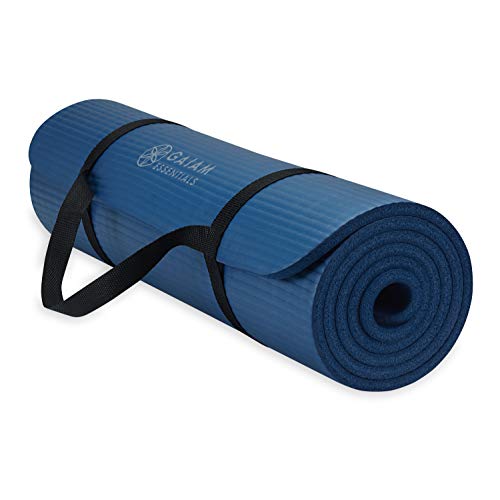 GAIAM Gaiam Essentials Thick Yoga Mat Fitness & Exercise Mat with…
View on Amazon ↗
Listing names and images come from Amazon and are rechecked against the live listings; last checked Nov 8, 2026. No prices shown; the current price is on the listing.
About this guide. This guide covers yoga mats as a product type and does not evaluate individual models. It is written from general knowledge of mat materials, thickness, and grip, without reading product reviews or testing. Check the listing for exact dimensions, weight, and cleaning instructions before you buy.