Cartridge type drives the choice: moving magnet needs standard 40 dB gain, while moving coil wants higher gain and loading options. Next, check whether your receiver has a phono input or you need a standalone unit. The main tradeoff is simplicity against adjustability, as fixed settings suit most beginners but limit cartridge upgrades.
Cartridge Type Sets the Starting Point
Moving magnet cartridges output around 3 to 6 millivolts, so a preamp with roughly 40 dB of gain works well. Moving coil cartridges typically output under 1 millivolt, often around 0.3 to 0.5 millivolts, and need 56 to 66 dB of gain. Some high output moving coil models sit in between and can work with a moving magnet stage.
Check the cartridge on your turntable before you buy. A mismatch leaves the signal too quiet or forces you to crank the volume and hear hiss. If you plan to change cartridges often, an adjustable stage keeps more options open.
Apartments and beginner setups usually have moving magnet cartridges, so a basic stage covers them. Vintage turntables often came with moving magnet or high output moving coil cartridges, which also fit under the moving magnet umbrella for gain purposes.
Standalone or Built In: Read the Back of Your Receiver
Many receivers and integrated amps include a phono input labeled PHONO, which means the preamp is built in. If yours has one, you can connect the turntable directly and skip a separate box. If the only inputs say AUX, CD, or TAPE, you need a standalone phono preamp between the turntable and the receiver.
A turntable with a built in preamp can feed any line input, but those built in stages are often basic. Bypassing them with a separate unit can improve clarity, though the difference depends on the rest of your system.
For small spaces, a compact standalone unit about the size of a paperback fits easily next to a turntable. Some models can sit hidden behind a shelf or under a riser.
Gain and Loading: The Two Numbers That Change the Sound
Gain is how much the preamp amplifies the tiny cartridge signal. Too little gain sounds thin and forces high volume settings. Too much gain can overload the input and clip loud passages. Fixed moving magnet stages usually sit near 40 dB, which suits most cartridges.
Loading, measured in ohms for moving coil and picofarads for moving magnet, shapes the high frequency response. A moving magnet cartridge often expects 47,000 ohms and a specific capacitance value. A moving coil cartridge may want 100 ohms, 500 ohms, or another value depending on the model.
If the listing does not state gain or loading, ask the seller. A stage with adjustable loading lets you tune the treble to taste; a fixed one commits you to one setting. For most listeners, the standard values sound correct, but a cartridge that sounds dull or bright may need a different load.
Noise Floor Separates a Quiet Stage From a Hissy One
Phono preamps amplify a very small signal, so their own noise becomes audible. A quiet stage lets you hear the space between notes and the decay of a cymbal. A noisy stage adds a constant hiss that grows worse as you turn up the volume.
Look for a high signal to noise ratio in the listing, often expressed in decibels. A number above 80 dB is decent; above 90 dB is very quiet. Power supply design matters too, as a cheap wall wart can inject hum.
Placement affects noise as well. Keep the preamp away from power cords, Wi-Fi routers, and large transformers. A metal case shields better than a plastic one when interference is present.
Subsonic Filter and Mono Switch: Useful or Just Extra
A subsonic filter cuts very low frequencies below the music, often under 20 Hz. Warped records can make your woofers pump back and forth without making sound. If your speakers visibly move on warped vinyl, a filter helps; if your records are flat, you may not need it.
A mono switch sums the left and right channels, which can reduce noise on old mono pressings. It is a small convenience rather than a must have. For most stereo records, leave it off.
Marketing copy often highlights gold plated connectors, toroidal transformers, and discrete circuits. These can matter, but they do not guarantee better sound. A well designed op amp stage can outperform a poorly implemented discrete one, so focus on the measured noise and gain figures instead.
| Design | Gain range | Loading | Noise floor | Suits |
|---|---|---|---|---|
| Moving magnet fixed | About 40 dB | Fixed 47k ohms | Usually low | Beginner decks with MM cartridges |
| Moving magnet adjustable | 35 to 45 dB | Some capacitance choices | Low to medium | MM users who swap cartridges |
| Moving coil fixed | 56 to 66 dB | Fixed, often 100 ohms | Varies widely | One known MC cartridge |
| Moving coil adjustable | 50 to 70 dB | Multiple ohm settings | Lowest in premium models | Multiple MC cartridges |
The Mistake of Buying for the Wrong Cartridge
A common error is buying a moving coil preamp for a moving magnet cartridge. The extra gain overloads the input and distorts. The reverse mistake leaves a moving coil cartridge barely audible.
Another error is hiding the preamp behind a stack of components where it picks up hum, then blaming the unit. Give it a few inches of space from power supplies and cables.
Some buyers assume a more expensive stage always sounds better. In a system with modest speakers, the difference between a budget and mid range stage may be subtle. Spend where the rest of the chain can reveal it.
Long Term Costs Are Mostly in Cartridges
The preamp itself has no consumables and should last for many years. The ongoing cost is the stylus, which wears and needs replacement after roughly 500 to 1,000 hours of play, depending on the cartridge.
A moving coil cartridge often cannot have its stylus replaced by the user and must be retipped or traded in. That makes the preamp choice part of a longer term plan: if you may move to moving coil later, an adjustable stage saves a second purchase.
Cables also matter over time. Short, well shielded interconnects between the turntable and preamp reduce hum and capacitance issues. Keep that run under about 3 feet if possible.
Who Should Skip a Standalone Phono Preamp
If your receiver has a phono input and you are happy with the sound, you may not need a separate unit. The built in stage already does the job. A standalone preamp helps when the built in stage is noisy or when you want to try a moving coil cartridge.
Listeners who play vinyl only occasionally through powered speakers with a built in phono stage can also skip the extra box. The convenience of fewer cables and less gear matters more than a small noise improvement.
If you are building a system around high resolution digital files and only spin a record rarely, put the money into a better cartridge or speakers first.
Phono Preamp Questions Before You Buy
How do I know if I need a phono preamp?
Look at the back of your receiver or powered speakers. If there is an input labeled PHONO, you do not need a separate one. If the only inputs are AUX, CD, or LINE, you need a phono preamp between the turntable and that input. A turntable with a built in preamp can also connect directly to a line input.
What is the difference between moving magnet and moving coil phono preamps?
Moving magnet cartridges output a higher voltage and need about 40 dB of gain. Moving coil cartridges output much less and need 56 to 66 dB of gain, plus loading options often measured in ohms. Some moving coil preamps also work with moving magnet cartridges, but a moving magnet preamp cannot properly amplify a low output moving coil.
Can I use a phono preamp with powered speakers?
Yes. Connect the turntable to the phono preamp, then run a cable from the preamp output to the line input on the powered speakers. Make sure the speakers do not already have a phono input, or you would be amplifying the signal twice.
Is a phono preamp worth it for a cheap turntable?
It can be, but the improvement has limits. A cheap turntable with a basic cartridge may not reveal the lower noise of a better preamp. If you plan to upgrade the turntable later, a decent preamp can stay in your system. If you will keep the cheap deck, a basic stage is enough.
Which phono preamp is best for a vintage turntable?
Check the cartridge first. Most vintage turntables use moving magnet cartridges, so a standard moving magnet preamp works. If the turntable has a low output moving coil cartridge, you need a moving coil stage. Also check whether the turntable has a built in preamp, as some later models do.
Which Phono Preamp Fits Your Turntable
A vinyl listener with a moving magnet cartridge and a receiver lacking a phono input is served by a fixed moving magnet stage with a low noise floor and a metal case. That covers most beginner and vintage setups without extra knobs. If you own or plan to buy a low output moving coil cartridge, choose an adjustable moving coil stage with selectable loading instead, since it will grow with your cartridge choices.
Real phono preamp listings, so you can check the points in this guide against actual products. These are affiliate links: as an Amazon Associate we earn from qualifying purchases, at no extra cost to you.
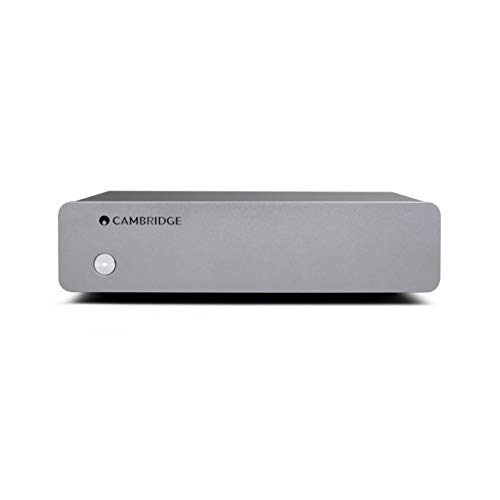 CAMBRIDGE AUDIO Cambridge Audio Alva Solo - Moving Magnet Phono Preamp –…
View on Amazon ↗
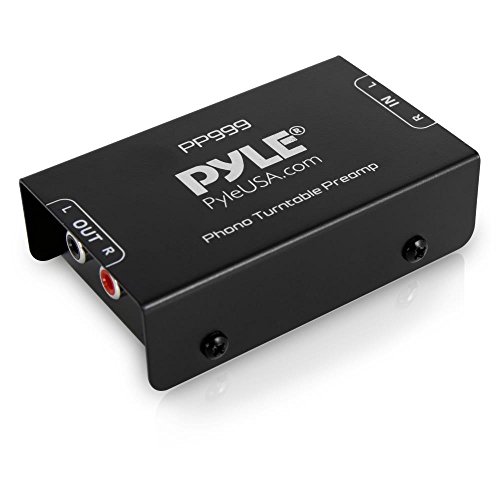 PYLE Pyle Phono Turntable Preamp - Mini Electronic Audio Stereo Phonograph…
View on Amazon ↗
 YAQIN Yaqin MS-33B Tube Phono Preamp for Moving Magnet & Moving…
View on Amazon ↗
Listing names and images come from Amazon and are rechecked against the live listings; last checked Nov 8, 2026. No prices shown; the current price is on the listing.
How to read this guide. This guide covers the phono preamp category in general, based on standard cartridge and gain principles rather than any individual model. No product documents, reviews, or in person testing were used, so verify any dimension or setting on the listing before you buy.