Decide between a box and open storage by how often you handle discs. A box protects against dust, light, and knocks, and it stacks or slides into tight spaces. A shelf or tower keeps spines visible and discs reachable in seconds. Most listeners with a stable, rarely changed collection do fine with a box; frequent players and growing libraries should skip it.
How Often You Pull a Disc
A CD storage box is a closed container that holds jewel cases, sleeves, or loose discs. It works well when you play a disc, put it back, and leave the rest alone for weeks. The lid or drawer keeps dust off the top edge of jewel cases, which is the part that collects grime on open shelves.
If you flip through your collection daily or leave discs out on a desk, a box adds a step every time. You lift the lid, dig through the stack, and refile. A shelf or a binder with clear pages shows you the spine art and lets you grab a title without moving other cases.
Think about where the box will live. A box under a bed or in a closet makes sense for long term storage. A box on a shelf you reach into every evening gets old fast.
Fixed Collection or Growing Shelf
Boxes suit a fixed set of discs. You can fill one, label it, and forget it. If your collection grows by a few discs a month, a box fills unevenly. You end up with two half full boxes, or one box you outgrow before the year ends.
A shelf or tower grows with you. You add a row, shift discs, and keep the alphabetized order. Some listeners keep a small box for archived discs they rarely play and a shelf for current rotation. That split works better than trying to make one box hold everything.
For car or travel use, a compact case or binder beats a home storage box. A box sized for a shelf is awkward in a seat pocket or glovebox.
Stacking, Sliding, and Hidden Spaces
| Storage style | Dust protection | Browsing speed | Best spot | Watch for |
|---|---|---|---|---|
| Lidded box | High | Slow | Closet, under bed | Lid must close fully |
| Drawer unit | Medium | Medium | Media cabinet | Drawer slide quality |
| Open shelf | Low | Fast | Living room wall | Dust on top edges |
| Sealed case | Very high | Very slow | Attic, garage | Latches break over time |
A lidded box stacks neatly, but only if the lid is flat and the box is rigid. Fabric covered boxes with floppy lids sag under weight. Check the listing for a reinforced lid or a hard shell if you plan to stack two or three high.
What the Listing Tells You Before You Buy
Start with the internal width. Standard jewel cases are about 5.6 inches wide and 4.9 inches tall. A box that claims to hold 30 CDs should have an interior at least 5.7 inches wide so cases slide in without forcing. Some boxes are sized for paper sleeves, which are thinner, so a 50 sleeve box may not hold 50 jewel cases.
Check the material. Corrugated cardboard is light and cheap but absorbs moisture in basements. Plastic or polypropylene boxes resist damp and wipe clean. Wood or MDF boxes look nicer in a living room but weigh more and cost more per disc stored.
Ask the seller about the interior finish if the listing does not show it. A rough unfinished edge can scuff jewel cases every time you slide one in. Look for a smooth interior, rolled edges, or a fabric lining.
Sleeves, Jewel Cases, and the Half Empty Box
One common mistake is buying a box sized for jewel cases and then filling it with paper or poly sleeves. The sleeves flop over, the stack leans, and the lid will not close. If you keep discs in sleeves, buy a box with dividers or one made for sleeve storage.
Another mistake is buying one large box for a small collection. A half empty box lets discs lean at an angle, which warps paper inserts over time. Use a divider or a smaller box so discs stand upright.
Avoid boxes with a tight fit. If you have to press discs in, the jewel case hinges and paper edges take the damage. Leave a finger of space so you can lift a case out without prying.
Long Term Costs and Care
Boxes have almost no consumables. The box itself is the only cost, and it lasts for years if kept dry and out of direct sun. Sunlight fades printed spines and can warp plastic cases, so a closed box in a bright room protects better than an open shelf.
If you store discs in a garage or attic, heat and humidity do more damage than the box style. A sealed plastic case with a foam gasket keeps out moisture, but no box is climate control. Discs stored above 100 degrees for long periods can delaminate.
Wipe the outside of a plastic box with a damp cloth. For cardboard, keep it dry and dust the top edge where dust settles. Do not store a box directly on a concrete floor in a basement; raise it on a shelf or a pallet.
Features That Matter and Features That Are Noise
A lid that stays closed matters. Cheap boxes have loose lids that slide off when you move the box. Look for a snap, a latch, or a snug friction fit. Handles matter only if you move the box often; a cutout handle on a heavy box can tear.
Labels and label windows are useful if you store multiple boxes. A clear pocket on the front lets you write the genre or date range without opening the box. Dividers help if you mix discs and sleeves in one box.
Marketing terms like archival, museum grade, or acid free mean little for standard jewel cases. They matter more for paper sleeves and printed inserts. A box that claims to be waterproof usually means splash resistant, not submersible. Check the IP rating if you truly need water protection.
CD Storage Box Questions Buyers Ask First
How many CDs fit in a standard storage box?
A typical lidded box holds 30 to 60 jewel cases depending on the interior width. Check the internal dimensions against the 5.6 inch width of a jewel case. Boxes sized for paper sleeves hold more discs per inch but do not fit jewel cases standing upright.
Can I store CDs in a box in the garage?
Yes, if the box is sealed and the garage stays below about 100 degrees. Heat and humidity warp discs and cases faster than light or dust. A plastic box with a gasket lid and a raised shelf position gives the best chance in an unconditioned space.
Is a CD storage box better than a binder?
A box keeps jewel cases and artwork intact, which matters if you care about the packaging. A binder removes discs from cases and stores them in sleeves, saving space but losing the case. Choose a box for home archiving and a binder for car or travel use.
What size box do I need for 100 CDs?
Plan for about 100 jewel cases standing upright in two boxes of 50 each, or one larger box if the interior width is at least 5.7 inches and the length fits your shelf. Check the listing dimensions and divide by 0.4 inches per jewel case for a rough estimate.
Do I need acid free storage for CDs?
Not for the discs themselves, which are polycarbonate and aluminum. Acid free matters for paper inserts and cardboard sleeves, which can yellow and become brittle over decades. Most listeners do not need archival grade materials for a home collection.
Which CD Storage Box Fits Your Shelf and Habits
If you have a fixed stack of discs you rarely play and nowhere to put them, a rigid lidded box with a smooth interior and a snug lid solves the problem for years. Buy one with dividers if you mix sleeves and jewel cases. If you pull discs every week or keep adding titles, skip the box and get a shelf or a drawer unit where spines stay visible and the collection can grow.
Real storage box listings, so you can check the points in this guide against actual products. These are affiliate links: as an Amazon Associate we earn from qualifying purchases, at no extra cost to you.
 NETTIA NETTIA CD/BD/DVD Storage Box with Moisture Protection, Lockable - Holds…
View on Amazon ↗
 DOITOOL DOITOOL CD/DVD Cake Box Spindle, 2Pack Empty DVD Storage Bucket…
View on Amazon ↗
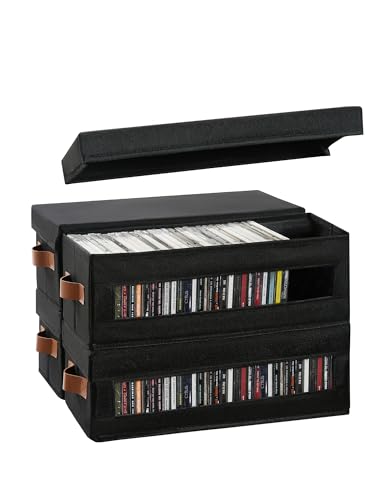 COORGANISERS Coorganisers 4 Packs CD Storage Box with Visible Window, Stackable…
View on Amazon ↗
Listing names and images come from Amazon and are rechecked against the live listings; last checked Nov 8, 2026. No prices shown; the current price is on the listing.
What this guide is. This guide is written from general knowledge of CD storage boxes and how they behave in real rooms. It does not describe any individual model, and you should verify interior dimensions and materials on the product listing before buying.