Bowl capacity and motor strength decide most of it. A 1 to 3 cup bowl suits garlic, herbs, dressings, and one person meals. A 3 to 5 cup bowl with a stronger motor handles small family prep and weekly meal prep, but takes more cabinet space. The tradeoff is simple: compact storage and fast cleanup against the ability to process larger batches and harder ingredients.
The Bowl Size That Fits Your Actual Meals
Check the work bowl capacity first, because it caps every recipe. A 1 to 2 cup bowl minces two garlic cloves, a shallot, a handful of herbs, or a single serving of pesto without leaving half the food stuck under the blade. It cannot hold a full onion or a can of chickpeas unless you work in several small rounds.
A 3 cup bowl is the middle ground for one to two people. It fits a small onion, a few carrots, or enough dressing for several salads. If you often cook for two or pack lunches, this size reduces the number of times you stop to scrape the sides.
A 4 to 5 cup bowl starts to overlap with a small full size processor. It can handle a batch of hummus, chopped nuts for baking, or vegetables for a soup base. The tradeoff is that it no longer disappears into a shallow drawer, and the wider base takes up more counter space.
Ignore the marketing line that a mini can replace a full size processor. It cannot shred a block of cheese, knead dough, or slice a whole cabbage. If those jobs come up monthly or more, a mini will sit unused while a full size earns its shelf space. Compare the bowl diameter and height against the spot where you plan to store it.
Motor Power Separates a Chopper From a Processor
Wattage is the most honest spec on the listing, but it only matters in context. A 150 to 250 watt motor spins fast enough for soft herbs, cooked vegetables, and ripe fruit. It will stall or pulse unevenly on raw carrots, frozen berries, and whole nuts.
A 300 to 400 watt motor handles those tougher jobs in small batches. It also holds a steadier speed under load, which means the blade cuts instead of smashing. If you regularly make nut butters, energy balls, or frozen fruit sorbets, look at the higher end of that range.
Do not compare watts across brands as if they are a score. A well designed blade and a narrow bowl can make a lower watt motor feel stronger, while a wide bowl can waste power on splashing food up the sides. Check the listing for a pulse function, because pulse gives you more control than a single on switch when you want a coarse chop.
Listen for the duty cycle if the listing states one. A motor rated for 30 seconds of continuous use will overheat if you run it for two minutes straight. That is fine for garlic, not for hummus. If the seller does not state a duty cycle, assume short bursts are safer.
Feed Style Changes How Evenly It Chops
There are two common feed styles in this product type. A simple single speed chopper with a fixed blade runs everything at one speed, so you control the texture by how long you hold the button and how often you scrape the bowl. It is fine for coarse salsas and chunky pesto but tends to leave a ring of unchopped food under the blade.
A model with a reversible or dual height blade and a pulse setting gives you more even results. Some designs place the blade low in a curved bowl so food falls back into the cutting zone. Others use a wide flat blade that needs more liquid to move the food around.
If even texture matters for sauces and dips, look for a bowl shape that curves inward at the bottom and a blade that sits close to the floor. If you only want a rough chop for stir fries and salads, any fixed blade will do and will be easier to clean.
Take note of how the lid feeds ingredients. A small opening on top lets you drizzle oil while the blade runs, which is useful for mayonnaise and vinaigrettes. A closed lid with no opening forces you to stop and open the bowl, which is a minor annoyance that adds up during weekly meal prep.
Which Design Types Actually Fit Your Counter and Routine
| Design type | Best batch | Cleanup effort | Suits |
|---|---|---|---|
| 1 to 2 cup chopper | Garlic, herbs, dressings | Rinse and go | One person meals, small kitchens |
| 3 cup mini processor | Salsa, small soup base | Quick hand wash | Couples, college students |
| 4 to 5 cup compact | Hummus, chopped nuts | More parts to wash | Weekly meal prep, small families |
| Full size 7+ cup | Dough, shredding, large batches | Heaviest cleanup | Busy families, frequent bakers |
A 1 to 2 cup chopper is the only type that truly earns the mini label. It stores in a drawer, cleans in seconds, and replaces a knife for small aromatic prep. If you cook for one and hate washing a cutting board for two cloves of garlic, this is the one.
The 3 cup mini processor is the most versatile for a two person household. It still fits in a cabinet but can handle a small batch of salsa or a quick nut topping. College students and studio apartment cooks often stop here.
A 4 to 5 cup compact model is where the word mini starts to stretch. It is still shorter and lighter than a full size processor, but it needs a dedicated shelf. Choose this only if you batch cook or cook for three or more people several times a week. For a busy family, it can be a second, smaller tool next to a blender, not a replacement for one.
A Parts Check Saves You From a Drawer Full of Plastic
Before you add to cart, count the removable parts. A simple chopper has a bowl, a lid, and a blade. A more complex model adds a splash guard, a reversible disc, a whisk attachment, or a storage lid. Every extra part is one more thing to wash, dry, and keep track of in a small kitchen.
Check whether the bowl and lid are dishwasher safe. Not all plastics survive the bottom rack or the heated dry cycle. If the listing says top rack only, that is a hand wash signal for most people. A bowl with a narrow base or deep grooves will trap food, so a smooth interior is easier to clean.
Look at how the blade attaches. A blade that lifts out separately is easier to clean under the rim than a blade fixed into the bowl. A fixed blade is safer to handle but often leaves a small gap where food sticks. Neither is wrong, but you should know which one you are buying.
Ask the seller about replacement parts if the listing does not say. A cracked bowl or a dull blade can turn a working motor into a paperweight. If the brand does not sell replacement bowls, treat the whole unit as disposable after a few years of hard use.
The Mistakes That Turn a Mini Into a Paperweight
The most common mistake is overfilling the bowl. A mini processor needs empty space above the food for the blade to move it around. Fill it more than about halfway with dry ingredients and the top stays unchopped while the bottom turns to paste. Work in smaller batches and you will get a better texture.
Another mistake is adding too little liquid. A mini processor is not a blender, and a dry load of nuts or breadcrumbs will just spin against the sides. A teaspoon of oil or water often makes the difference between a smooth chop and a stalled motor.
Buyers also misread the cord. A short cord is common on small appliances for safety reasons, but it can leave the processor stuck at the edge of the counter. Check the cord length on the listing and compare it to the distance from your outlet to your prep area. A cordless mini processor is rare, but if you see one, check the run time before you assume it can finish a batch of pesto.
Finally, do not buy a mini processor to replace a blender or a full size processor. It cannot make a smooth soup, crush ice, or shred vegetables in volume. If you already own a blender, a mini is a useful second tool. If you do not, a mini will leave you frustrated the first time you try to make a smoothie.
Which Features Matter and Which Are Just on the Box
A pulse button is a real feature. It lets you tap the motor in short bursts, which gives you a coarse chop instead of a puree. A single on switch forces you to run the motor continuously and stop it yourself, which is harder to control. Look for pulse on any model you plan to use for nuts, herbs, or chunky salsa.
A drizzle hole in the lid is a real feature for anyone who makes vinaigrettes, mayonnaise, or aioli. It lets you add oil in a thin stream while the blade runs, which is how you get an emulsion instead of a separated mess. If you do not make those sauces, it is just a hole to clean.
A storage lid is a quiet convenience. It turns the work bowl into a small serving or storage dish, so you can make a batch of pesto and keep it in the fridge without dirtying another container. It adds no bulk and costs little, but it is surprisingly useful for one person meals.
Ignore claims about a specific number of speed settings as a mark of quality. A mini processor does not need ten speeds. One speed with a good pulse button beats three speeds without one. Ignore color matched accessories and recipe booklets as reasons to pay more. They do not change how the food turns out. Focus on bowl shape, blade clearance, and the power to handle your hardest regular ingredient.
When a Mini Is the Wrong Tool
Skip a mini food processor if you cook for four or more people most nights. The bowl will force you into two or three batches for a single onion and carrot base, and that time adds up. A full size processor or a good chef's knife will serve you better.
Skip it if your weekly routine includes shredding cheese, slicing cucumbers, or kneading bread dough. Those jobs need the wide feed tube and heavy base of a full size machine. A mini can chop and puree small amounts, but it cannot slice or shred in any meaningful volume.
Skip it if you already own a high powered blender with a small jar attachment. Many blenders can handle the same jobs a mini processor does, and buying a second appliance just duplicates the function. Check what your current blender can do before you spend on a mini.
Skip it if you have very little counter space and no easy cabinet. Even a small processor needs to be pulled out, plugged in, used, washed, and put away. If that friction means you will not use it, a sharp knife and a good cutting board are faster for the same small jobs. A mini air fryer or a compact induction burner may be a better use of your limited kitchen space than another chopping gadget.
Mini Food Processor Questions Before You Buy
Is a mini food processor worth it?
For one or two people who cook often, yes. It minces garlic, chops herbs, and makes small batches of sauce faster than a knife and with less cleanup than a full size processor. If you cook for four or more, or if you need to shred and slice, a full size model is the better value.
What is the difference between a mini food processor and a chopper?
The terms overlap, but a chopper usually means a 1 to 2 cup bowl with a single fixed blade and no feed tube. A mini food processor typically has a 3 to 5 cup bowl, a pulse function, and sometimes a reversible blade or a drizzle hole. The chopper is smaller and cheaper, the mini processor is more versatile.
How many cups should a mini food processor be?
A 3 cup bowl is the most useful starting point for one or two people. It holds a small onion or a cup of nuts without being too bulky to store. If you only mince garlic and herbs, a 1 to 2 cup chopper is enough. If you batch cook weekly, look for a 4 to 5 cup model.
Can a mini food processor chop nuts?
Yes, but the motor power matters. A 150 to 250 watt model can chop soft nuts like walnuts and pecans in small batches. For harder nuts like almonds, or for making nut butter, look for 300 watts or more and use short pulses so the motor does not overheat.
Which mini food processor is easiest to clean?
The simplest one with the fewest parts. A bowl, a lid, and a removable blade are all you need. Check that the bowl is dishwasher safe and has a smooth interior without deep grooves. Avoid models with a fixed blade or a hard to remove splash guard if quick cleanup is your priority.
The Mini Food Processor That Fits Your Cooking
A cook who lives alone or with one other person and makes garlic, herb, and dressing prep a daily habit should start with a 3 cup mini processor with a pulse button and a removable blade. It balances counter space against enough capacity for a real recipe. But if your weekly routine includes hummus, nut butter, or batch cooking for the week, move up to a 4 to 5 cup model with at least 300 watts, or you will fight the bowl every Sunday.
Real mini food processor listings, so you can check the points in this guide against actual products. These are affiliate links: as an Amazon Associate we earn from qualifying purchases, at no extra cost to you.
 CUISINART Cuisinart Mini Food Processor, Reversible Blade, 3-Cup Capacity | Auto-reversing…
View on Amazon ↗
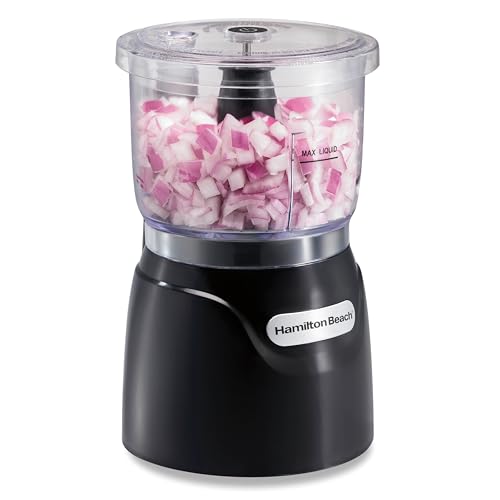 HAMILTON BEACH Hamilton Beach 3 Cup Electric Vegetable Chopper & Mini Food…
View on Amazon ↗
 EASY SPEED Electric Garlic Chopper, 250ml Mini Food Processor, USB Rechargeable Garlic…
View on Amazon ↗
Listing names and images come from Amazon and are rechecked against the live listings; last checked Nov 8, 2026. No prices shown; the current price is on the listing.
How to read this guide. Use this guide as a checklist to hold against any listing you are considering, not as a verdict on a specific model. It is written from general knowledge of how mini food processors work, so verify the bowl dimensions and wattage on the product page before you buy.