Decide by the base thickness, the lid seal, and the handle length. A thin base scorches sauces; a thick base heats evenly but costs more. Small households and beginners do fine with 1.5 to 2 quarts. Home chefs who reduce stocks want 3 to 4 quarts. The main tradeoff is even heating against weight and price.
Match the Capacity to the Recipe, Not the Cupboard
A 1.5 quart pan heats fast and suits one or two eggs, a single portion of oatmeal, or a quick bechamel for two. A 2 quart model is the general purpose choice: it holds a pound of pasta sauce or rice for four without sloshing.
A 3 to 4 quart saucepan works for reductions, poaching, and small batches of stock. Anything larger belongs in a stockpot, not a saucepan. The tall sides of a stockpot slow evaporation, which is the opposite of what a reduction needs.
A Thick Base Saves a Cream Sauce From the Trash
The base is where stainless steel earns its keep. A thin, single layer base heats unevenly. The center gets hotter than the edges, so a dairy based sauce can split or scorch even on medium heat.
A thick disc base or a fully clad pan spreads heat sideways. That matters for anything that sits in the pan for more than a few minutes: tomato sauce, gravy, custard, polenta. If you mostly boil water or blanch vegetables, a thinner base is fine and cheaper.
The Lid Changes What the Pan Can Do
A lid that fits tight holds steam, which keeps rice or grains moist. A loose lid lets steam escape, which reduces a sauce faster. Some lids have a small vent hole, which is useful for simmering without rattling.
Check the lid material too. A glass lid lets you watch a reduction without lifting it, but it adds weight and can break. A steel lid is lighter and more durable, but you have to lift it to see inside.
One Handle Fits a Big Pot; Another Fits a Small Kitchen
A long handle stays cool on the stovetop because it sits away from the burner. It also gives leverage when you pour out liquid. The downside is that it sticks out and can crowd a small cooktop or a narrow cabinet.
A short or loop handle saves space and makes the pan easier to store. It also balances better when the pan is full, which matters for a 3 or 4 quart saucepan. The tradeoff is that it gets hotter, so you need a towel or mitt.
Handle shape matters less than attachment. A riveted handle is stronger but harder to clean around. A welded handle leaves a smooth interior wall, which is easier to wipe down.
Induction Owners Need to Check One Magnet
Not every stainless steel pan works on an induction cooktop. The steel must be magnetic. A quick test is to hold a fridge magnet to the base: if it sticks, the pan will work on most induction burners.
This matters because a pan with a nonmagnetic outer layer will not heat on induction at all. If you have an induction cooktop, check the listing for the word 'induction compatible' or a flat base symbol. Also check our guide on induction cooktop pot sets for more on this.
How to Read a Listing Without Falling for the Shine
Listings often say 'tri ply' or 'multi clad' without telling you where the layers are. A tri ply base means the aluminum is only in the bottom disc. A fully clad pan has layers running up the sides, which costs more but heats the sides too.
Check the actual metal in the base. Aluminum and copper are the heat spreaders. A base that is just stainless steel with no aluminum or copper inside will heat poorly, no matter how shiny it looks.
Ask the seller two questions if the listing is vague: what is the total thickness of the base in millimeters, and is the pan fully clad or just disc based? A good base is often 4 to 5 millimeters thick. If they cannot answer, treat it as a thin base.
A Saucepan Can Do More Than Sauce
- Small batches of soup or chili for two or three people.
- Boiling eggs, steaming vegetables, or reheating leftovers.
- Making rice, quinoa, or couscous with a tight lid.
- Poaching fish or chicken in shallow liquid.
- Melting butter or chocolate over low heat with constant stirring.
When a Saucepan Is the Wrong Pan for the Job
Skip a saucepan if you mostly sear steaks or chops. A skillet or frying pan gives more surface area for browning. A saucepan's tall sides trap steam, which prevents a good crust.
Skip it too if you make large batches of stock or pasta. A stockpot holds more water and has a wider base, so it boils faster and fits a pound of spaghetti without breaking it.
For gentle, low and slow cooking like a pot roast or beans, a Dutch oven holds heat better and has a heavier lid. If you are deciding between these, see our guide on cast iron skillets that last for a different angle.
Compare the Three Main Builds Before You Decide
| Build | Heat spread | Weight | Cleanup | Suits |
|---|---|---|---|---|
| Thin disc base | Poor | Light | Easy | Boiling, quick tasks |
| Thick disc base | Good | Medium | Easy | Sauces, daily cooking |
| Full clad | Very good | Heavy | Harder | Reductions, even heat |
| Copper core | Excellent | Heaviest | Harder | Precise, high heat |
Thin disc pans are cheap and light, but they scorch anything that sits still. Thick disc pans are the sweet spot for most home cooks. Full clad and copper core pans are for people who cook sauces often and notice a difference.
Saucepan Questions, Answered Without the Sales Pitch
Is stainless steel saucepan safe for acidic foods?
Yes. Stainless steel is nonreactive, so tomato sauce, lemon juice, and vinegar will not pick up a metallic taste or discolor the pan. This is a main reason to choose stainless over bare aluminum or cast iron for acidic dishes.
What size saucepan should I buy for two people?
A 2 quart saucepan is the most useful size for two people. It holds enough for pasta sauce, rice, or soup without being too heavy. If you often cook single portions, a 1.5 quart pan heats faster and takes less storage space.
Can a stainless steel saucepan go in the dishwasher?
Most stainless steel pans are dishwasher safe, but hand washing keeps the finish looking better longer. Dishwasher detergent can dull the surface and leave water spots. If the pan has a nonstick coating or wooden handle, check the care label before using the dishwasher.
How do I stop food from sticking to a stainless steel saucepan?
Preheat the pan on medium heat for a minute or two, then add oil and let it heat before adding food. Use enough oil or butter, and avoid overcrowding. For starches like rice or pasta, stir at the start and use a lower heat.
Which is better, a disc base or a fully clad saucepan?
For most home cooking, a thick disc base is better value. It heats evenly on the bottom and costs less. A fully clad pan heats the sides too, which helps when reducing a sauce or making custard, but it is heavier and more expensive.
The Right Saucepan for Your Stove and Your Usual Recipe
A home cook who makes tomato sauce, rice, and the occasional cream sauce gets the most from a 2 to 3 quart pan with a thick disc base and a tight fitting lid. That combination heats evenly, cleans easily, and costs less than full clad. If you reduce stocks or make custards weekly, spend more on a fully clad 3 quart pan: the even side heat makes a real difference.
Real stainless steel saucepan listings, so you can check the points in this guide against actual products. These are affiliate links: as an Amazon Associate we earn from qualifying purchases, at no extra cost to you.
 CUISINART Cuisinart 419-18P 2-Quart Pour Saucepan with Cover Contour Cookware, Stainless…
View on Amazon ↗
 TRAMONTINA Tramontina Signature Tri-Ply Clad Stainless Steel 2-Quart Sauce Pan |…
View on Amazon ↗
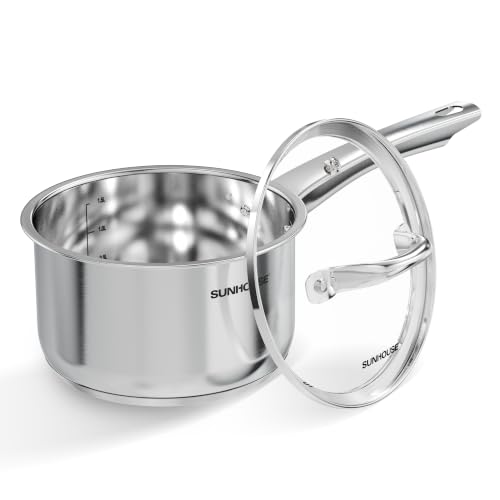 SUNHOUSE SUNHOUSE 2 QT Stainless Steel Sauce Pan with Lid, Small…
View on Amazon ↗
Listing names and images come from Amazon and are rechecked against the live listings; last checked Nov 8, 2026. No prices shown; the current price is on the listing.
How to read this guide. Use this guide as a checklist to hold against any listing you open, not as a verdict on a particular model. It covers the category from general knowledge of how stainless saucepans are built and used; no individual product documents or tests were used. Always verify the base thickness and dimensions on the listing before buying.