Judge a jewelry making tool kit by the pliers joint, tip alignment, and spring tension before counting pieces. A five tool kit with smooth box joints and aligned tips beats a thirty piece set full of stiff, wobbly pliers. Buyers making earrings and light wirework need precision first, while people bending thick wire or rings need leverage and tougher jaws. The main tradeoff is between tool count and tool quality: kits pad the piece count with duplicates and weak extras instead of the three or four pliers you will actually use.
The Three Checks That Separate Real Tools From Props
Open the listing photos and look at the pliers joint, the spot where the two halves meet. A box joint, where one half passes through a rectangular slot in the other, stays aligned under side pressure. A lap joint, where the two halves simply overlap and are riveted, can wobble and let the tips drift apart. For jewelry work, wobble means crimped beads get crushed at an angle and wire loops come out lopsided.
Next check tip alignment in the product photos. Close up shots should show the two tips meeting evenly with no daylight between them. If the listing only shows the tools fanned out, ask the seller for a close photo of the closed tips. Misaligned tips are the most common reason beginners think they lack talent when the tool is fighting them.
Finally, read the description for spring type. Single leaf springs feel stiff and snap back hard. Double leaf springs open smoothly and are easier on the hands during long sessions. If the listing says only 'spring loaded' without naming the type, treat it as a single leaf spring until proven otherwise.
Which Pieces Do the Work, and Which Just Fill the Box
Most jewelry making tool kits are built around three pliers: chain nose, round nose, and flat nose. Chain nose pliers taper to a fine point for opening jump rings and gripping small parts. Round nose pliers have conical jaws for making loops. Flat nose pliers have rectangular jaws for holding wire flat and making sharp bends. A good kit starts with these three.
Side cutters or flush cutters come next. Flush cutters leave one flat side on the wire, which matters for clean joins. Look for cutters rated for the wire gauge you plan to use. Many kits include cutters that dull quickly on anything thicker than 20 gauge.
Beyond those four, evaluate every extra piece with suspicion. Crimping pliers help if you work with beading wire and crimp beads. Nylon jaw pliers straighten wire without marring it. A split ring tool saves fingernails but is not essential. Tweezers, bead scoops, awls, and measuring gauges are useful but cheap to buy separately. A kit that offers thirty pieces usually includes ten you will never touch.
What the Metal and Grips Tell You Before You Buy
Tool steel matters more than the finish. Carbon steel holds an edge on cutters but rusts if stored damp. Stainless steel resists rust but some alloys are softer and wear faster. Many mid range kits use stainless steel jaws with a comfortable grip, which works for copper, brass, and fine silver wire. If you plan to work with steel wire or thicker gauges, look for tools described as high carbon steel or hardened steel.
Grip comfort affects how long you can work. Cushioned grips with a slight give reduce pressure on the palm. Hard plastic grips are fine for short sessions but cause fatigue during long ones. Check the grip length too. Short grips force your hand into a cramped position. Full size grips, roughly 4 to 5 inches, let you use your whole hand.
Also check the return policy before buying. Pliers that feel fine in photos can feel wrong in your hand. A seller who offers free returns gives you a way to test the spring tension and grip without risk.
Match the Kit to the Jewelry You Actually Make
Earring makers need fine tips and light spring tension. Look for chain nose and round nose pliers with slim, well aligned tips. A kit with heavy duty pliers will feel clumsy on small findings.
Wire wrappers need round nose pliers with a smooth, consistent taper. The cone should narrow evenly so you can choose the loop size by where you place the wire. A rough or stepped taper leaves marks on the wire.
Ring makers and people who bend thick wire need leverage. Look for pliers with longer handles and box joints. Side cutters should be rated for at least 18 gauge wire. A light starter kit will not hold up.
Bead stringers can skip most pliers entirely. Crimping pliers and a pair of chain nose pliers cover most tasks. Spending on a full pliers set makes little sense if you mainly string beads on flexible beading wire.
Beginners and weekend projects suit a small, curated set of four or five tools. Etsy sellers making production runs need tools that stay aligned through thousands of repetitions, which usually means spending more on fewer, better pliers. Handmade gifts require enough precision to make a piece look finished, not just assembled.
How a Small Workspace Changes the Kit You Choose
Small workspaces reward kits that include a case or roll. A zip case with elastic loops keeps pliers from banging against each other, which protects the tips. A soft roll takes less drawer space and can hang on a hook. If the kit comes with no storage, budget for a separate pouch.
Also consider whether the kit includes a bench block or small anvil. These are heavy and take up space, but they give you a flat steel surface for hammering wire and riveting. In a small workspace, a bench block that doubles as a weight for other tasks earns its spot. A plastic work surface will dent and bounce the hammer.
Table clamps and vises are rarely worth it in a starter kit. They grip poorly, mar the work, and eat space. A simple rubber bench block or a piece of leather on the table works better for most light jewelry tasks.
The Tool Count Trap and Other Buying Mistakes
The most common mistake is choosing a kit by the number of pieces. A thirty piece kit sounds like a better value, but many of those pieces are duplicates in different sizes or plastic accessories that break. You will use three or four pliers for almost every project. Put your budget into those.
Another mistake is ignoring the joint type. A kit with lap joint pliers may feel fine for a week, then start to wobble. Once the joint loosens, the tips no longer meet and every crimp or loop comes out crooked.
Buying tools meant for electronics is also a mistake. Electronics pliers have fine tips for circuit boards, but they are too delicate for jewelry wire. Jewelry pliers need stronger jaws and a more comfortable grip for repeated hand pressure.
Finally, do not buy a kit with cutters that are not rated for your wire. If you work with memory wire, which is hardened steel, standard flush cutters will dent and dull. You need memory wire cutters with hardened blades.
How to Read a Listing Like a Bench Jeweler
Start with the close up photos. You want to see the joint, the tips, and the spring. If the listing shows only a group shot, ask the seller for a photo of the pliers closed. A seller who cannot provide one is likely hiding misaligned tips.
Read the materials section carefully. 'High quality steel' means nothing. Look for a specific grade or type, such as carbon steel, stainless steel, or hardened steel. If the listing names no steel type, assume it is soft.
Check the dimensions. Pliers length, grip length, and jaw length all matter. A pliers that is 5 inches long overall with a 2 inch grip will feel cramped. Compare those numbers to a tool you already own.
Ask the seller two questions before buying. First, what type of spring do the pliers use, single leaf or double leaf? Second, what wire gauge are the cutters rated for? A seller who answers both clearly has actually handled the tools. A seller who dodges the questions is selling a box of props.
Finally, check whether replacement parts are available. Springs break. Good brands sell replacement springs. If the kit uses proprietary springs that cannot be replaced, the whole pliers is disposable when one small part fails.
Care and Long Term Costs Most Listings Skip
Pliers joints need oil occasionally. A drop of light machine oil at the joint keeps the action smooth. Do this every few months or whenever the pliers feels stiff. Wipe off excess oil so it does not transfer to your wire.
Store pliers dry. Carbon steel tools rust in humid rooms. If your workspace is damp, add a silica gel packet to the tool case. Stainless steel resists rust but can still spot if left wet.
Cutters dull. No cutter lasts forever. When a flush cutter starts leaving a pinched edge instead of a clean cut, it is time to replace it. Some cutters can be sharpened, but most jewelry cutters are meant to be replaced.
Springs are the first part to fail. Double leaf springs last longer than single leaf springs, but both eventually snap. Check whether the kit brand sells replacement springs before you buy. A five dollar spring replacement beats buying a new pliers.
Long term, you will likely add tools one at a time. A crimping pliers, a nylon jaw pliers, and a better pair of cutters are the usual first additions. Starting with a small, solid kit leaves room for those upgrades. Starting with a big, cheap kit means replacing everything.
Starter Kits, Curated Sets, and Pro Benches
Starter kits aim for a low price and a big piece count. They typically include chain nose, round nose, and flat nose pliers, a cutter, tweezers, and some findings. The pliers have lap joints and single leaf springs. They work for light wire and occasional projects, but expect to replace them within a year of regular use.
Curated plier sets include three to five tools chosen for one type of jewelry making. They have box joints, double leaf springs, and better steel. They cost more than starter kits but less than pro benches. For most people making earrings, necklaces, and bracelets, this is the sweet spot.
Pro bench sets are sold to people who make jewelry for income. They include high quality pliers, cutters, and often a bench block or anvil. The tools are heavier, the joints stay tight for years, and the cutters handle thicker wire. They are overkill for a weekend hobby but worth it for a full time Etsy shop.
| Kit type | Pliers joint | Spring type | Best for |
|---|---|---|---|
| Starter kits | Lap joint | Single leaf | Occasional light wirework |
| Curated plier sets | Box joint | Double leaf | Regular earring and necklace making |
| Pro bench sets | Box joint | Double leaf | Production work and thick wire |
| Bead stringing sets | Mixed | Mixed | Crimping and light gripping only |
A bead stringing set is a special case. It often includes crimping pliers and a chain nose pliers, but the other tools are filler. If you only string beads, buy a crimping pliers and one good chain nose pliers separately. You will spend less and get better tools.
Who Should Skip a Kit and Buy Single Tools
A kit makes sense when you need the core three pliers and a cutter all at once. It saves time and usually costs less than buying the same four tools separately. But some buyers are better off skipping the kit.
If you already own two good pliers, a kit will duplicate them. Buy only the missing tool. A single high quality round nose pliers will outperform a kit's round nose pliers.
If you work only with beads and crimp beads, skip the kit. A crimping pliers and one chain nose pliers cover the work. The rest of the kit sits unused.
If you make rings or work with thick wire, skip starter kits. Their cutters and pliers are too light. Buy a heavy duty chain nose pliers, a good flush cutter, and a ring mandrel instead.
If you are trying jewelry making for the first time and are not sure you will continue, a starter kit is a low risk way to test the hobby. Just accept that the tools are temporary.
Jewelry Making Tool Kit Questions, Answered
What is the minimum number of tools I need to start making jewelry?
Four tools cover most beginner projects: chain nose pliers, round nose pliers, flat nose pliers, and a flush cutter. With those, you can open and close jump rings, make loops, bend wire, and cut it cleanly. Add crimping pliers only if you use beading wire and crimp beads. More tools than this are convenience, not necessity.
Should I buy a jewelry making tool kit or individual tools?
Buy a kit if you need the core three pliers and a cutter at once and do not already own good pliers. A kit costs less than the same four tools bought separately. Buy individual tools if you already own two or more good pliers, or if you need one specialty tool like a crimping pliers or memory wire cutter.
How do I know if a jewelry making tool kit is good quality?
Check three things in the listing. First, the pliers joint should be a box joint, not a lap joint. Second, the tips should meet evenly in close up photos. Third, the springs should be double leaf, not single leaf. If the listing does not show or state these, ask the seller. Vague answers mean soft steel and loose joints.
Is it worth buying an expensive jewelry making tool kit?
For regular use, yes. Expensive kits use better steel, box joints, and double leaf springs, which means the tips stay aligned and the cutters stay sharp longer. For occasional weekend projects, a mid range curated set is enough. A cheap starter kit is worth it only as a low risk way to test whether you enjoy the hobby.
Which pliers do I need for making earrings?
For earrings, you need chain nose pliers for opening jump rings, round nose pliers for making loops, and flat nose pliers for holding parts. A flush cutter completes the set. Choose pliers with slim, well aligned tips and light spring tension. Heavy duty pliers will feel clumsy on small earring findings.
The Kit That Earns a Spot on Your Bench
Buyers making earrings, necklaces, and light wirework should choose a curated set of four or five tools with box joints, double leaf springs, and flush cutters rated for 20 gauge wire or finer. It costs more than a starter kit but lasts years instead of months. Buyers who only string beads should skip the kit and buy a crimping pliers plus one chain nose pliers. For a small workspace, pick a set that comes in a zip case or roll to protect the tips.
Real jewelry making tool kit listings, so you can check the points in this guide against actual products. These are affiliate links: as an Amazon Associate we earn from qualifying purchases, at no extra cost to you.
 URSKYTOUS URSKYTOUS 4Pcs Jewelry Pliers Set Jewelry Making Pliers Tools Kit…
View on Amazon ↗
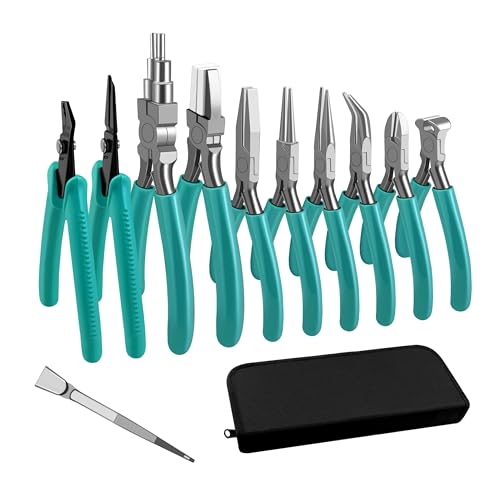 C&T C&T 11-Piece Jewelry Plier Sets,Jewelry Making Tools Kit | Micro…
View on Amazon ↗
 SOKOSEY 5 Pack Jewelry Pliers Tool Set, Wire Wrapping Tools for…
View on Amazon ↗
Listing names and images come from Amazon and are rechecked against the live listings; last checked Nov 8, 2026. No prices shown; the current price is on the listing.
How to read this guide. Use this guide as a checklist to hold against any jewelry making tool kit listing. It is written from general knowledge of the category, not from tests of individual models, so verify dimensions and materials before you buy.