The right set hinges on three decisions: how you reheat and store, how much cabinet or fridge space you have, and how roughly the containers travel. Look for a lid style that seals without leaking, straight or tapered sides that fit your storage, and glass thick enough for daily knocks. If you microwave often, prioritize vented, stain resistant lids over the cheapest set.
Read the Listing for the Parts That Fail First
Start with the lid, because that is the part most likely to crack, warp, or lose its seal before the glass shows wear. A listing should state the lid material, whether it is dishwasher safe, and whether it has a vent for microwave use. If the lid has a silicone ring, check whether that ring is removable for cleaning; a fixed ring traps food and odors under the edge.
Next, look for the glass type. Borosilicate glass handles sudden temperature changes better than soda lime glass, which matters if you move a container from the fridge straight into a hot oven or microwave. Many budget sets use soda lime glass, so do not assume the glass is oven safe. The listing should say the temperature range for both the glass and the lid.
Finally, confirm the set contents. A listing that says '10 pieces' may mean five containers and five lids, or seven containers and three lids. Check the exact number of bases and lids, and whether the sizes match how you portion meals. Ask the seller about replacement lids only if the listing does not mention buying them separately, since losing one lid can make a whole container useless.
Which Features Change Your Daily Use
A vented lid is the feature you will notice most if you reheat food at work or school. Without a vent, steam builds up and can pop the lid open or leave the seal loose. A vent you can flip open before microwaving, then close after, keeps the lid from warping and keeps the food from drying out.
Stackability is the second real feature. Containers with straight sides stack tightly and use less cabinet space, but they can be harder to eat from because the corners are square. Tapered containers nest inside each other when empty, which saves space, but they do not stack as stably when full. Decide which matters more: tight stacking or easy scooping.
Glass thickness matters less than people think. A thicker base resists chips from a drop on the counter, but it adds weight to a lunch bag and takes longer to heat evenly. Look for a base around 3 to 5 millimeters thick, which most brands list. Below that, the glass can crack from a small knock; above it, the container feels heavy and takes longer to cool after cooking.
Lid Types Set the Real Tradeoff
Snap lock plastic lids give the tightest seal and the most leak protection, but they are bulky and can warp if you microwave them too often. The four flaps press down hard, which is good for soup or saucy dishes in a bag, but that pressure also stresses the lid over time.
Silicone rim lids sit between a snap lock and a simple press on lid. The silicone edge grips the glass rim for a decent seal without the bulk of four flaps. They hold their shape better than thin plastic in the microwave, but you have to press the rim down evenly or liquid seeps out at one corner.
Bamboo or wood lids look good and keep food covered in the fridge, but they are not watertight and cannot go in the microwave or dishwasher. They suit dry snacks or salads you eat cold, not soups or reheated meals. If you want one set for every use, skip wood lids.
| Lid style | Leak control | Microwave use | Bulk in a bag | Suits |
|---|---|---|---|---|
| Snap lock plastic | Strong | Vented only | High | Soups, sauces, long commutes |
| Silicone rim | Moderate | Usually safe | Medium | Mixed meals, daily reheating |
| Bamboo or wood | None | Not safe | Low | Cold salads, dry snacks, fridge storage |
Match the Set to Where You Eat
Office lunches favor a single compartment container with a vented lid, because you can pack one main dish and reheat it without fuss. A 3 cup or 4 cup size fits most portions, and a lid that stays sealed in a work bag prevents spills on papers or a laptop. Straight sides help if you eat at a desk, since the container sits flat without rocking.
School lunches need smaller, lighter containers that a child can open. A snap lock lid is too hard for small hands, so a silicone rim or a simple press on lid works better. Two or three small compartments in one container let you pack a main, a side, and a fruit without using three separate boxes. Check that the lid opens easily when pressed in the middle, not just at the corners.
Family meal prep uses larger containers, often 4 to 6 cups each, with multiple pieces from the same set. Look for a set that includes a few different sizes, since a family cooks in batches and stores different portions. A set with all the same size works for single adults but frustrates a family that needs a big casserole and a small side.
Picnics push containers toward leak proof lids and larger sizes, because food travels in a cooler or a basket and gets jostled. A snap lock lid is worth the bulk here, even if you would not use it daily. Avoid bamboo lids for picnics unless everything stays dry and upright.
Storage Shape Decides How Many You Keep
Small cabinets punish tall, straight sided containers. If your cabinet has a fixed shelf height, measure the space between shelves before buying. A container that is 3 inches tall may not fit on a shelf with 4 inches of clearance once the lid is on. Tapered containers that nest when empty save the most space in a small kitchen.
Fridge space is different from cabinet space. Containers stack on a fridge shelf, and straight sides make a stable stack of three or four without sliding. Tapered sides leave gaps between containers, which wastes cold air space. If you batch cook for the week, straight sides win for the fridge even if they take more cabinet room.
The same set can work in both places if you pick a middle ground: a slight taper, about 1 to 2 degrees, that nests when empty but still stacks reasonably when full. Check the listing photos for the side angle. A dramatic taper nests beautifully but tips over when you stack two full containers.
Mistakes That Shorten a Set's Life
One common mistake is putting a cold glass container straight into a hot oven or onto a hot stove. Even borosilicate glass can crack from a rapid change of more than about 300 degrees Fahrenheit. Let the container warm up on the counter for a few minutes, or put it in a cold oven and let it heat with the oven.
Another mistake is microwaving with the lid fully locked. The steam pressure builds and can warp the lid or pop it open violently. Always open the vent or leave a corner of the lid lifted. If the lid has no vent, place it loosely on top instead of snapping it down.
Stacking containers with the lids on seems efficient, but it traps moisture inside and can make the glass smell musty. Store lids separately or leave a small gap so air circulates. Also avoid nesting glass containers inside each other when both are empty, because the rims can scratch or chip against each other.
Care Habits That Add Years
Glass containers last indefinitely with basic care, but the lids wear out faster than the bases. Hand wash the lids in warm, soapy water rather than the dishwasher if you want the seal to stay tight. Dishwasher heat warps thin plastic lids over time, and the spray can knock the silicone ring loose.
For the glass, avoid abrasive scrubbers on the outside if you care about scratches, though scratches do not affect safety. For baked on food, soak the container in hot water with a little dish soap before scrubbing. A paste of baking soda and water removes stubborn stains without scratching.
Long term, expect to replace lids every couple of years if you microwave them daily. Some brands sell lids separately, which is cheaper than buying a whole new set. Check that before you buy, because a set with no replacement lids becomes useless when one lid cracks.
When a Different Container Makes Sense
Glass is not the right choice for every meal. If you carry a lunch in a backpack that gets tossed around, a lightweight plastic or stainless steel container survives better. Glass adds noticeable weight, and a hard drop onto concrete can shatter it even inside a bag.
For children who drop things often, tempered glass is safer than regular glass because it breaks into small, less sharp pieces, but it still breaks. A silicone or plastic option may be smarter for a young child's lunchbox. If you need to pack several snacks for a long day, multiple small plastic containers weigh less than one big glass one.
Skip glass if you often eat directly from the container while walking, because the weight and the rigid shape make it awkward. A stainless steel bento or a plastic container with a spork works better for eating on the go. Glass shines when you reheat at a desk, store food for days, or want to see what is inside at a glance.
Glass Meal Prep Container Questions, Answered
Is glass meal prep better than plastic?
Glass wins for reheating, stain resistance, and seeing what is inside, and it does not absorb odors or warp in the microwave. Plastic wins on weight, drop resistance, and price. If you reheat daily and eat at a desk or table, glass is usually the better long term choice. If you carry food in a backpack or pack for a child, plastic may serve you better.
Which glass meal prep containers are truly leak proof?
No container is leak proof if the lid is not seated correctly, but snap lock lids with a silicone ring come closest. They hold soups and sauces in a bag that tips over. Silicone rim lids are moderately leak resistant but can seep at the corners if not pressed down evenly. Check the listing for a leak proof claim, and test with water before trusting a saucy meal.
Can glass meal prep containers go from fridge to oven?
Only if the glass is borosilicate and the listing says oven safe. Soda lime glass can crack from the sudden temperature change. Even borosilicate should not go from a cold fridge straight into a hot oven; let it sit at room temperature for a few minutes first. The lid, of course, never goes in the oven.
How do I stop glass meal prep containers from chipping?
Avoid stacking glass directly on glass, especially when nesting empty containers inside each other. Place a paper towel or a cloth between them if you must nest. Do not drop a metal spoon into the container, and avoid hitting the rim with utensils. Store lids separately so the glass rims do not rub against each other in a drawer.
Is it worth paying more for borosilicate glass?
If you often move containers between fridge, freezer, and oven, yes. Borosilicate handles thermal shock far better than soda lime glass, so it is less likely to crack from a sudden change. If you only use containers for cold storage or microwave reheating, soda lime glass works fine and costs less. The price difference is usually modest for the added safety.
The Set to Buy for Most Lunches
Someone who packs a hot lunch for the office four or five days a week should buy a set with vented snap lock plastic lids and borosilicate glass, in 3 and 4 cup sizes, with straight or slightly tapered sides. That combination handles soup, reheats safely, and stacks in a fridge. For a parent packing a child's lunchbox, choose a smaller set with silicone rim lids that small hands can open, even if it means giving up a little leak protection.
Real glass meal prep container listings, so you can check the points in this guide against actual products. These are affiliate links: as an Amazon Associate we earn from qualifying purchases, at no extra cost to you.
 LIURUIYU Liuruiyu 8 Pack Glass Food Storage Containers with Lids, Meal…
View on Amazon ↗
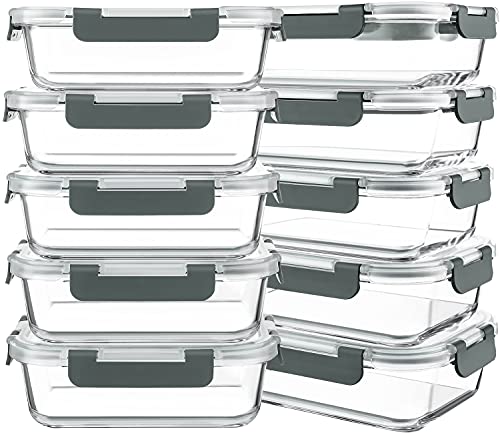 KOMUEE KOMUEE 10 Packs 30 oz Glass Meal Prep Containers with…
View on Amazon ↗
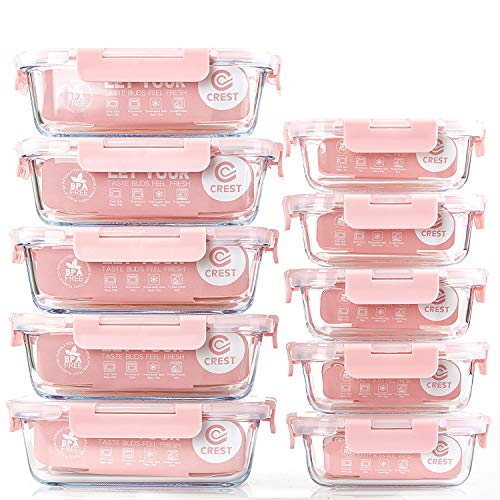 C CREST C CREST [10 Pack] Glass Meal Prep Containers, Food Storage…
View on Amazon ↗
Listing names and images come from Amazon and are rechecked against the live listings; last checked Nov 8, 2026. No prices shown; the current price is on the listing.
What this guide is. This guide covers the glass meal prep container category as a whole, from lid types to glass thickness and stacking shapes. It is written from general knowledge about how these containers work, not from individual product listings, reviews, or in person testing, so check any dimensions and temperature limits on the listing before you buy.