Pick by brush head material and speed control. Silicone heads suit sensitive or reactive skin and stay cleaner, while nylon bristle heads remove more dead skin but can over exfoliate. A tool with at least two speed settings prevents the common mistake of scrubbing too hard. Skip it entirely if your routine already has a chemical exfoliant.
The Brush Head Decides How Your Face Feels
Two materials dominate: silicone and nylon. Silicone heads have short, rounded nubs that flex against the skin. Because the surface is nonporous, it rinses clean and dries quickly, so bacteria have less chance to grow. This makes silicone the safer starting point for sensitive skin, rosacea, or a damaged moisture barrier.
Nylon bristle heads range from soft to firm. Soft bristles still give more friction than silicone, which helps loosen flaky skin and clear pores. Firm bristles or a rotating head create a scrubbing action that can feel satisfying but easily crosses into irritation. If you already use a retinoid, vitamin C serum, or acid exfoliant, choose silicone or the softest nylon available.
Check the listing for bristle diameter or a stated softness level. A head described as 'gentle' without a material or firmness rating tells you little. Look instead for words like 'ultrasoft,' 'for sensitive skin,' or a durometer number if the seller provides one.
Speed Control Prevents the Number One Mistake
Most facial cleansing brushes offer one to four speed settings. A single speed is workable only if the brush is already very gentle. Two or more speeds let you use a low setting around the eyes, nose creases, and any dry patches, and a higher setting only on the forehead and chin.
The mistake buyers make is assuming that faster equals cleaner. With a cleansing brush, pressure and duration matter more than speed. Holding the brush against the skin too long or pressing down creates friction burns, broken capillaries, and a tight, shiny feeling afterward. A brush with a timer that pauses every 20 seconds discourages this; a brush without one requires your own restraint.
If the listing mentions 'sonic' or 'pulsation' frequency, treat that as a secondary detail. High frequency vibration can help loosen oil, but it does not replace a good cleanser or a proper speed setting. A brush that vibrates at 8,000 pulses per minute is not automatically better than one at 6,000; the head material still matters more.
Waterproofing and Battery Shape How You Use It
Look for an IPX7 rating. That means the brush can survive being submerged in about 3 feet of water for up to 30 minutes, which covers shower use and thorough rinsing. IPX5 or IPX6 means splash resistant, fine for sink use but not for holding under running water. If no IP rating appears, assume it should stay dry.
Battery type affects long term cost. A sealed lithium ion battery recharges via USB-C or a charging stand and typically runs for weeks between charges. A brush that takes replaceable AA or AAA batteries costs less upfront but needs new batteries and often has a weaker motor. Check whether the listing states battery life in minutes of use, not just days, because a '30 day battery' that runs two minutes per day means only about an hour of actual use.
For travel, a compact silicone brush with a hard case or a cap over the head packs better than a bulky handle with exposed bristles. Even a waterproof brush should be dried before you pack it, since a damp head in a toiletry bag can grow mildew.
What the Listing Claims Actually Mean
Marketing phrases like 'deep cleans pores,' 'removes 99% of dirt,' or 'dermatologist approved' appear on nearly every listing and tell you little. Pore size does not change with scrubbing; a brush removes surface oil and dead skin, which makes pores look smaller temporarily. 'Dermatologist approved' has no standard definition and often means a single dermatologist reviewed the product once.
Claims worth checking are specific: bristle diameter in millimeters, IPX rating, number of speed settings, timer intervals, and battery runtime in minutes. A seller who lists the brush head replacement interval, usually every three months for nylon heads, is providing practical information. A seller who only lists 'gentle' and 'effective' is not.
Ask the seller only what the listing does not state. Useful questions: What is the bristle diameter or firmness rating? Can the brush head be replaced, and how much do replacements cost? What is the IP rating? Is the battery user replaceable? If the seller cannot answer, that is a signal to look elsewhere.
Who Should Skip a Cleansing Brush
Three groups get little benefit. First, anyone already using a chemical exfoliant like salicylic acid, glycolic acid, or a retinoid. Adding physical scrubbing on top often damages the skin barrier and causes redness, stinging, or breakouts. Second, anyone with active acne, eczema, psoriasis, or rosacea flare ups. A brush can spread bacteria and worsen inflammation.
Third, anyone who washes their face quickly in the morning. A cleansing brush adds one to two minutes to a routine and requires rinsing and drying the head afterward. If your mornings are rushed, a gentle washcloth or just your hands with a good cleanser will do the job without the extra step. The brush earns its place in a home spa routine, not in a five minute dash out the door.
For home spa routines, the brush fits naturally into an evening wind down. Use it after removing makeup, with a foaming or gel cleanser, on damp skin. For beginners, start with one minute total, twice a week, and increase only if your skin stays comfortable. For travel, a small silicone brush with a case is the most practical, since nylon bristles can bend in a bag.
A Simple Table for the Main Designs
| Brush head | Cleaning feel | Cleanup effort | Best for |
|---|---|---|---|
| Silicone pad | Soft, low friction | Rinse and air dry | Sensitive or reactive skin |
| Soft nylon bristles | Gentle scrub | Replace head every 3 months | Normal skin, twice a week |
| Firm nylon bristles | Strong scrub | Replace head every 3 months | Oily, non reactive skin |
| Rotating head | Mechanical scrub | Deep clean head regularly | Occasional use only |
The table shows the tradeoff: silicone is the easiest to live with and the gentlest, while rotating heads offer the most aggressive scrub. Most people do well with a silicone pad or soft nylon bristles. Firm and rotating heads are for specific skin types that tolerate strong physical exfoliation.
Long Term Costs Hide in the Brush Head
Nylon brush heads wear out. Bristles splay, trap product, and become rough. Replacing the head every three months is the standard advice, so check the price of replacement heads before you buy the handle. A budget handle with expensive replacement heads costs more over a year than a mid range handle with affordable heads.
Silicone heads do not need replacement for normal use, but they can tear if cleaned with sharp tools or exposed to harsh chemicals. Rinse after every use, and once a week wash the head with mild soap and warm water. Let it air dry on a clean surface, not in a closed drawer.
The cleanser you use with the brush also matters. Creamy or foaming cleansers work best; gritty scrubs or cleansers with beads create too much friction. A brush cannot fix a bad cleanser, and a harsh cleanser plus a brush is a fast route to a damaged barrier.
How to Read a Listing in Five Minutes
Open the listing and look for these items in order. First, the brush head material: silicone or nylon, and if nylon, what firmness. Second, the speed settings: how many, and whether there is a low setting. Third, the waterproof rating: IPX7, IPX5, or none. Fourth, the battery: rechargeable or replaceable, and claimed runtime in minutes.
Fifth, the replacement head cost and availability. If the listing does not show replacement heads, search for them separately. A brush with no available replacement heads becomes a disposable product after a few months, which is a hidden cost.
Ignore the before and after photos. Lighting, makeup, and photo editing change skin appearance more than any brush. Ignore star ratings that do not explain the skin type of the reviewer. Instead, check whether the listing states the brush is safe for sensitive skin and backs that with a material or firmness detail.
For related routines, see our guide to how plate width changes a straightener for another device where the physical surface matters more than the brand. And if you are putting together a shower or bath setup, our bath pillow comparison covers a different kind of skin contact surface.
Questions People Ask Before Buying a Cleansing Brush
How often should I use a facial cleansing brush?
Start with twice a week for one minute. If your skin shows no redness, tightness, or flaking after two weeks, you can move to every other day. Daily use is rarely necessary and often causes over exfoliation, especially with nylon bristles. Sensitive skin types may stay at twice a week permanently.
Is a silicone or bristle brush better for sensitive skin?
Silicone is better for sensitive skin. Its smooth, nonporous nubs create less friction and harbor less bacteria than nylon bristles. Choose a brush with a low speed setting and use it only on damp skin with a gentle cleanser. If your skin stings or turns red, stop using the brush for several days.
Can I use a facial cleansing brush in the shower?
Only if the brush has an IPX7 rating. IPX7 means it can survive submersion in about 3 feet of water for up to 30 minutes. IPX5 or IPX6 brushes are splash resistant but should not be held under running water. If the listing has no IP rating, keep the brush at the sink and dry it after use.
Do facial cleansing brushes remove blackheads?
They can loosen the surface oil and dead skin that make blackheads look darker, but they do not pull blackheads out of pores. For stubborn blackheads, a leave on salicylic acid product works better. Using a brush too aggressively on blackheads can irritate the surrounding skin and make the area look worse.
How long does a facial cleansing brush head last?
Nylon bristle heads typically last about three months with regular use. Signs of wear include splayed bristles, a rough feel, or product buildup that does not rinse away. Silicone heads can last years with proper cleaning, but replace them if the nubs tear or the surface becomes sticky.
Which Cleansing Brush Fits Your Routine
A person with normal or slightly sensitive skin who wants a simple evening routine should pick a silicone brush with at least two speed settings and an IPX7 rating. It cleans gently, rinses clean, and avoids the recurring cost of replacement heads. Someone with oily, non reactive skin who wants a stronger weekly scrub should instead choose a soft nylon bristle brush with a timer, and plan to replace the head every three months.
Real facial cleansing brush listings, so you can check the points in this guide against actual products. These are affiliate links: as an Amazon Associate we earn from qualifying purchases, at no extra cost to you.
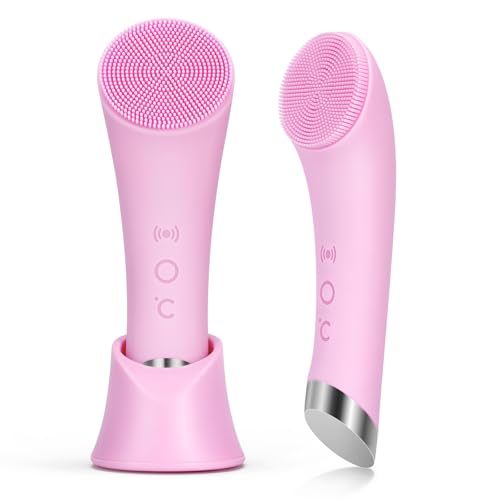 PRITECH PRITECH Facial Cleansing Brush, Rechargeable Silicone Face Scrubber with Heat…
View on Amazon ↗
 GAILAC Electric Face Scrubber Exfoliator, Rechargeable Silicone Facial Cleansing Brush with…
View on Amazon ↗
 VWMYQ VWMYQ Silicone Face Scrubber for Men & Women, Manual Waterproof…
View on Amazon ↗
Listing names and images come from Amazon and are rechecked against the live listings; last checked Nov 8, 2026. No prices shown; the current price is on the listing.
How to read this guide. This guide covers the facial cleansing brush category as a whole, drawing on general knowledge of how brush materials, speeds, and waterproofing work. It does not evaluate any individual listing, so dimensions, battery life, and specific firmness ratings should be confirmed on the product page before purchase.