Your decision comes down to three factors: boiler type, portafilter size, and how much milk steaming you do. A single boiler suits straight espresso drinkers who can wait between brewing and steaming. A heat exchanger or dual boiler suits milk drinkers who want both at once. The main tradeoff is control against convenience: more manual machines reward skill but punish rushing.
Boiler Design Sets the Pace
The boiler is the heart of an espresso machine. It heats water to the right temperature and keeps it there while you brew. A single boiler machine has one chamber for both brewing and steaming. You brew first, then wait for the boiler to climb to steam temperature. That wait can be thirty seconds to a minute, and then you wait again for it to cool before the next shot.
A heat exchanger machine keeps one large boiler at steam temperature and runs fresh water through a pipe inside it for brewing. You can brew and steam at the same time, but brew temperature is less precise and can drift during long sessions. A dual boiler machine has two separate chambers, one for brewing and one for steaming. Both stay at their ideal temperatures, which gives the most stable shots and the best steam performance.
For straight espresso, a single boiler is often enough. For daily milk drinks, a heat exchanger or dual boiler removes the waiting and the temperature guessing. That convenience costs more and takes up more counter space.
Portafilter Size Changes the Recipe
Home machines usually come with a portafilter basket between 51 and 58 millimeters wide. The wider the basket, the shallower the coffee bed for the same dose. A shallow, wide bed extracts more evenly because water passes through less depth. Commercial machines standardize on 58 millimeters, so most aftermarket tools like tampers and precision baskets fit that size.
Smaller baskets, often 51 or 54 millimeters, are common on compact machines. They work well but need a slightly finer grind and more careful distribution. Check whether the machine uses a pressurized or nonpressurized basket. Pressurized baskets have a small hole that creates fake crema and forgive stale coffee or a poor grinder. Nonpressurized baskets show the true quality of your grind and technique.
A bottomless portafilter, one with the spouts removed, lets you watch the extraction for channeling. It is a useful learning tool but not a requirement.
Milk Steaming Is a Separate Skill
If you drink lattes or cappuccinos, the steam wand matters as much as the brew group. A panarello wand, a plastic sleeve with a hole, automatically injects air and makes thick foam. It is easy for beginners but gives less control over texture. A traditional steam wand with one or more holes requires you to position the tip and stretch the milk yourself. That takes practice but produces microfoam, the silky texture good latte art needs.
Steam power is measured in how long the machine takes to heat a pitcher of milk. A machine with a small boiler or weak heating element will take longer and may run out of steam halfway through a large pitcher. For one or two drinks, most machines manage. For back to back milk drinks, look for a heat exchanger or dual boiler.
The number of steam holes also matters. A single hole is forgiving. Two or three holes heat milk faster but require a better angle to avoid big bubbles.
Grinder Quality Limits the Machine
An espresso machine cannot fix a bad grinder. The grinder sets the particle size, and espresso needs a very fine, very consistent grind. A blade grinder chops beans unevenly and will not work. A burr grinder, especially a stepless one, lets you make tiny adjustments as coffee ages or humidity changes.
Some machines have a built in grinder. That saves counter space but locks you into that grinder's quality and makes repairs harder. A separate grinder costs more upfront but can be upgraded later.
If you buy preground coffee, choose a machine with a pressurized basket. Preground coffee is too coarse and inconsistent for a nonpressurized basket, and the shot will run fast and taste sour.
Counter Space and Warm Up Time
Espresso machines are heavy. A compact single boiler can fit under standard cabinets, but a dual boiler with a top water reservoir may not. Measure the height with the reservoir lid open, not just the machine body.
Warm up time varies from a few minutes for thermoblock machines to twenty or thirty minutes for large boilers. A machine with a timer can start before you wake up. If you make one shot a day and do not want to wait, a thermoblock or a small single boiler is the practical choice.
Water reservoirs are usually rear mounted, which makes refilling awkward under cabinets. A front loading reservoir or a direct plumb line solves that, but plumbing requires a water connection and a drain.
Maintenance Is Not Optional
Espresso machines need regular cleaning or they will clog and scale. Backflush with water after each session if the machine has a three way solenoid valve. Backflush with detergent weekly or monthly, depending on use. Descale every few months, more often if your water is hard. Use the descaling product the manufacturer recommends, since some machines have aluminum boilers that certain acids can damage.
The group head needs wiping after every shot. The drip tray and water tank should be emptied and dried regularly. Steam wands must be purged and wiped immediately after use, or dried milk will block the holes.
Replace the group gasket and shower screen once a year or when shots start leaking around the portafilter. A machine with easily available parts and standard sizes will be cheaper to maintain.
Reading a Listing Before You Buy
Check the boiler type first. A listing that says only 'thermoblock' or 'boiler' without details may be hiding a weak heating system. Ask the seller for the boiler volume in liters and the warm up time.
Look at the portafilter diameter and whether the basket is pressurized or nonpressurized. If the listing does not say, ask. That single detail changes which grinder you need.
Check the steam wand type and the number of holes. Ask whether the machine can brew and steam at the same time. If the answer is vague, assume it cannot.
Look at the water tank capacity and whether it is removable. A removable tank is easier to fill and clean. Check the machine's height with the lid open.
Ask about the warranty and where repairs are done. A machine with no local service support can become an expensive paperweight.
| Design type | Brew and steam | Control level | Best for |
|---|---|---|---|
| Lever machine | One at a time | Highest | Espresso purists who enjoy the ritual |
| Single boiler | Wait between steps | High | Straight espresso drinkers on a budget |
| Heat exchanger | At the same time | Medium | Milk drinkers who want speed |
| Dual boiler | At the same time | Medium high | Milk drinkers who want temperature stability |
| Superautomatic | One button | Lowest | People who want a drink with no learning curve |
The table shows the main design types and how they trade control for convenience. A lever machine gives you full control over pressure but demands total attention. A superautomatic gives you a drink in seconds but no way to adjust the shot.
For most home baristas, a semiautomatic machine with a single boiler or heat exchanger is the sweet spot. It teaches you the craft without punishing every mistake.
Who Should Skip an Espresso Machine
An espresso machine is not for everyone. If you drink mostly brewed coffee and want a full mug, a drip machine or pour over setup is faster and cheaper. If you want espresso like strength without the learning curve, a moka pot or an AeroPress gets close for a fraction of the price and counter space.
If you travel often or have no permanent counter space, a manual lever device like a portable espresso maker fits in a bag. It will not steam milk, but it makes real espresso anywhere.
If you are the only coffee drinker in the house and you make one shot a day, a superautomatic or a pod machine may save you time. But you give up the ability to use fresh beans and fine tune the shot. For more on other coffee methods, see our guides on cold brew makers for daily fridge brewing and cold brew coffee makers for small kitchens.
Use Cases Change the Priorities
Home baristas who want to learn espresso craft should choose a semiautomatic with a nonpressurized basket and a separate burr grinder. You need control over dose, grind, and shot time to improve. A single boiler is fine if you drink mostly straight shots; a heat exchanger is better if you practice latte art.
Office kitchens need a machine that survives many users and little training. A superautomatic is the usual choice because it grinds, tamps, and cleans itself. If you choose a semiautomatic, get one with a pressurized basket so untrained users can still get a drinkable shot. Make sure someone is assigned to empty the drip tray and refill the water.
Beginners should start with a machine that has a pressurized basket and a panarello steam wand. That combination forgives uneven grinding and poor milk technique. As skills improve, you can switch to a nonpressurized basket and a traditional wand without buying a new machine.
Small counters call for a compact single boiler or a thermoblock machine. Check the height with the reservoir lid open. A machine with a removable water tank is easier to fill in a tight space.
Travelers cannot bring a full espresso machine. A manual lever device or a stovetop moka pot is the realistic alternative. Some portable devices use a hand pump to build pressure and can make a shot anywhere with hot water.
Espresso Machine Questions, Answered Straight
Is an espresso machine worth it for one person?
It depends on how often you drink espresso. If you make one shot a day and enjoy the process, a single boiler machine with a good grinder is worth it. If you want a drink in thirty seconds with no cleanup, a pod machine or a superautomatic may fit better. The ongoing cost of beans and maintenance matters more than the machine price for a solo drinker.
Which espresso machine is best for beginners?
Look for a machine with a pressurized portafilter basket and a panarello steam wand. The pressurized basket creates crema even with preground or unevenly ground coffee, and the panarello wand makes foam without much skill. A single boiler keeps the price low while you learn. Avoid machines with only a nonpressurized basket until you have a burr grinder.
Can I use preground coffee in an espresso machine?
Yes, but only with a pressurized basket. Preground coffee is usually too coarse and inconsistent for a nonpressurized basket, so the shot will run fast and taste thin and sour. A pressurized basket adds resistance and creates a layer of crema. For the best results, grind whole beans immediately before brewing with a burr grinder.
What is the difference between a single boiler and a dual boiler?
A single boiler has one water chamber, so you must wait for the temperature to change between brewing and steaming. A dual boiler has two separate chambers, one for brewing and one for steaming, so you can do both at the same time at the right temperatures. Dual boilers cost more and take up more space, but they are the best choice for daily milk drinks.
How long does an espresso machine take to warm up?
It varies by design. Thermoblock machines can be ready in under a minute. Small single boilers often need five to ten minutes. Large heat exchanger and dual boiler machines may need twenty to thirty minutes for the metal parts to reach a stable temperature. A machine with a timer can start warming before you wake up.
The Espresso Machine That Fits Your Counter and Cup
If you drink mostly straight espresso and want to learn the craft, choose a semiautomatic single boiler machine with a 58 millimeter nonpressurized portafilter and a separate burr grinder. It gives you control over every variable without the cost of a dual boiler. If you make milk drinks every morning and hate waiting between brewing and steaming, choose a heat exchanger or dual boiler machine instead. That second pick costs more and takes up more room, but it removes the main daily frustration.
Real espresso machine listings, so you can check the points in this guide against actual products. These are affiliate links: as an Amazon Associate we earn from qualifying purchases, at no extra cost to you.
 AMZCHEF AMZCHEF Espresso Machine with Grinder, 1500W, 40 Grind Settings |…
View on Amazon ↗
 BREVILLE Breville BES870BTR Barista Express Espresso Machine, Black Truffle | Craft…
View on Amazon ↗
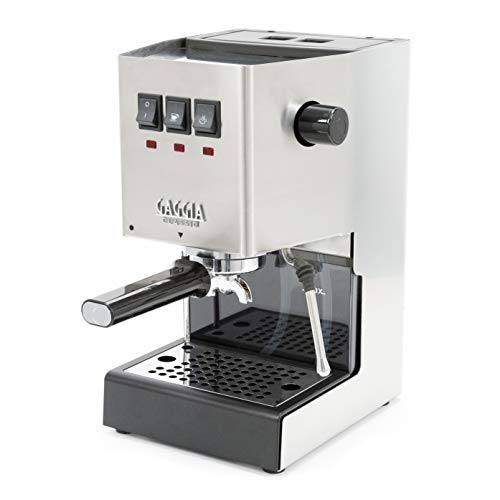 GAGGIA Gaggia RI9380/46 E24 Espresso Machine, Brushed Stainless Steel
View on Amazon ↗
Listing names and images come from Amazon and are rechecked against the live listings; last checked Nov 8, 2026. No prices shown; the current price is on the listing.
About this guide. This guide covers espresso machines as a category and is written from general knowledge of how they work. It does not use documents, reviews, or tests of any individual model, so you should verify dimensions, boiler details, and basket types on the product listing before buying.