Start with capacity and sensitivity, then check the platform size and tare button placement. A scale that reads to one gram or a fraction of a gram suits baking and coffee; a five gram step works for large batch meal prep. The main tradeoff is between a slim, compact design and a wide, stable platform for big bowls.
Capacity and Sensitivity Set the Limits
A kitchen scale works best when its range covers everything you weigh in a single session. Most home scales read up to 5 kilograms or 11 pounds, which handles a large mixing bowl plus ingredients. Check that the maximum capacity is printed on the listing or the scale itself, because some compact models stop at 2 or 3 kilograms.
Sensitivity matters just as much. A scale that reads to one gram works for yeast, salt, spices, and pour over coffee. A scale with a five gram step is fine for portioning chicken or measuring flour for a family dinner but will frustrate anyone who bakes by weight.
Ignore marketing terms like extra precise or lab grade. The real specification is the readability, often listed in grams. A scale that displays one decimal place in grams is not automatically more accurate than a whole gram scale; the internal sensor and calibration matter more. Compare the readability and the stated accuracy range if the listing provides it.
Platform Size Is a Use Case Decision
The weighing surface has to hold your containers without tipping or covering the display. A wide platform, roughly 20 by 20 centimeters or larger, keeps a stand mixer bowl stable and leaves the readout visible. A slim rectangular scale, often 15 by 20 centimeters, stores in a shallow drawer but a large dinner plate or mixing bowl can hang over the edges and block your view.
Meal prep with multiple identical containers works well on a compact square platform. You can tare one container, fill it, and swap in the next without needing much surface area. Baking with a single large bowl benefits from a wider, heavier base.
Small kitchens and limited counter space push buyers toward a slim design, but the tradeoff is real. If you weigh directly into a pot or a sheet pan, check the platform dimensions against that cookware before buying.
Related reading: cutting boards that stay put during prep can also help when you weigh and chop in the same small space.
Tare, Units, and Controls You Can Actually Press
The tare button zeroes out the container so you weigh only the ingredients. It gets used constantly, so its placement and feel matter more than the number of unit modes. A physical button that sits flush with the platform but still clicks is easier to operate with wet or floury fingers than a touch sensitive strip.
Most scales offer grams, ounces, pounds, and milliliters. Grams are the standard for baking and coffee, while ounces and pounds suit recipes written for American kitchens. A unit button that cycles through all modes with one press is faster than holding a button to scroll.
Look for an automatic shutoff of at least two to three minutes. A scale that powers down after 30 seconds will switch off while you walk to the pantry for the next ingredient. Some models let you disable auto off, which is useful for long baking sessions.
One common mistake is buying a scale with a touchscreen display that looks sleek but stops responding when your hands are wet. Physical buttons or raised membrane keys survive a busy kitchen better.
Battery Type Decides How Often You Replace Power
Most digital kitchen scales run on two AAA or two AA batteries. Expect several months of daily use from a set, though a backlit display drains batteries faster. A scale with a built in rechargeable battery costs more upfront but removes the need to keep spares in a drawer.
Check where the battery compartment sits. A door on the underside that snaps open is easy to access, but one held by a tiny screw is annoying when the scale dies mid recipe. Some slim scales use a coin cell battery, which lasts a long time but is harder to find in a grocery store.
Long term cost is modest either way. Rechargeable scales save a few dollars a year at most. The bigger issue is downtime: if a battery powered scale dies and you have no spares, dinner waits.
Four Design Types and Where Each One Fits
The market splits into four broad shapes, and each one suits a different counter.
A slim rectangular scale is the most common. It stores in a drawer, weighs accurately, and costs the least. Its weakness is stability with a heavy bowl set near one edge.
A compact square scale adds a little width and often a slightly thicker body. It handles medium mixing bowls better while still fitting a small kitchen.
A wide platform scale, sometimes called a baker's scale, has a large flat surface and often a separate or angled display. It stays put under a stand mixer bowl and works well for meal prep with sheet pans, but it takes up permanent counter space.
A folding or hanging scale is a niche pick for portioning directly into bags or for travel. It is not a replacement for a countertop scale because the hook design limits what you can weigh.
| Design | Stability with big bowls | Storage footprint | Best for |
|---|---|---|---|
| Slim rectangular | Fair, display can be hidden | Excellent, drawer friendly | Small kitchens, occasional weighing |
| Compact square | Good for medium bowls | Good, still compact | Daily cooking, meal prep |
| Wide platform | Excellent, very stable | Poor, needs counter space | Baking, large batch cooking |
| Folding or hanging | Not applicable | Excellent, packs flat | Travel, portioning in bags |
No single design wins for everyone. A baker who weighs flour into a stand mixer bowl every weekend will find a slim scale frustrating. A meal prepper with a narrow counter will resent a wide platform that never leaves the counter.
How to Read the Listing Before You Add to Cart
Product listings for kitchen scales often bury the important numbers below lifestyle photos. Scroll to the specification table or the fine print. You want three numbers: maximum capacity, readability or minimum division, and platform dimensions.
If the listing says 5kg capacity but does not state readability, assume it is five grams. That is fine for chicken breasts but not for yeast. Ask the seller for the minimum weight it can register if the number is absent.
Check the display type. An LCD without a backlight is hard to read under low cabinets or in evening light. A backlit display costs a little more battery life but is worth it if your kitchen is dim.
Look at the button labels in the product photos. If the tare button is small or placed near the edge where a bowl overhangs, you will press it by accident. A recessed or protected button is safer.
Finally, confirm the units listed match your recipes. A scale that toggles only between grams and ounces is fine for most American cooking, but a scale without milliliters will annoy anyone who weighs liquids by volume.
Who Should Skip a Digital Kitchen Scale
A digital scale solves a specific problem: inconsistent measurements from cups and spoons. If you cook mostly by eye, follow boxed meal instructions, or only need rough portions, a scale adds a step without much benefit.
People who bake bread or pastries, brew pour over coffee, or track macros for fitness will use a scale daily and should not compromise on sensitivity. A one gram or finer readability becomes the baseline.
Seniors or anyone with limited grip strength should look for a scale with large, raised buttons and a display that sits at an angle. A flat display on the platform is hard to read from above when a bowl is on it. See other kitchen tools for daily cooking for related choices.
If you need to weigh packages for shipping, a postal scale with a higher capacity and a detached display is a better tool. A kitchen scale tops out too low and lacks a stable base for large boxes.
Mistakes That Lead to a Scale You Will Replace
The most common mistake is underestimating the platform size needed for your cookware. Measure the base of your largest mixing bowl or sheet pan. If it is wider than the platform, the scale tips or the readout disappears under the rim.
Another mistake is buying a scale with only a touch sensitive tare button. Flour, oil, or water on your fingers makes the button unresponsive. A physical button with a slight click gives tactile confirmation that the tare registered.
Ignoring the auto shutoff timer is a quiet frustration. A scale that turns off after 60 seconds will reset mid recipe, and you may not notice the tare was lost until a measurement looks wrong.
Finally, assuming all gram scales are equally accurate is a mistake. Two scales can both claim one gram readability, but a cheap sensor drifts as the battery drains or after a temperature change. Check if the listing mentions a calibration function or a stated accuracy tolerance.
Kitchen Scale Questions That Come Up Before a Purchase
Is a digital kitchen scale worth it for beginner cooking?
Yes, if you follow recipes that list ingredients in grams or want consistent results from the start. A scale removes the guesswork of packed versus scooped flour and makes portioning protein for meal prep faster than measuring cups. A budget scale with one gram readability covers nearly all beginner needs without a steep learning curve.
Which digital kitchen scale is best for meal prep?
Look for a wide or compact square platform that fits your meal prep containers side by side, a tare button that is easy to press repeatedly, and a capacity of at least 5 kilograms. A scale that switches quickly between grams and ounces saves time when you follow a mix of recipes. Auto shutoff should be at least two minutes so it stays on between containers.
What makes a digital kitchen scale accurate?
Accuracy comes from the internal load cell and calibration, not from the number of decimal places on the display. A scale with one gram readability is accurate enough for most cooking if it has a stable base and consistent readings. Check the listing for a stated accuracy tolerance, and recalibrate with a known weight if the scale offers that function.
Can a digital kitchen scale weigh liquids?
Yes, in grams or milliliters if the scale has a milliliter mode that assumes water density. For oils, milk, or syrups, the milliliter reading is approximate because their density differs from water. Weighing liquids in grams is the most reliable method, and a tare function lets you zero the empty cup or bowl first.
How do I choose a digital kitchen scale for a small kitchen?
Prioritize a slim or compact design that stores in a drawer or stands upright against a backsplash. Check the platform dimensions against your largest bowl, not just your counter space. A scale with a backlit display helps in a cramped, dim corner, and a physical tare button works better when you have limited room to maneuver.
The Pick Depends on Your Biggest Bowl
A home cook who weighs directly into a stand mixer bowl or a sheet pan should start with a wide platform scale that reads to one gram and has a physical tare button. That single choice covers baking, meal prep, and portioning without frustration. A different situation calls for a slim rectangular scale: a small kitchen where the scale lives in a drawer and only comes out for quick measurements of coffee or small portions. In that case, compact storage matters more than bowl stability.
Real digital kitchen scale listings, so you can check the points in this guide against actual products. These are affiliate links: as an Amazon Associate we earn from qualifying purchases, at no extra cost to you.
 ETEKCITY Etekcity Food Kitchen Scale, Digital Grams and Ounces, 11lb |…
View on Amazon ↗
 NICEWELL Nicewell Food Scale 22lb Digital Kitchen Scale for Cooking Baking…
View on Amazon ↗
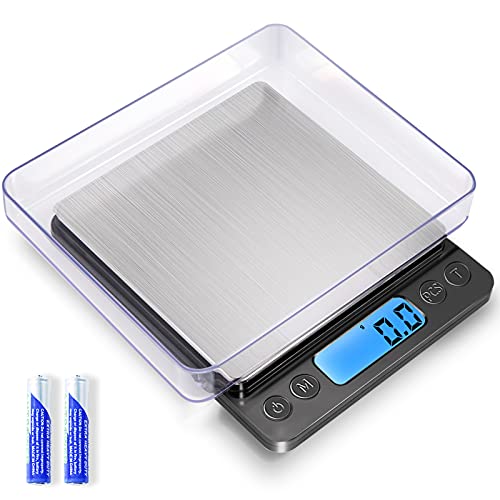 YONCON Digital Food Kitchen Scale Upgraded, YONCON 3000g/0.1g High Accuracy Mini…
View on Amazon ↗
Listing names and images come from Amazon and are rechecked against the live listings; last checked Nov 8, 2026. No prices shown; the current price is on the listing.
What this guide is. Use this guide as a checklist to hold against any listing you are considering. It is written from general knowledge of how digital kitchen scales work, not from testing any individual model, so verify the platform size, readability, and battery details on the product page before you buy.