Focus on size, material, and grid markings. A mat must fit the work area, cushion the blade without dulling it, and show accurate lines. Larger mats suit fabric and classroom work, while smaller ones fit card making. Self healing PVC is the standard, but glass and hard plastic each trade durability for blade wear. Pick the largest size your desk can hold.
Work Area Decides Size
Measure the desk or table where you will cut. A mat should sit flat without hanging over the edge. For card making and scrapbooking, a 12 by 18 inch mat often fits a small table and handles most paper sizes.
Fabric projects need more room. Cutting yardage or long strips works better on a mat at least 24 by 36 inches. Classroom projects with multiple students also benefit from a larger shared surface, while a small craft business may need two mats: one large for production and one small for portable work.
Check the listing for actual dimensions, not just the photo. Some mats look large but are only 9 by 12 inches. If you use a rotary cutter, add extra length for the tool to travel past the fabric edge.
Material Changes Blade Life
Most craft cutting mats are self healing PVC. The surface closes around shallow cuts, which keeps the mat usable for years and reduces blade dulling. Thicker PVC, often 3 to 5 millimeters, resists warping and stays flat on the table.
Hard plastic mats are cheaper and resist deep cuts, but they dull blades faster and do not heal. Tempered glass mats are smooth and easy to clean, and they never scar. The tradeoff is that glass is hard on knife edges and can crack if dropped.
For T-shirt projects with vinyl, a self healing mat is usually the best balance. For paper crafts with light pressure, a thinner PVC mat works fine. For heavy utility knife use, a hard plastic mat may last longer but will require more blade changes.
Grid Markings and Angles
A printed grid helps you cut straight lines and measured pieces. Look for mats with clear markings in inches or centimeters, or both. Many mats print a 1 inch grid with finer half inch or quarter inch lines.
Angle markings are useful for quilting and pattern work. Lines at 30, 45, and 60 degrees let you align fabric without a separate ruler. Some mats also include common shape templates like circles or hexagons, but these are less important than the basic grid.
Check that the grid is printed on the top surface and reads correctly, not mirrored. Some mats have a plain back side, which is fine if you flip the mat for a clean cutting surface. The grid should not rub off quickly; if the listing does not mention print durability, look for a mat with a slightly textured top layer.
Thickness and Flatness
Thickness affects how the mat feels under the blade and whether it stays flat. A mat that is too thin can curl or slide on the table. A mat that is too thick can feel spongy and reduce cutting accuracy.
For most craft work, a thickness around 3 millimeters works well. Fabric cutting with a rotary cutter benefits from a 5 millimeter mat because it absorbs more pressure. Thin mats under 2 millimeters are best for light paper crafts and portability.
Before buying, check the listing for a note about flatness. Some mats arrive rolled and need time to lie flat. If you plan to store the mat rolled, a thinner mat is easier to manage. If it will stay on a table, choose a thicker one that resists curling.
The Comparison That Simplifies the Choice
| Material | Blade wear | Self healing | Best for |
|---|---|---|---|
| Self healing PVC | Low | Yes | Fabric, vinyl, general crafts |
| Hard plastic | High | No | Heavy utility cutting |
| Tempered glass | Very high | No | Painting, glue work, displays |
| Laminated cardboard | High | No | Temporary or classroom use |
Use this table as a quick filter. If you change blades often and want them to last, self healing PVC is the default. If you cut with a lot of force and do not mind sharpening or replacing blades, hard plastic can work. Glass is a specialty surface, not a general cutting mat.
Rotary Cutter Users Need One Feature
A rotary cutter rolls across the mat and can easily run off the edge. A mat with a raised or printed border helps, but the real requirement is enough length for the cutter to make a full pass without hitting the table.
For fabric cutters, the mat should extend at least 4 inches beyond the fabric on all sides. This keeps the blade on the mat and protects the table. If you cut long strips, a mat with a continuous grid along the long edge is more useful than one with a decorative border.
Check the listing for a note about rotary cutter compatibility. Some mats are specifically designed for rotary blades and have a denser self healing layer. Others are intended for craft knives only and may scar more quickly under a rolling blade.
What to Ignore in the Listing
Some features are marketing rather than function. Double sided mats with a different color on each side are nice, but the second side is usually just a plain color with no grid. Odor free claims matter, but most PVC mats have a slight smell that fades.
A carrying handle or hanging hole is convenient but does not affect cutting quality. Extra printed shapes like hexagons or oval templates are rarely used by most crafters. A mat that claims to work with all blades is not saying much; the material is what matters.
Focus on the three factors: size, material, and grid. If the listing does not state the material clearly, ask the seller. If the grid is not shown in a close up photo, assume it is basic and check the return policy before buying.
Care Keeps the Grid Readable
A cutting mat lasts longer if you clean it regularly. Paper fibers and fabric lint can build up in the cut lines and make the grid hard to read. A soft brush or a damp cloth with mild soap removes most debris.
Avoid harsh chemicals like acetone or bleach, which can dissolve the printed grid or warp the PVC. For glue residue from vinyl projects, use a plastic scraper or a little rubbing alcohol on a cloth, but test on a corner first. Never put a cutting mat in a dishwasher or leave it in direct sunlight for long periods.
Store the mat flat or rolled loosely. If it curls, lay it on a flat surface with a heavy book on top overnight. Avoid folding the mat, because a crease becomes a permanent weak spot. With basic care, a self healing mat can last for many years of regular use.
Mistakes That Ruin a Mat
Cutting with too much pressure is the most common mistake. A sharp blade needs only light pressure; pressing hard cuts through the mat and dulls the blade faster. Let the blade do the work and keep a light hand.
Using the same spot repeatedly creates grooves. Shift your cutting area around the mat, especially for repetitive cuts like card bases. If you always cut in the center, the mat wears unevenly and the grid becomes unreliable in that area.
Leaving the mat in a hot car or near a heater can warp it. PVC softens with heat and may not return to flat. Keep the mat at room temperature and away from direct heat sources. If you travel with a mat, choose a thinner, more flexible one that tolerates some bending.
Questions Crafters Ask Before Buying a Cutting Mat
What is a self healing cutting mat?
A self healing mat is made from a dense PVC material that closes around shallow cuts. The blade slices through a thin top layer, and the material springs back, leaving only a faint line. This protects both the blade and the table underneath. The mat does not repair deep gouges, so light pressure and rotating your cutting area extend its life.
How do I choose the right size cutting mat?
Measure your work surface first, then think about your largest project. For card making and scrapbooking, a 12 by 18 inch mat is usually enough. For fabric or clothing projects, choose a mat at least 24 by 36 inches. A larger mat is better if you use a rotary cutter, because the blade needs room to travel past the fabric edge.
Can I use a rotary cutter on any cutting mat?
Rotary cutters work best on self healing PVC mats designed for fabric. The mat needs enough thickness, typically 3 to 5 millimeters, to absorb the rolling pressure. A hard plastic or glass mat will dull the rotary blade quickly and may not grip the fabric. Check the listing for a note about rotary cutter compatibility before buying.
Is a glass cutting mat better than a self healing one?
Glass mats are smooth, easy to clean, and never scar, but they are very hard on blades and can crack if dropped. Self healing PVC mats are gentler on blades and better for repeated cutting. If you mostly cut paper and light fabric, a self healing mat is the safer choice. Glass is better for painting or glue work, not general cutting.
How do I clean and store a cutting mat?
Wipe the mat with a damp cloth and mild soap after each project. For glue residue, use a plastic scraper or rubbing alcohol on a cloth. Store the mat flat or rolled loosely, never folded. If it curls, lay it flat with a heavy book on top overnight. Keep it away from heat sources and direct sunlight to prevent warping.
Which Cutting Mat Fits Your Next Project
A crafter who cuts paper, vinyl, or fabric at a desk should start with a self healing PVC mat in the largest size that fits the workspace, at least 3 millimeters thick with a clear grid. That combination handles most projects and keeps blades sharp. For someone who only cuts heavy materials with a utility knife and does not mind frequent blade changes, a hard plastic mat is a better fit. Size and material decide more than any printed extra.
Real craft cutting mat listings, so you can check the points in this guide against actual products. These are affiliate links: as an Amazon Associate we earn from qualifying purchases, at no extra cost to you.
 IDEMEET Idemeet Density-upgraded 24" x 36" Large Self Healing Sewing Mat,…
View on Amazon ↗
 SENTK SENTK Upgraded A1 Thickened Self Healing Cutting Mat, 24" x…
View on Amazon ↗
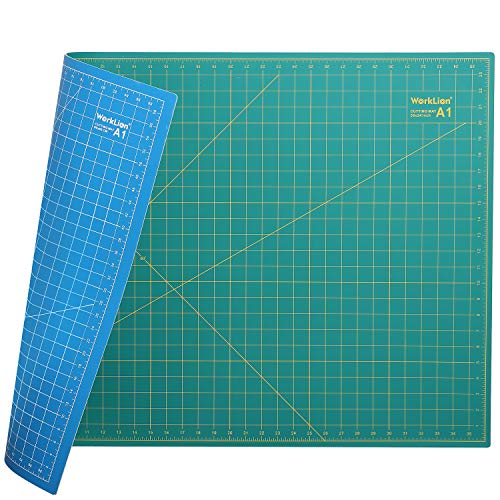 WORKLION WORKLION 24" x 36" Large Self Healing PVC Cutting Mat,…
View on Amazon ↗
Listing names and images come from Amazon and are rechecked against the live listings; last checked Nov 8, 2026. No prices shown; the current price is on the listing.
How to read this guide. Use this guide as a checklist when you look at any cutting mat listing. Compare the size, material, and grid against the points here, and verify dimensions on the product page before you buy.