Match the blade height and edge grind to how you actually cut. A thin, hard blade gives cleaner slices but asks for careful technique and a honing habit. A thicker, softer blade tolerates rough chopping and bones, yet feels less precise. Handle fit, especially the pinch grip and the bolster, decides whether the knife feels like an extension of your hand or a chore to hold.
Blade Height Sets Your Knuckle Clearance
The distance from the cutting edge to the spine decides whether your knuckles hit the board. A taller blade, often 45 mm or more, keeps your fingers clear when you use a forward grip. A shorter blade, sometimes around 38 mm, feels nimble but crowds your hand on a crowded cutting board.
Check the listing for the blade height at the heel, not just the overall length. A tall blade also scoops diced vegetables more easily, which saves time during meal prep. For small kitchens with limited board space, a shorter blade can feel less unwieldy, but you lose some knuckle room.
Blade height changes how the knife balances. A taller blade shifts weight forward, which helps with rocking cuts through herbs. A shorter blade feels lighter and easier to steer for precise tip work, but you may find your middle finger grazing the board on deep cuts.
Edge Grind Decides How the Knife Cuts and How You Care for It
The grind describes how the blade thins from the spine to the edge. A thin, flat grind passes through onions and carrots with little resistance, but the edge is more likely to roll or chip if you scrape the board or hit a bone. A thicker, convex grind resists damage but wedges in dense food like squash.
Match the grind to your cutting style. If you rock the blade through herbs and use a gentle push cut, a thinner grind rewards you with cleaner slices. If you chop with force or cut around joints, a thicker grind is more forgiving.
Care follows the grind. A thin edge needs a honing rod before or after most sessions to realign the edge. A thicker edge can go longer between sharpenings. Neither is better overall; they suit different hands and different tasks.
| Edge style | Cutting feel | Damage risk | Maintenance | Suits |
|---|---|---|---|---|
| Thin, flat grind | Low resistance, clean slices | Rolls or chips easily | Hone often, sharpen carefully | Precise push cuts, soft vegetables |
| Midweight grind | Balanced for most foods | Moderate | Hone weekly, sharpen as needed | General home cooking |
| Thick, convex grind | Wedges in dense food | Very durable | Less frequent honing | Forceful chopping, occasional bones |
A common mistake is choosing the thinnest edge because it feels sharp in a store. A very thin edge can feel impressive on a tomato but chip the first time you twist it on a cutting board. Compare the grind description in the listing instead of relying on the word 'sharp' in the title.
Handle Fit Comes Before Steel Type
A chef knife is held with a pinch grip more often than a full fist. Your thumb and forefinger squeeze the blade just ahead of the handle, while the other three fingers wrap around the handle. This grip means the handle's job is to fill your palm without forcing your wrist into an angle.
The bolster, the thick band where blade meets handle, matters more than most buyers realize. A full bolster adds weight and blocks your fingers from sliding forward, but it also prevents sharpening the entire edge and can feel bulky in a pinch grip. A half bolster or no bolster keeps the heel accessible and feels lighter, but offers less protection if your hand slips.
Handle material changes the feel in a wet kitchen. A smooth resin or metal handle wipes clean easily but can feel slippery with oily hands. A textured wood or composite handle grips better but may need occasional oiling or drying. For seniors or anyone with reduced grip strength, a thicker, softly contoured handle is easier to control than a slim, polished one.
Steel Names on the Box Are Not a Promise
Many listings lead with a steel name or a number, but the name alone does not tell you how the knife performs. The same steel can be heat treated to different hardness levels, and the geometry matters more than the alloy. A well made knife from a common steel can outperform a poorly ground knife from a famous steel.
What you can check is the listed hardness. A harder blade, often marked with a number on the Rockwell scale, holds an edge longer but is more brittle. A softer blade dulls faster but is easier to sharpen and less likely to chip. For a beginner cook, a slightly softer blade is more forgiving while learning technique.
Marketing phrases like 'surgical steel' or 'high carbon' describe a category, not a standard. Look for concrete details: the blade height, the edge angle, the handle shape, the weight. Those are the features that change how the knife feels on day one and after a year of use.
Weight and Balance Change the Cutting Rhythm
A heavy knife, often over 250 grams, falls through food with less effort from your arm, but it tires your wrist during long prep sessions. A light knife, often under 180 grams, feels quick and precise but asks you to push harder through dense vegetables.
Balance point matters as much as total weight. A knife that balances at the bolster feels stable in a pinch grip. A blade heavy knife wants to tip forward, which helps with rocking cuts but can feel clumsy for fine tip work. Check the listing for the weight, and if it is missing, ask the seller before buying.
For family dinners with lots of chopping, a midweight knife around 200 grams is a safe starting point. For small kitchens where storage and quick tasks matter, a lighter blade feels easier to grab and put away. Your cutting board and counter height also change how much weight feels comfortable.
Storage and Care Shape the Long Term Cost
A chef knife lasts years, but only if you store it so the edge does not bang against other metal. A magnetic strip or a blade guard keeps the edge safe, while a crowded drawer dulls it quickly. If you have small cabinets, a knife with a slim profile and a simple sheath is easier to store safely.
Sharpening is the main long term cost. A knife that is easy to sharpen at home, with a simple flat edge and no full bolster, can be maintained with a basic whetstone. A knife with a complex curve or a full bolster may need professional sharpening more often.
Wood handles need occasional mineral oil and should not sit in water. Resin or composite handles are more tolerant of a dishwasher, though the blade itself is always better washed by hand. A knife that is easy to dry and store is one you will actually use.
Who Should Skip a Full Size Chef Knife
A full size chef knife, usually 8 inches or longer, is not the right first knife for everyone. In a small kitchen with a short counter, a long blade feels awkward and can hit cabinets or walls. A shorter blade, often 6 to 7 inches, gives more control and still handles most tasks.
Anyone with limited grip strength or wrist pain may prefer a smaller, lighter knife with a thicker handle. The same applies to beginners who are still learning knife skills: a shorter blade is easier to steer and less intimidating.
If you mostly slice bread, carve roasts, or peel small vegetables, a chef knife is not the most useful tool. A serrated knife for bread or a small paring knife may serve you better. A chef knife earns its place when you chop, dice, and mince often.
The Cutting Board Itself Is Part of the Decision
A chef knife only performs as well as the board under it. A board that is too small forces you to use the tip more than the belly, which changes which knife feels right. A board that is too hard, like glass or stone, dulls any edge quickly and can chip a thin blade.
Wood and soft plastic boards are gentler on edges than bamboo or composite boards, though bamboo is still far better than glass. The board should be large enough for your longest knife plus the food you prep, with a few inches to spare on each side.
This is a detail that rarely appears in knife listings but changes the buying decision. A tall, heavy knife on a tiny board is a frustration, not a tool. If you have a small kitchen, choose a knife and a board together, not one after the other.
Questions to Ask the Seller Before You Buy
A listing often omits the measurements that matter. Ask for the blade height at the heel, the total weight, and the handle length. If the seller cannot provide these, that is a sign the knife may be marketed on looks rather than function.
Ask about the edge angle and the steel hardness if those are not listed. A seller who knows the product will give a number or a range, not a vague phrase like 'high quality steel'. Also ask whether the knife comes with a sheath or blade guard, since that affects how you store it safely.
If you are a beginner, ask whether the knife is easy to sharpen at home. A full bolster or a very hard steel can make sharpening difficult without special tools. The answer tells you more about the long term cost than the price tag.
Chef Knife Questions Worth Asking Before the Cart
What size chef knife should I buy for a small kitchen?
A 6 to 7 inch blade is usually easier to control in a small kitchen with limited counter space. A full 8 inch blade can feel awkward when your cutting board is small or your counters are short. Check the blade length and the handle length together, since a long handle can make a short blade feel bulky in a drawer or on a magnetic strip.
Is a more expensive chef knife worth it for a beginner?
A beginner benefits more from a midweight knife with a comfortable handle than from a premium steel. A very hard, thin blade is less forgiving of poor technique and can chip if you twist it on the board. Start with a knife that is easy to hone and sharpen at home, then upgrade once your cutting style is consistent.
How do I know if a chef knife handle will fit my hand?
The pinch grip is the best test. Hold your hand as if you are pinching the blade just ahead of the handle, with your other fingers wrapped around the handle. Your middle finger should not hit the cutting board, and your wrist should stay straight. A handle that is too slim forces you to grip harder, while one that is too thick spreads your fingers awkwardly.
Can I put a chef knife in the dishwasher?
The blade is better washed by hand, even if the handle is dishwasher safe. Detergent and high heat can dull the edge and damage a wood handle. Rinse and dry the knife right after use, then store it on a magnetic strip or in a blade guard so the edge does not knock against other metal.
Which chef knife is best for meal prep?
A midweight knife with a tall blade, around 45 mm at the heel, is a strong starting point for meal prep. The tall blade keeps your knuckles clear and scoops diced vegetables, while the midweight balance handles both herbs and dense root vegetables. Choose a blade height that fits your cutting board and a handle that feels secure in a pinch grip.
The Chef Knife to Start With, and the One to Skip
A home cook who chops vegetables several times a week should start with a midweight blade, a tall heel for knuckle clearance, and a handle that feels secure in a pinch grip. That combination handles meal prep without demanding expert sharpening skills. If you live in a small kitchen with a short counter and mostly slice rather than chop, choose a 6 to 7 inch blade with a slim profile instead. A full size, blade heavy knife is the wrong tool for that space and that rhythm.
Real chef knife listings, so you can check the points in this guide against actual products. These are affiliate links: as an Amazon Associate we earn from qualifying purchases, at no extra cost to you.
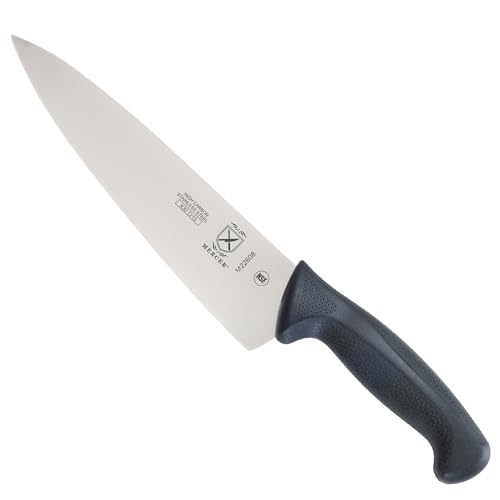 MERCER CULINARY Mercer Culinary M22608 Millennia Black Handle, 8-Inch, Chef's Knife
View on Amazon ↗
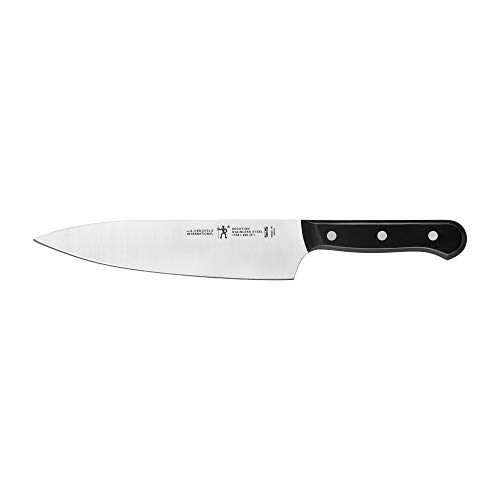 HENCKELS HENCKELS Solution Razor-Sharp 8-inch Chef Knife, German Engineered Informed by…
View on Amazon ↗
 PAUDIN PAUDIN Chef Knife, 8 Inch High Carbon Stainless Steel Sharp…
View on Amazon ↗
Listing names and images come from Amazon and are rechecked against the live listings; last checked Nov 8, 2026. No prices shown; the current price is on the listing.
About this guide. This guide covers the chef knife category in general, based on how blade geometry, handle design, and materials behave. It does not draw on individual product documents, reviews, or in person testing, so confirm any listed dimension or weight on the product page before you buy.