Capacity and sleeve material decide most of it. A fixed sleeve binder holds more in less space for a stable collection; a carousel or removable page binder makes swapping easier but adds bulk. Frequent travelers should prioritize a rigid shell and quality zipper. The tradeoff is simple: compact storage versus fast access.
Sleeve material decides whether discs survive a decade
The plastic touching the disc matters more than the outer cover. Polypropylene sleeves are the baseline for safe storage: they do not react with the polycarbonate in a CD. Polyethylene is also acceptable and often softer. PVC sleeves were common in older binders and can outgas over time, leaving a cloudy film that ruins playback.
Check the listing for the sleeve material by name. If it only says "plastic sleeves," ask the seller before buying. A binder with paper or fabric backed sleeves adds a little protection against scratches, but the backing also makes each page thicker, so the binder holds fewer discs in the same space.
Sleeve seams are the second point of failure. Heat sealed seams can split after repeated use, especially in a hot car. Look for sleeves with reinforced stitching or a double seal line. If you plan to slide discs in and out weekly, stitched sleeves outlast heat sealed ones.
Capacity claims need a quick math check
A "200 disc binder" rarely holds 200 discs the way you expect. That number usually counts both sides of each sleeve, so a 100 sleeve binder becomes a 200 disc binder. If you want to store booklets or liner notes with each disc, the real capacity drops by half or more because a sleeve with a booklet cannot hold a disc on the other side without pressure.
Before buying, decide whether you need one disc per sleeve or two. One per sleeve means the binder must be roughly twice as thick for the same disc count. For a car glovebox, that extra thickness may not fit. For a shelf at home, it may not matter.
Also compare the listed disc count to the physical page count. Some brands count a double sided sleeve as two slots, which is fair, but others count the clear front pocket as a slot even when it is too tight for a disc. If the listing shows a photo of an open sleeve, count the visible disc positions on one page and multiply.
| Design type | Disc access | Shelf footprint | Best for |
|---|---|---|---|
| Fixed sleeve binder | Slide disc out of sleeve | Slimmest for capacity | Archival storage at home |
| Removable page binder | Lift page out of rings | Moderate, rings add width | Reorganizing a collection |
| Carousel binder | Lift disc from tray | Thickest, trays double size | Frequent swaps in a car |
Fixed sleeve binders win on space and price. Carousel binders win on access speed but cost more and take up roughly twice the shelf depth. Removable pages are a middle ground for people who like to reorder their collection often.
The zipper is the weakest part, not the cover
A broken zipper turns a binder into a pile of loose pages. Look for a zipper that runs around three sides, not just the top, so the binder opens flat. Nylon coil zippers are quieter and less likely to jam than metal teeth. A zipper pull that is metal or rubberized is easier to grip with cold hands.
The outer shell matters for travel and dust. A rigid shell with a fabric cover protects discs if the binder slides under a car seat. A soft vinyl cover is lighter but offers no crush protection. For home storage on a shelf, a soft cover is fine; for a car, choose a semirigid or hard shell.
Check how the zipper is attached. If the fabric around the zipper is thin, the teeth can pull away from the cover after a few months. A double stitched zipper tape is a sign of a binder that will last.
A binder is wrong for some collections
If you own more than a few hundred discs and rarely move them, a shelf or drawer system is better. Binders put pressure on the outer discs when full, especially if stored upright. A full binder also becomes heavy: a 300 disc binder can weigh over ten pounds, which is manageable but not trivial to carry.
Skip binders for discs you listen to once a year. The effort of flipping pages to find one disc is higher than reading spines on a shelf. Binders make sense when you want to flip through a collection quickly in a car or when shelf space is scarce.
People who keep original jewel cases and liner notes should also reconsider. A binder means storing booklets separately or doubling the binder thickness. If the packaging is part of the collection's value, a CD storage shelf keeps everything intact.
Car use changes which features matter
Heat is the main threat in a car. A binder left in a hot car can warp discs or soften PVC sleeves. Polypropylene sleeves handle heat better than PVC. Keep the binder under a seat or in a trunk rather than on a dashboard, and avoid leaving it in direct sunlight.
A zipper closure is nonnegotiable for a car. Open sided binders let discs slide out during turns or braking. A handle or strap helps when carrying it between car and house. Some binders have a loop for hanging on a seat back, which keeps it off the floor.
For a car, prioritize a smaller capacity that you will actually flip through. A 48 or 64 disc binder fits in most gloveboxes and is light enough to hold with one hand. A 200 disc binder is too large for most gloveboxes and becomes a floor item.
Marketing words that do not mean much
"Archival quality" is not a regulated term. It often means polypropylene sleeves, but not always. Check the sleeve material name instead of trusting the phrase. "Heavy duty" is similarly vague: it may describe a thick cover, a strong zipper, or neither.
"Water resistant" usually means the fabric beads water briefly. It does not mean waterproof. If you need real moisture protection for a basement or garage, look for a binder with a plastic shell or store it in a sealed container.
Ignore color and pattern claims beyond personal preference. A printed cover does not change how the binder protects discs. The same goes for "bonus" items like a cleaning cloth or label stickers: they are inexpensive and do not compensate for poor sleeve material.
Reading a listing before you buy
Start with the sleeve material. If it is not named, ask the seller. Then check the disc capacity against the sleeve count: a listing that says "200 discs" should show roughly 100 sleeves or 50 pages, depending on the design. If it says "200 discs" and shows 40 pages, something is off.
Look at the zipper in the product photos. A zipper that stops at the top corners means the binder opens like a folder, which is fine but less convenient for flipping pages. A zipper that runs down both sides lets the binder open flat like a book.
Check the handle and any closure straps. A handle on the spine is useful for carrying; a handle on the cover is less stable when the binder is open. Ask the seller about the sleeve seam type if the photos do not show it clearly.
For car use, measure your glovebox or door pocket before ordering. Binder dimensions in listings are usually the outside cover, not the page area. A binder listed as 10 inches wide may not fit a glovebox that is 9 inches deep.
Long term care keeps sleeves from sticking
Store the binder upright, not flat, to reduce pressure on the bottom discs. If the binder is full, leave one or two empty sleeves at the end so the pages do not press against the zipper. Keep it in a cool, dry place: humidity can make polypropylene sleeves cling to discs.
Clean the outer cover with a damp cloth only. Do not use solvents on the cover or sleeves, as they can cloud the plastic. If a sleeve tears, remove that page rather than taping it, since tape adhesive can transfer to a disc.
There are no ongoing costs for a binder beyond replacing it when the zipper fails or sleeves crack. A well made binder should last five to ten years with normal use. If you use it daily in a car, expect to replace it sooner.
CD Binder Questions Worth Asking Before You Order
How many CDs does a 200 disc binder actually hold?
Usually 100 sleeves with two discs per sleeve, so 200 discs without booklets. If you store booklets or liner notes, the capacity drops to around 100 because a booklet takes up one side of a sleeve. Always divide the listed disc count by two to get the sleeve count, then decide whether you need booklets.
Can a CD binder damage discs over time?
Yes, if the sleeves are PVC or if the binder is stored flat under weight. PVC outgasses and leaves a film on discs. Polypropylene and polyethylene sleeves do not. Store the binder upright and do not overfill it so the outer discs are not pressed against the cover.
What size CD binder fits in a car glovebox?
Most gloveboxes fit a binder up to about 10 by 6 by 1.5 inches, which is typically a 48 or 64 disc binder. Measure your glovebox first, and remember that the listed dimensions are the outer cover. A 200 disc binder is usually too thick for a glovebox and works better under a seat.
Is a zipper or Velcro closure better for a CD binder?
A zipper is better for travel because it seals completely and keeps dust out. Velcro wears out faster and can snag on fabric. For a shelf at home, either works. For a car, choose a zipper that runs around three sides so the binder opens flat.
Which CD binder design is best for quick disc changes?
A carousel binder lets you lift a disc out of a tray without sliding it from a sleeve, which is faster and reduces the chance of scratching. The tradeoff is bulk: carousel binders are roughly twice as thick as fixed sleeve binders for the same disc count.
Which CD Binder to Put in Your Cart
A driver who swaps discs weekly and keeps the binder in the glovebox should pick a small fixed sleeve binder with polypropylene sleeves and a three sided zipper. It fits the space, protects discs from heat better than PVC, and costs less than a carousel. Someone who reorganizes a large collection at home is the exception: a removable page binder makes reordering easier, even though it adds bulk and a little cost.
Real cd binder listings, so you can check the points in this guide against actual products. These are affiliate links: as an Amazon Associate we earn from qualifying purchases, at no extra cost to you.
 LIOVODE LIOVODE DVD Case 128 DVDs and 64 Booklets Capacity, CD/Blu-ray…
View on Amazon ↗
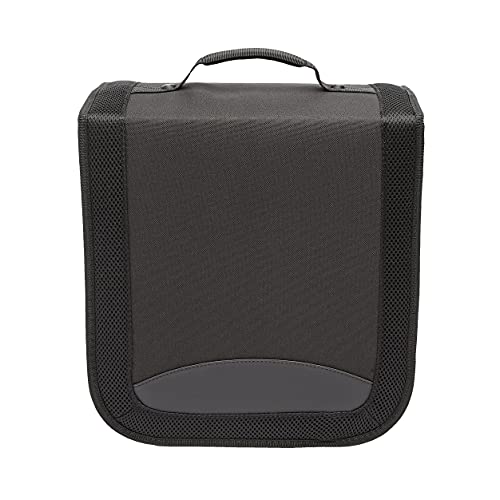 AMAZON BASICS Amazon Basics Polyurethane, fabric CD/DVD Portable Storage Binder with Handle,…
View on Amazon ↗
 SIVEIT Siveit CD/DVD Case Binder - 400 Capacity Disc Storage Holder,…
View on Amazon ↗
Listing names and images come from Amazon and are rechecked against the live listings; last checked Nov 8, 2026. No prices shown; the current price is on the listing.
What this guide is. Use this guide as a checklist to hold against any CD binder listing: confirm the sleeve material, divide the capacity claim by two, and check the zipper path. It is written from general knowledge of how these products are built, not from testing individual models, so verify any dimension on the listing before ordering.