Thickness, handle attachment, and surface prep decide most of the result. A thicker, preseasoned wok with a riveted steel handle suits everyday cooks and gas stoves. A thinner, unfinished wok suits high heat stir frying and quick seasoning, but it warps more easily on induction. Match the wok to your heat source and willingness to season it.
Thickness Decides Whether the Wok Warps or Holds Its Shape
Carbon steel woks range from roughly 1.2 mm to 2 mm or more in the center. Thin steel responds almost instantly to flame changes, which makes it lively for tossing vegetables and fried rice. That same thinness is the reason many woks bow upward on a flat induction hob after a few high heat sessions.
A thicker wok stores more heat, so food sears instead of steaming when you add a handful of cold ingredients. It also resists warping far better on electric and induction stoves. The tradeoff is weight and a slower response when you turn the burner down.
Check the listing for a gauge or millimeter figure. If it is absent, compare the total weight against similar sizes. A 14 inch wok under about 3 pounds is often thin enough to warp under high induction power.
The Bottom Shape Must Match Your Cooktop
A traditional round bottom wok rocks on a flat stove unless it sits in a wok ring. On gas, a ring works well and lets you toss food with a ladle. On induction or glass ceramic, a round bottom makes almost no contact with the cooking zone, so heat transfer drops sharply.
Flat bottom woks solve that contact problem. Look for a base that is wide enough to cover the hob's marked cooking area, often 5 to 7 inches across. A base that is too small leaves the outer ring cold and creates a hot spot in the center.
Some listings describe a wok as induction compatible, but that only means the steel is magnetic. It does not guarantee the bottom is flat or thick enough to avoid warping. Check the base diameter and the stated flatness before you buy.
Handle Fastening Is the First Thing to Fail
A wok handle takes a lot of torque from lifting and tossing. Riveted handles pass through the wok wall and are pressed flat on the inside, so they rarely loosen. Welded handles are cheaper to make, but a poor weld can crack or separate after repeated heating and cooling.
Many woks add a helper handle on the opposite side. That second handle makes a full wok much easier to lift, especially with one hand. Check whether the helper handle is also riveted or just spot welded, because it bears nearly as much force as the main handle.
Wooden handles stay cool but cannot go in the oven. All steel handles can take oven heat for seasoning, but they get hot on the stovetop. Some handles are hollow steel with a wooden sleeve, which is a compromise that still cannot be oven seasoned.
Seasoning Starts Before You Cook
Raw carbon steel arrives with a factory oil coating to prevent rust. You must wash that off, dry the wok fully, and then build a seasoning layer with heat and oil. This can take an hour and fills the kitchen with smoke, but it gives you control over the finish.
Preseasoned woks come with a baked on oil or wax layer. They are ready for a quick wash and first use, which suits a beginner or a small kitchen with poor ventilation. The seasoning is often thin and may need touch ups after acidic sauces.
A preseasoned finish can also hide a rough surface or an uneven coating. Run a paper towel over the inside before buying if you can see it in person. If buying online, check whether the listing states the seasoning type and whether it is solvent free.
Which Features Matter and Which Are Marketing
Steel type matters. Carbon steel is iron with a small amount of carbon, which makes it lighter than cast iron but still responsive to heat. Any claim of 'high carbon steel' is mostly marketing, because all carbon steel contains carbon by definition.
A lid is useful for steaming and braising, but a domed lid from a random listing may not fit tightly. A flat glass lid is often more useful than a tall metal one because you can see the food and it stores more easily.
Nonstick coatings on carbon steel are a sign that the wok is trying to be something else. A true carbon steel wok relies on seasoning, not a chemical coating. If a listing emphasizes 'PFOA free nonstick', it is probably a coated pan, not a traditional wok.
Spouts or pouring lips are rarely useful on a wok because you toss food, not pour liquid. A hammered texture is cosmetic and does not improve cooking. Thickness, handle attachment, and a flat base are the features that actually change the result.
How to Read a Listing Before You Buy
Start with the weight and the thickness. If the listing gives a gauge like '16 gauge' or a millimeter figure, compare it to the range above. If it gives only a shipping weight, subtract a pound for packaging and ask yourself whether the wok feels heavy enough to hold heat.
Check the bottom description. The words 'flat bottom' should appear, along with a base diameter. If the listing only says 'works on all stovetops', ask the seller for the exact flat base measurement before you buy.
Look at the handle attachment in the product photos. Rivets are visible as two or three metal dots on the inside of the wok. If the photos only show the outside, ask the seller whether the handle is riveted or welded.
For induction, confirm the base is magnetic and flat. Many sellers copy 'induction compatible' from a template without testing. You can ask whether the wok sits flush on a glass surface without rocking.
Which Buyers Should Skip a Carbon Steel Wok
If you cook mostly on a small portable induction burner, a carbon steel wok may never get hot enough across the whole base. The burner's coil is often smaller than the wok's flat bottom, so the edges stay cold and food steams instead of sears.
If you do not want to season or maintain a pan, choose a nonstick stir fry pan instead. Carbon steel rusts if you leave it wet, and the seasoning needs occasional reoiling. A dishwasher cycle strips the seasoning entirely.
If you live in a small apartment with a weak range hood, the seasoning smoke may be a real problem. You can season outdoors on a portable burner, but that is an extra step many people skip.
For a small household that cooks small portions, a 14 inch wok is oversized and heavy. A 10 inch or 12 inch carbon steel skillet or saute pan may fit the burner and the storage space better.
Long Term Costs and Care
A carbon steel wok does not need replacement liners or filters, but it does need oil and occasional steel wool. The main long term cost is time, not money. You will reseason the interior after cooking acidic dishes like tomatoes or vinegar based sauces.
Store the wok with a light coat of oil if you live in a humid climate. Rust forms quickly on bare steel, especially near the rivets and the rim. A paper towel with a few drops of oil is enough after each wash.
Do not put a wooden handled wok in the dishwasher. The heat and detergent strip the wood and the seasoning. Even an all steel wok should be hand washed, because dishwasher detergent is too harsh for the seasoning layer.
If the wok develops a sticky brown layer, it is usually burnt oil, not seasoning. Scrub it back with steel wool and start again. A smooth, dark, slightly glossy surface is the goal; a thick, gummy layer means you used too much oil.
Three Mistakes Buyers Make With Carbon Steel Woks
Buying a round bottom wok for an induction stove is the most common error. The wok barely touches the hob, so it heats slowly and unevenly. A flat bottom with a wide base is nonnegotiable for induction and glass ceramic.
Choosing the thinnest wok to save money leads to warping. A wok that rocks on the stove is dangerous when you toss hot oil. A thicker wok costs more but stays flat for years.
Believing a nonstick coating replaces seasoning is a misunderstanding. A coated carbon steel wok cannot take the high heat that makes stir frying work, and the coating wears off. Seasoning is the only surface that improves with use.
Skipping the seasoning step because the wok looks oily is another mistake. That factory oil is a rust preventive, not a cooking surface. It must be washed off and replaced with a proper seasoning layer.
How the Main Design Types Compare
| Design | Heating speed | Warp resistance | Seasoning effort | Best for |
|---|---|---|---|---|
| Thin round bottom | Very fast | Low | Low | Gas stoves, fast tossing |
| Thick round bottom | Fast | High | Medium | Gas stoves, high heat |
| Thin flat bottom | Fast | Medium | Low | Induction, light use |
| Thick flat bottom | Moderate | Very high | Medium | Induction, daily cooking |
A thin round bottom wok is the classic restaurant shape, but it needs a wok ring on gas and is nearly useless on induction. A thick flat bottom wok is the safest choice for a modern kitchen with mixed cooktops, even if it heats a little more slowly.
Preseasoned woks can fall into any of these categories. The seasoning does not change the steel's thickness or the bottom shape, so check those separately. A preseasoned thin round bottom wok is still a poor match for induction.
Carbon Steel Wok Questions Before You Add to Cart
Is carbon steel wok safe for induction cooktops?
Yes, if the wok is magnetic and has a flat bottom. Carbon steel is magnetic, so it works with induction coils. The problem is shape: a round bottom wok touches only a tiny point of the glass surface and heats poorly. Check the listing for a flat base diameter of at least 5 inches, and confirm the wok sits flush without rocking.
Which carbon steel wok thickness is best for a beginner?
A thickness around 1.5 mm to 2 mm is a good starting point. It heats fast enough for stir frying but resists warping better than very thin steel. A beginner also benefits from a preseasoned finish, because raw carbon steel requires an initial seasoning step that can be intimidating.
Should I buy a carbon steel wok or a nonstick wok?
Buy carbon steel if you want high heat searing, a surface that improves with use, and you are willing to season it. Buy nonstick if you cook mostly eggs or delicate foods and want easy cleanup without any maintenance. Carbon steel cannot go in the dishwasher; nonstick coatings wear out and cannot take very high heat.
How do I season a carbon steel wok for the first time?
Wash the wok with hot water and a scrubber to remove the factory oil. Dry it completely on the stove. Heat it until it just begins to smoke, then rub a thin layer of high smoke point oil over the entire inside with a paper towel. Keep heating and wiping until the surface darkens, then let it cool. Repeat two or three times for a solid base.
Is it worth buying a carbon steel wok for a small kitchen?
Only if you have a gas stove or a strong induction burner and enough storage for a 14 inch pan. In a small kitchen with a weak electric coil or limited cabinet space, a 10 inch carbon steel skillet is easier to store and heats more evenly. A wok is worth it when you cook stir fries at least once a week and can season it outdoors or under a good vent.
The Wok to Pick Once the Cooktop Is Known
A home cook on a gas stove who stir fries weekly should buy a thick round bottom wok with a riveted steel handle and season it at home. That shape tosses food well and lasts for years. A cook on an induction hob should instead buy a thick flat bottom wok, even if it costs more, because a round bottom will never heat properly on that stove.
Real carbon steel wok listings, so you can check the points in this guide against actual products. These are affiliate links: as an Amazon Associate we earn from qualifying purchases, at no extra cost to you.
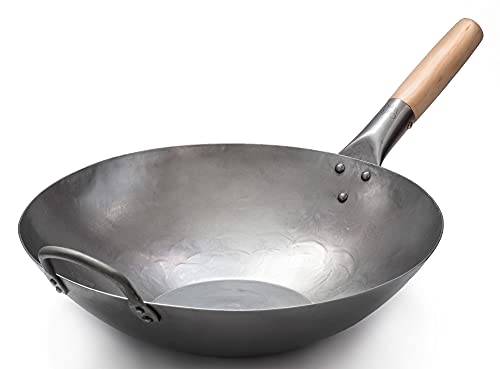 CRAFT WOK Craft Wok Flat Hand Hammered Carbon Steel Pow Wok with…
View on Amazon ↗
 YOSUKATA YOSUKATA 13.5" Pre-Seasoned Flat Bottom Black Carbon Steel Wok for…
View on Amazon ↗
 TAROYAKI TAROYAKI Made in Japan 11.8-Inch Carbon Steel Wok with Flat…
View on Amazon ↗
Listing names and images come from Amazon and are rechecked against the live listings; last checked Nov 8, 2026. No prices shown; the current price is on the listing.
About this guide. Use this guide as a checklist to hold against any listing you open, not as a verdict on a specific model. It is written from general knowledge of carbon steel woks as a product type, without reading individual product documents or reviews, so confirm any dimension or handle type on the listing before you buy.