Blocking mats differ by surface grip, thickness, and grid accuracy. A smooth mat with printed lines suits lace and precise shaping, while a textured mat grips slippery yarns. Buy the thickest mat you can store if you use heavy wool, but skip the category entirely if you only block occasional small items.
How the Mat Surface Decides Your Result
A blocking mat works by holding pins at the exact points where you stretch a wet knit. If the surface lets a pin shift even a fraction of an inch, the whole shape drifts. Compare listings for how the foam grips a pin shaft, not just how it looks in a photo.
Smooth mats with printed grids are easy to wipe clean and let you slide pins into place quickly. That same slipperiness becomes a problem with slick yarns like silk or bamboo, because the pin can lean as the yarn dries and pulls inward.
Textured or pebbled surfaces hold pins more firmly and keep the yarn from slipping across the mat. The tradeoff is cleanup: dust and fiber settle into the texture and need a rinse or vacuum more often than a smooth sheet.
Thickness Changes How You Pin and Dry
A thicker mat gives a pin more material to bite into, so it stands straighter and resists the pull of a shrinking yarn. Thin mats work for light lace and small items, but a heavy sweater can bend pins or let them pop out overnight.
Thickness also affects drying. A dense, thick mat holds moisture under the knit and can slow the drying time, while a thinner or open cell mat lets air reach the back. Check whether the listing states the mat is closed cell or open cell.
If you block on a table or floor that might get damp, a thicker mat protects the surface better. For travel or small storage, a thinner roll up mat may be the only practical option.
Grid Lines Are Either Useful or a Lie
Most blocking mats print a one inch or one centimeter grid. The question is whether the grid stays accurate after the mat has been wet, pinned, and rolled a dozen times. Printed lines can stretch with the foam or wash off entirely.
Compare the grid description: some mats claim heat embossed lines that sit below the surface, while others print on top. An embossed grid lasts longer and stays visible, but it can also create tiny bumps that transfer to the knit if you press hard.
If you rely on exact measurements for garment pieces, a warped grid is worse than no grid. Check the listing photos for whether the lines run edge to edge, and consider buying a separate ruler to verify the spacing on arrival.
Design Types: What Each One Does to Your Knit
Blocking mats come in four main forms: flat sheets, interlocking tiles, foldable mats, and roll up mats. Flat sheets are the simplest and often the cheapest, but you need a large flat surface to store them.
Interlocking tiles solve the storage problem and let you build a custom size, but the seams between tiles can show as faint ridges on the blocked knit. Check whether the tiles lock tightly or leave a gap that catches yarn.
Foldable mats are convenient for travel and small projects, but the crease where the mat folds can press a line into the knit. Look for a fold that is designed to lie flat when opened, or place a towel over the crease.
Roll up mats store in a tube and are easy to pack, but they often have a curl memory. You may need to weigh down the edges or let the mat rest flat for a few hours before pinning.
| Design type | Surface grip | Storage effort | Best for |
|---|---|---|---|
| Flat sheet | Varies by texture | Bulky, needs flat space | Home use, large projects |
| Interlocking tiles | Usually textured | Compact, modular | Custom sizes, mixed projects |
| Foldable mat | Often smooth | Folds small | Travel, small items |
| Roll up mat | Often textured | Rolls into tube | Portable, occasional use |
Pick the design type first because it sets your storage and setup time, then compare surface and thickness within that type.
Project Size and Shape Set the Minimum Mat
A mat that is too small forces you to block in sections, which can distort the piece at the joins. Measure your largest typical project and add at least two inches on every side for pin placement.
Square and rectangular mats suit most garments, but a round shawl or a long scarf may need a different shape. Interlocking tiles let you build an L shape or a long strip, while a single flat sheet locks you into one rectangle.
For blanket making, a mat that covers the full blanket is ideal but rarely practical. Instead, block the blanket in quarters and check the grid alignment at each seam line.
Who Should Skip a Blocking Mat
If you only knit small accessories and are happy with the shape straight off the needles, a blocking mat adds storage and setup time without much benefit. A towel and some pins on a carpet can do a rough job.
Crafters with limited floor or table space may find a mat takes more room than the project itself. In that case, a foldable or roll up mat is the only type worth considering.
Some yarns, like superwash wool, grow dramatically when wet and need aggressive pinning. A thin or slippery mat will fight you the whole time. If that is your main yarn, invest in the grippiest, thickest mat you can find.
Arthritis, Grip, and Pin Handling
Pushing T pins into a dense foam mat takes more hand strength than most people expect. A thinner or softer mat is easier to pierce, but it may not hold a heavy knit. Compare the foam density description and look for words like 'soft' or 'low density' if pin pressure is a concern.
A textured surface can actually help if you have limited dexterity, because the pin stays where you put it while you reposition your hand. Smooth mats require a steadier grip to keep the pin upright.
Some mats come with a grid that is too faint for low vision or poor lighting. Look for high contrast lines, or plan to mark your own grid with a permanent marker on the back.
Care and Long Term Costs
Blocking mats are consumable in the sense that the foam eventually loses its spring and the grid fades. A mat used weekly for heavy garments may need replacing every few years, while a lightly used mat lasts much longer.
Rinse the mat after every few uses to remove yarn residue and any soap from the blocking bath. Let it dry completely before storing to prevent mold in the foam cells.
You will also need pins, and possibly blocking wires for straight edges. These are separate purchases, so factor them into the total cost when comparing mat prices.
Blocking Mat Questions Buyers Ask Before Pinning
Is a blocking mat necessary for knitting?
Not for every project. Small items like hats or dishcloths can dry on a towel without a mat. A mat becomes useful when you need to pin a garment to exact measurements, open up lace, or straighten edges on a scarf or blanket.
What is a blocking mat made of?
Most are made from EVA foam or a similar closed cell foam that resists water and springs back after pinning. Some are open cell foam, which dries faster but can absorb water. Check the listing for 'closed cell' if you want a mat that stays dry.
Which blocking mat thickness is best?
Half an inch is a common middle ground, thick enough for most pins and light enough to store. For heavy wool or aggressive stretching, look for three quarter inch or thicker. Thin mats around a quarter inch work only for light lace and small items.
How do I clean a blocking mat?
Rinse it in a tub or shower with mild soap, then let it air dry completely. Avoid scrubbing printed grids with anything abrasive. For textured mats, a soft brush helps remove fiber from the crevices.
Can I use a blocking mat for travel projects?
Yes, but choose a foldable or roll up mat specifically designed to pack small. Check that the fold line or curl memory will not press a mark into your knit. A small flat sheet also works if you have room in a suitcase.
Which Blocking Mat Fits Your Knitting
A knitter who blocks a few garments a month at home gets the most from a set of interlocking tiles with a textured surface and a half inch thickness. That combination grips pins, builds to any project size, and stores in a drawer. If you only block small accessories while traveling, choose a foldable mat instead, because the storage and portability matter more than pin grip.
Real blocking mat listings, so you can check the points in this guide against actual products. These are affiliate links: as an Amazon Associate we earn from qualifying purchases, at no extra cost to you.
 MR. PEN Mr. Pen- Blocking Mats for Knitting & Crochet Projects, 12"…
View on Amazon ↗
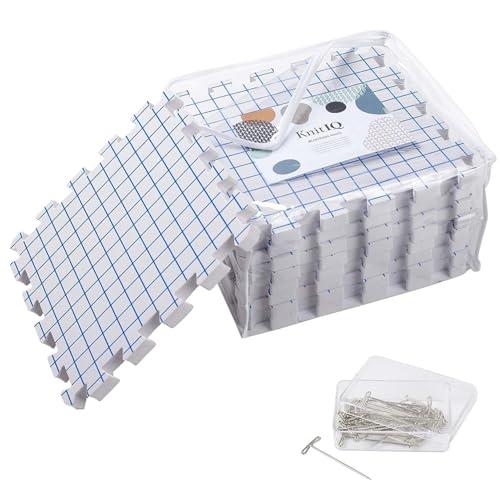 KNITIQ KnitIQ Standard 9-pc Set of Blocking Mats for Knitting &…
View on Amazon ↗
 SVARTUR Svartur Interlocking Blocking Mat for Knitting and Crochet Projects, 9…
View on Amazon ↗
Listing names and images come from Amazon and are rechecked against the live listings; last checked Nov 8, 2026. No prices shown; the current price is on the listing.
About this guide. This guide covers blocking mats as a product type and compares design approaches, not individual models. It is written from general knowledge of foam mats and knitting practice, so check any dimension or material claim on the product listing before you buy.