A bedside sleeper works when it aligns with your bed height and locks firmly against the mattress. First time parents should prioritize a rigid frame and a tight gap seal. Small bedrooms and apartment living favor a compact footprint with storage. The main tradeoff is between a simple bassinet style and a convertible unit that lasts longer.
Match the sleeper to the adult bed, not the nursery
Most bedside sleepers fail because the sleeping surface sits lower than the adult mattress or leaves a vertical ledge. Measure your bed height from the floor to the top of the mattress before you compare anything else. Then check the sleeper's listed height range. A unit that adjusts only in one inch steps may still leave a small gap.
The safest setup puts the sleeper's mattress edge flush with yours, with no more than a fingertip width between them. Some designs use a drop side that lowers for midnight feeds, but that side must lock back up firmly. A soft mesh wall can help you see baby, but it does not replace a secure attachment.
For a thick pillow top or an adjustable bed frame, look for a sleeper with a wide height range. A fixed height model often sits too low against a tall mattress. If your bed has a footboard or an odd frame shape, check whether the sleeper's anchor straps can reach a solid point.
How the attachment system changes your nights
Two attachment styles dominate. A strap system loops around the adult mattress or bed frame and cinches tight. A clamp or anchor plate slides under the mattress and relies on body weight to hold position. Both can work, but they fail differently.
Straps that wrap under the mattress can loosen as you shift in bed, especially on a smooth platform base. Check for a buckle or ratchet that holds tension. A clamp system is often quicker to set but may not fit a bed with a deep recessed frame or a very soft edge.
Some sleepers use side panels that press against the adult bed rather than attaching at all. These are easier to move for daytime naps but can drift during the night. If you want the sleeper to stay flush while you reach over, choose a model with a positive mechanical connection, not just friction.
Before buying, ask the seller whether the attachment works with your bed type. A sleeper that anchors to a box spring may not work on a platform bed. Compare the anchor length and the shape of the hooks against your frame.
Firmness and airflow matter more than padding
A newborn needs a flat, firm sleep surface. Steer clear of sleepers with thick quilted toppers or soft inserts, because those can create a pocket around the baby's face. A removable, wipe clean mattress that is thin and dense is a better sign than plushness.
Mesh walls do two jobs: they let you see through to baby and they allow air to move. Check that the mesh is tightly woven, with no holes large enough for a finger. Solid fabric sides may look cozier but trap heat and block your line of sight.
Some sleepers include an incline feature for reflux or congestion. For unsupervised overnight sleep, keep the surface flat unless your pediatrician says otherwise. An inclined position can let a baby's chin drop toward the chest and restrict breathing.
Small rooms and apartment life change the footprint
A bedside sleeper occupies floor space next to the bed, not inside a closet. In a small bedroom, measure the gap between your bed and the wall or the nearest furniture. Most sleepers are 30 to 36 inches long and 18 to 22 inches wide, but the base legs can flare wider.
Apartment living often means moving the sleeper from bedroom to living room for daytime naps. Wheels or glides help, but check whether they lock. A unit with a storage basket underneath saves a separate bin for diapers and wipes, but adds a few inches to the footprint.
If your bedroom door is narrow or you plan to store the sleeper in a closet, compare the folded dimensions. Some frames fold flat in one motion; others need tools. A travel friendly model that collapses into a carry bag can work for overnight visits, but it may sacrifice height adjustment.
What a listing tells you, and what to ask the seller
A listing should state the height range, the weight limit, and the mattress dimensions. If those numbers are missing, ask for them before buying. A vague phrase like 'fits most beds' hides the real range. You want a minimum and maximum height in inches.
Look at the product photos for the attachment hardware. A listing that shows only the sleeper next to a bed, without the straps or clamps in use, may be hiding a weak connection. Ask whether the hardware is metal or plastic and whether replacement parts are available.
Check the cleaning instructions. A removable, machine washable fabric cover saves time, but a sewn in cover means spot cleaning only. For overnight leaks, ask whether the mattress itself can be wiped down and air dried.
Compare the age and weight limit. Most bedside sleepers are for babies up to about five or six months, or until baby pushes up on hands and knees. A higher weight limit does not make the sleeper safer for an older baby if the walls are too low.
Features that help, and features that only add cost
| Feature | What it does | Worth it? | Better alternative |
|---|---|---|---|
| Vibration | Soothes some babies to sleep | Rarely | White noise machine |
| Nightlight | Lets you check baby without a lamp | Sometimes | Dimmable nursery light |
| Music or sounds | Plays lullabies or white noise | Rarely | Separate sound machine |
| Storage basket | Holds diapers and wipes within reach | Often | None needed |
| Drop side | Lowers the wall for one handed access | Yes for C section recovery | Wheels to move the sleeper |
A vibration motor that runs on batteries adds cost and another thing to replace. If your baby responds to motion, a separate white noise machine or a gentle rock with your hand often works the same. Spend the money on a firm mattress and a secure attachment instead.
A drop side is the one feature that changes how you use the sleeper, especially in the first weeks after a cesarean birth. But the latch must feel solid and lock with an audible click. A flimsy drop side is worse than no drop side, because it can sag or release under pressure.
Mistakes that make a bedside sleeper unsafe
The most common mistake is buying by brand or color before checking the bed height. A sleeper that looks right in the nursery photo can be useless next to a low platform bed. Start with a tape measure, not a style preference.
Another mistake is using a sleeper with a gap, then filling the gap with a rolled blanket or a pool noodle. That filler can shift during the night and create a wedge or an entrapment hazard. If the sleeper does not sit flush, return it or use it as a standalone bassinet away from the bed.
Some parents keep using the sleeper after baby can push up on hands and knees, because the weight limit still allows it. The real limit is developmental, not weight. Once baby can get on all fours, the low walls become a fall risk.
Do not place the sleeper against a bed with a soft mattress topper that overhangs the edge. The overhang can droop into the sleeper and cover the baby's face. A firm adult mattress edge and a tight strap are both needed.
Who should skip a bedside sleeper
If your bedroom has no space for a 30 inch long unit next to the bed, a bedside sleeper will block your path. A compact standalone bassinet on the other side of the room may work better. You lose the side access but gain floor space.
If you co sleep only for short naps and baby sleeps in a crib at night, a bedside sleeper is an extra piece of furniture. A simple travel bassinet or a pack and play with a bassinet level covers those daytime sessions for less.
If you have a very high bed or an unusual frame that cannot accept straps or a clamp, no bedside sleeper will attach safely. In that case, a separate bassinet placed on the floor next to the bed is the safer choice. Some parents choose a full size crib in the room instead.
For overnight travel, a bedside sleeper that folds flat can work, but it is rarely as compact as a dedicated travel bassinet. If you fly or stay in tight guest rooms often, compare the folded size and weight before assuming it will fit in a car trunk.
Bedside Sleeper Questions New Parents Actually Ask
Is a bedside sleeper safe for a newborn?
Yes, when it meets two conditions: the sleeping surface is firm and flat, and the sleeper attaches securely to the adult bed with no gap. A newborn should sleep alone on the sleeper's mattress, not on the adult bed. Check the height match and the strap tension every night before you place the baby down.
Which bedside sleeper works for a low platform bed?
Look for a sleeper with a minimum height near or below your mattress top, usually around 11 to 15 inches. An adjustable height model with a wide range gives the most flexibility. Avoid fixed height sleepers made for tall box spring beds, because they will leave a ledge above the baby.
What is the weight or age limit for a bedside sleeper?
Most models list a weight limit around 20 to 25 pounds, but the practical limit is developmental. Stop using the sleeper when your baby can push up on hands and knees, even if the weight limit allows more. That usually happens around five or six months.
Can I use a bedside sleeper if I had a C section?
Yes, and a drop side model helps most, because you can lower the wall with one hand while staying in bed. Make sure the drop side locks firmly in the raised position. A sleeper with wheels also helps you move it without lifting the whole unit.
How do I compare two bedside sleepers with similar prices?
Compare three things in this order: the height range against your bed, the attachment hardware and how it tightens, and the mattress firmness. Then check the washable cover and the folded size. Two sleepers can look identical in photos but differ in the strap length and the latch stiffness.
Which Bedside Sleeper to Pick for Your Bed and Room
A parent in a small apartment with a standard height bed and a newborn should start with a basic bedside bassinet that has a firm, flat mattress, a tight strap system, and a height range that covers the measured bed. Check the gap after setup and return it if the fit is not flush. A different pick fits a parent recovering from a cesarean birth: choose a drop side model with an adjustable height and locking wheels, because the one handed access and easy movement matter more than extra storage.
Real bedside sleeper listings, so you can check the points in this guide against actual products. These are affiliate links: as an Amazon Associate we earn from qualifying purchases, at no extra cost to you.
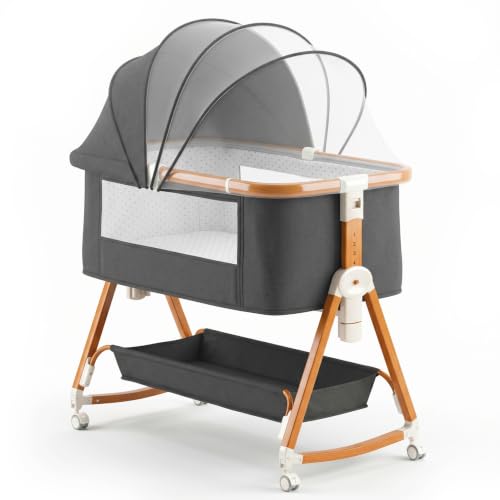 SPACELOG Spacelog 3 in 1 Baby Bassinet Bedside Sleeper - Adjustable…
View on Amazon ↗
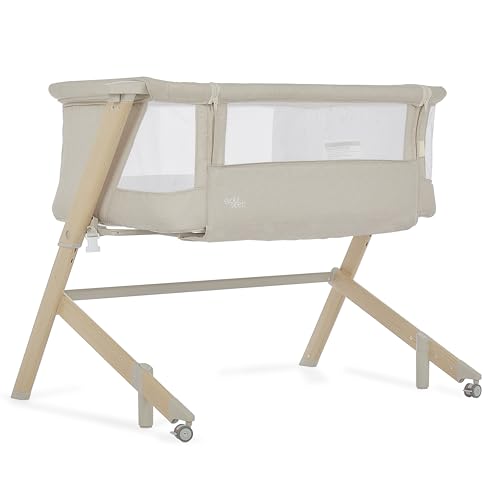 EVOLUR Evolur Stellar Bassinet & Bedside Sleeper – Adjustable Height Bedside…
View on Amazon ↗
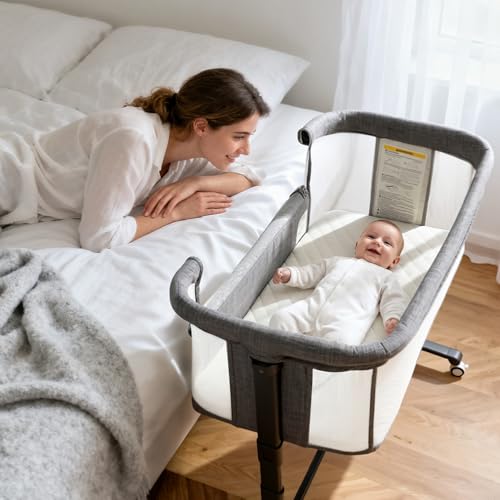 KINDER KING Kinder King Baby Bassinet Bedside Sleeper, Adjustable Heights, Grey |…
View on Amazon ↗
Listing names and images come from Amazon and are rechecked against the live listings; last checked Nov 8, 2026. No prices shown; the current price is on the listing.
Scope and limits. Use this guide as a checklist to hold against any bedside sleeper listing you open. It covers the category, not individual models, and no product documents or reviews were used, so verify every height and attachment detail on the listing before you buy.