The two factors that decide most baby gates are the mounting method and the latch you will operate dozens of times a day. Pressure mounted gates suit rentals and low risk openings, while hardware mounted gates are the safer choice at the top of stairs. Parents of climbers should skip pressure gates entirely. The real tradeoff is convenience against security, and the wrong pick usually shows up as a gate that loosens within weeks.
Match the gate to the opening
Measure the gap at the exact height where the gate will sit, not at the floor. Walls and banisters are rarely parallel, so a gate that fits at ankle height may not fit at waist height.
For stairways, measure from wall to banister post, not to the rail itself. A banister post is structural; a spindle is not. Hardware mounted gates need solid wood or a stud behind the drywall.
Wide openings, such as between a kitchen and living room, often need an extension kit or a configurable gate. Check the listed minimum and maximum width before you buy, and keep the receipt if the opening is outside a standard range.
Pressure mounted or hardware mounted
Pressure mounted gates use tension pads against opposite surfaces. They leave no holes, which makes them the default for rentals and for blocking a doorway temporarily.
Hardware mounted gates screw into a door frame, stud, or banister post. They are the only type recommended at the top of stairs, because a pressure gate can be knocked out by a falling child.
Check the listing for a stair rating. If a gate is not explicitly rated for top of stairs use, treat it as a doorway gate only. The phrase 'hardware mounted' alone is not enough; the mounting brackets and latch must be designed for stair loads.
The latch you will open one handed
Parents often carry a baby in one arm and a bottle in the other. A latch that needs two hands or a precise pinch becomes a daily frustration, and a frustrated adult is more likely to leave the gate open.
Look for a latch that a toddler cannot reach or operate but an adult can open with one hand. Some gates use a lift and slide motion, others a button and lift. Compare the listed height of the release mechanism.
A gate with a hold open feature stays open until you push it closed. That helps when you are carrying laundry or moving between rooms frequently, but it also means the gate is not protecting anything while it is open.
Slat spacing and the climb test
Vertical slats should be spaced so a baby cannot get their body through. The widely accepted limit is no more than 3 inches between slats, and many gates list this in the specifications.
Horizontal bars or decorative cutouts give a toddler footholds. A determined climber can scale a gate with horizontal rails, even if the gate itself is tall. For a climbing stage, choose a gate with vertical slats and no toeholds.
Check the gate height against your child's reach. A gate that ends at armpit height for a standing toddler invites climbing. Taller gates add security but also make the latch harder for shorter adults to reach.
The gate should not have a bottom bar that creates a trip hazard. A raised threshold may be fine for a doorway but dangerous at the top of stairs, where a foot can catch during a fall.
Doorway, hallway, or stair top
| Mounting style | Best location | Stair safe | Rental friendly |
|---|---|---|---|
| Pressure mounted | Doorways, room dividers | No | Yes |
| Hardware mounted | Stair tops, high traffic halls | Yes | No |
| Retractable mesh | Wide openings, low traffic | Depends on model | Yes |
| Freestanding | Room dividers, supervised play | No | Yes |
A gate rated for stairs can work in a doorway, but the reverse is not true. If you will move the gate between rooms over time, buy for the most demanding opening you have, not the easiest one.
Rental homes and no drill rules
Pressure mounted gates and freestanding gates leave no holes, which keeps a deposit intact. Read the lease before buying; some landlords allow small screw holes if they are filled and painted, others do not.
For a rental with a stairway, the safest option is a hardware mounted gate with banister mounting kits that clamp around a post instead of drilling into it. Not every banister shape works with every kit, so compare the post dimensions.
Night time use changes the latch question. A gate that clicks loudly wakes a sleeping baby. Look for a latch described as quiet or soft close, and avoid gates with a spring that slams the door shut.
First time parents often buy a gate before the baby crawls. That is fine, but measure the opening again once the baby is mobile. Furniture moves, and the opening you measured at six months may not be the one you need at ten.
Long term costs and consumables
Most gates have no ongoing consumables, but extension kits and replacement latch parts are common add ons. Check whether the listed width includes extensions or whether they are sold separately.
Pressure pads wear out and lose grip after repeated tightening. A gate that shifts when you push on it needs new pads or a different mounting method. Compare replacement pad availability before buying a budget gate.
Retractable mesh gates have a fabric panel that can fray or stain. The mesh is not always replaceable, so a torn panel may mean replacing the whole gate. Check the listing for replacement panel availability.
A gate that will be used for two or three children should be judged on its hardware, not its finish. Plastic hinges and thin metal frames are more likely to crack after years of daily opening.
Mistakes that come back at 2 a.m.
Buying a gate for the doorway you have today, not the stairs you will need tomorrow, is the most common mistake. A pressure gate at the top of stairs is a fall waiting to happen.
Ignoring the latch height is another. A gate that an adult can open with one hand may still be reachable by a tall toddler. Check the listed release height and compare it to your child's reach, not your own.
Trusting a photo instead of a measurement leads to returns. A gate that looks wide in the listing may be 24 inches, while your hallway is 36. Measure first, then filter.
Choosing a gate with horizontal bars for a climber is a mistake that shows up after the first escape. Vertical slats without footholds are the safer default for the climbing stage.
Forgetting the swing direction matters in tight halls. A gate that swings into the landing at the top of stairs can knock a person off balance. Check whether the gate can be mounted to swing only one way, and which way you need.
Baby gate questions parents ask before they drill
Is a pressure mounted baby gate safe for stairs?
No. Pressure mounted gates rely on friction and can be dislodged by a child leaning, pushing, or falling against them. At the top of stairs, a dislodged gate is a fall hazard. Use a hardware mounted gate rated for stair use, and anchor it to a stud or solid banister post.
Which baby gate is best for a rental home?
A pressure mounted gate for doorways or a freestanding gate for room dividers leaves no holes. For a stairway in a rental, look for a hardware mounted gate with banister mounting kits that clamp around the post. Verify the banister post width and shape before buying, since clamp kits do not fit every post.
What is a retractable baby gate?
A retractable gate uses a roll of mesh that pulls across an opening and latches to a hook on the opposite side. It takes up little space when open, which helps in narrow halls. The tradeoff is that the mesh and latch can wear faster than a rigid gate, and not all retractable models are rated for stairs.
How do I know if a baby gate fits my opening?
Measure the opening at the height where the gate will sit, from wall to wall or wall to banister post. Compare that to the gate's listed minimum and maximum width. If your opening is wider than the maximum, check whether an extension kit is available and whether it is included or sold separately.
Should I buy a baby gate before my baby crawls?
Buying early lets you install and test the gate before you need it, but remeasure the opening once your baby is mobile. Furniture moves, and the gate you bought at six months may not fit the opening you need at ten months. If you wait, you can also match the gate to your child's climbing stage.
The gate to buy for the room you have
A parent in a rental or a single story home who only needs to block a doorway should buy a pressure mounted gate with a one hand latch and vertical slats no more than 3 inches apart. That covers most first time parents until the climbing stage. A parent with stairs, or a child who already climbs, needs a hardware mounted gate rated for top of stairs use and anchored to a stud or banister post, even if it means patching holes later.
Real baby safety gate listings, so you can check the points in this guide against actual products. These are affiliate links: as an Amazon Associate we earn from qualifying purchases, at no extra cost to you.
 REGALO Regalo Safety 29"-38.5" Easy Step Baby Gate, Bottom of Stairs…
View on Amazon ↗
 KENY keny 29"-42.5" Baby Gate for Stairs, Auto Close Safety Dog…
View on Amazon ↗
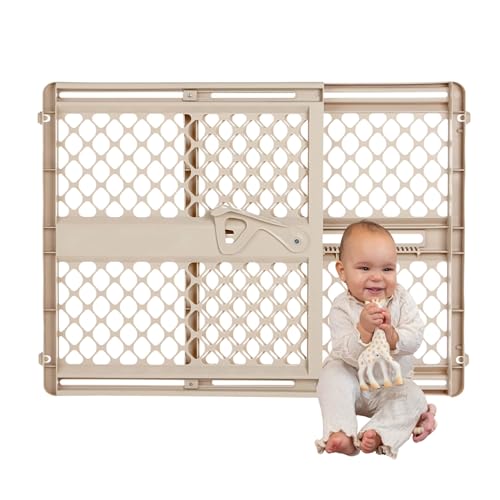 TODDLEROO BY NORTH STATES Toddleroo by North States - Supergate Ergo Baby Gate: Plastic…
View on Amazon ↗
Listing names and images come from Amazon and are rechecked against the live listings; last checked Nov 8, 2026. No prices shown; the current price is on the listing.
About this guide. This guide is written from general knowledge of baby gate designs, mounting methods, and safety standards, not from any specific product documents or tests. A listing can tell you a gate's width and latch type, but only you can verify the wall material and banister shape in your home.