Arch support sandals come down to three things: how firm the footbed is, how adjustable the straps are, and whether the arch contour actually lines up with your foot. Flat feet and long standing shifts need firmer, deeper support. Wide feet and travel need adjustable straps and a forgiving fit. The main tradeoff is support versus softness: a firm orthotic style footbed corrects, but a soft cushioned footbed often just masks the problem.
Firmness Decides Whether Support Actually Works
A soft foam footbed feels good in the store but compresses under your weight. Once it flattens, your arch gets little resistance and can roll inward. That is why a soft sandal often feels worse after a few hours than a firmer one.
Firmer footbeds hold their shape longer. They push back against your arch instead of collapsing around it. Look for a footbed that flexes only slightly when you press the arch area with your thumb.
Firmness is not the same as hardness. A cork or dense EVA footbed can be firm yet still have a slight give. A rigid plastic base with a thin cover can feel hard and cause hot spots. Check the listing for the midsole material and whether the arch area is reinforced.
Strap Adjustability Keeps the Arch in Place
A contoured footbed only works if your foot stays over the contour. Straps that are too loose let your foot slide forward or sideways, so the arch support hits the wrong spot. Straps that are too tight cause blisters and numbness.
Adjustable straps solve most fit problems. Look for hook and loop closures, buckles, or multiple strap positions across the forefoot and heel. A single fixed strap across the instep rarely holds a foot with a high or low arch.
For wide feet, check whether the straps can open wide enough. For narrow feet, check whether the straps can be tightened without bunching. Some designs use elastic inserts that stretch over time, so prioritize mechanical closures over elastic if you need a secure fit.
Heel Cup and Arch Shape Do the Heavy Lifting
A deep heel cup wraps around the heel bone and keeps it from rolling side to side. This is the first thing to check on a product image: a flat heel area offers almost no correction, no matter how tall the arch bump looks.
The arch contour itself should be gradual, not a sharp ridge. A ridge digs into the foot and causes pain within minutes. The contour should start behind the ball of the foot and taper toward the heel.
Some sandals advertise a 'built in orthotic' but only add a small raised logo under the arch. Compare the side profile in photos. If the arch curve is barely visible, the sandal is a comfort slide, not a support sandal.
Which Arch Support Sandal Design Fits Your Day
| Design | Support level | Fit security | Best for |
|---|---|---|---|
| Slide with contoured footbed | Moderate | Low, foot can shift | Short walks, travel, easy on and off |
| Adjustable strap sandal | Moderate to firm | High, custom fit | All day wear, wide or narrow feet |
| Orthotic style sandal | Firm | High, structured fit | Flat feet, long standing shifts, plantar fasciitis |
| Cushion sandal with soft foam | Low | Low to moderate | Casual wear, recovery days, short errands |
Slides are the least secure because there is no heel strap. They work for a quick trip to the store but not for a shift on your feet. The foot naturally grips the toe post, which can strain the plantar fascia over hours.
Orthotic style sandals often look clunkier and take longer to break in. That is the tradeoff for real correction. If you need them for work, budget a week of short wear before a full shift.
Flat Feet Need a Different Decision Than High Arches
Flat feet overpronate, meaning the ankle rolls inward and the arch collapses. A firm, high arch contour counters that roll. A soft sandal lets the foot keep collapsing, so flat feet often feel more tired in plush sandals than in firm ones.
High arches need support that fills the gap under the midfoot, not just a hard bump. Look for a footbed with a graduated arch and a metatarsal pad. Too much arch height pushes a high arch foot outward and causes ankle pain.
If you have flat feet and wide feet together, prioritize a wide base and adjustable forefoot strap. A narrow orthotic sandal can squeeze the midfoot and cause numbness even when the arch support is correct.
Long Shifts and City Walking Reward a Break In Period
A new arch support sandal rarely feels perfect on day one. The footbed needs to mold slightly to your foot, and your foot needs to adjust to being held in a corrected position. Wearing them for a full shift immediately can cause arch soreness.
Start with two hours at home, then a short walk, then a half day. Increase wear time over a week. If the arch area still hurts after two weeks of gradual wear, the contour is likely too high or too far forward for your foot.
For city walking on hard pavement, look for a rubber outsole with some tread. A slick foam outsole wears down quickly on concrete and loses shock absorption. A firmer midsole also protects your feet from pavement fatigue better than a soft one.
- Wear new arch support sandals for two hours the first day, not a full shift
- Check that the arch contour sits under your arch, not behind your heel or under the ball
- Look for a rubber outsole for pavement, not bare foam
Travel Sandals Trade Support for Packability
Travel often means long days of walking on uneven surfaces with a heavy bag. That is exactly when arch support matters most, but many travel sandals are built to pack flat and weigh little. A folded or rolled sandal usually has a thin, soft footbed that offers little correction.
If you need both, look for a contoured footbed that can still lie flat in a suitcase. Some models use a firm EVA footbed that is shaped but not bulky. Avoid sandals that advertise 'folds in half' if support is your priority.
For flights and long transfers, a slide is easy to slip off at security. But do not make it your only walking shoe for a trip with more than a couple of miles per day. Bring a second pair with a heel strap and firmer support.
When to Skip Arch Support Sandals Altogether
Arch support sandals are not for everyone. If you have a neutral foot with no pain and you only wear sandals for an hour at the beach, a firm orthotic footbed is unnecessary and may feel uncomfortable.
People with severe overpronation or a diagnosed foot condition like posterior tibial tendon dysfunction often need a custom orthotic inside a closed shoe. A sandal cannot provide the same degree of control.
If you need a dress sandal for an evening event, a chunky orthotic style will look out of place. In that case, choose a low profile sandal for the event and use your support sandals for recovery the next day. Check the footwear department overview for other options.
Long Term Costs Hide in the Footbed and Straps
A quality arch support sandal should last two to three seasons of regular wear. The first thing to wear out is usually the top cover fabric, which can peel or crack. Check whether the footbed is replaceable or whether the whole sandal must be replaced.
Cork footbeds can be resealed with a cork sealer to extend their life. EVA footbeds compress over time and lose their arch contour, even if the straps still look fine. If the arch bump is visibly flattened, the support is gone.
Straps are the other common failure point. Look for reinforced stitching at the attachment points and avoid thin straps that dig into the foot. A sandal with a broken strap is not repairable in most cases, so the whole pair becomes waste.
Arch Support Sandal Questions Buyers Ask First
What is the difference between arch support sandals and regular sandals?
Arch support sandals have a footbed shaped to match the natural arch of the foot, with a raised contour under the midfoot and usually a deep heel cup. Regular sandals have a flat or lightly cushioned footbed. The raised contour in a support sandal pushes back against the arch to reduce overpronation and fatigue, while a flat sandal lets the foot roll inward.
Should I buy arch support sandals for flat feet?
Yes, flat feet benefit the most from arch support sandals. A firm, contoured footbed prevents the arch from collapsing and the ankle from rolling inward. Look for a sandal with a deep heel cup and a pronounced but gradual arch contour. Avoid soft foam slides, which compress under a flat foot and offer no real correction.
How do I know if an arch support sandal fits correctly?
The arch contour should sit directly under your arch, not behind your heel or under the ball of your foot. Your heel should stay inside the heel cup without sliding. The straps should hold your foot in place without cutting in. Walk on a hard floor and check that your arch stays over the contour with each step.
Is it worth paying more for arch support sandals?
If you have flat feet, plantar fasciitis, or spend long hours on your feet, the extra cost usually pays off in reduced foot fatigue and fewer injuries. Cheaper sandals often use soft foam that flattens within weeks. A firmer, denser footbed holds its shape longer, so the per wear cost can be lower even at a higher price.
Can I wear arch support sandals for long standing shifts?
Yes, but choose a design with a heel strap and adjustable forefoot strap. Slides do not hold the foot securely enough for hours of standing. Look for a firm footbed with a deep heel cup and a rubber outsole for traction. Break them in over a week before wearing them for a full shift.
Which Arch Support Sandal to Pick First
A person with flat feet who stands for long shifts should pick an orthotic style sandal with a firm footbed, adjustable straps, and a deep heel cup. It offers the most correction and the most secure fit. A traveler who packs light and walks only short distances should instead pick a slide with a moderate contour and a rubber outsole, accepting less support for easier on and off and a smaller packed size.
Real arch support sandals listings, so you can check the points in this guide against actual products. These are affiliate links: as an Amazon Associate we earn from qualifying purchases, at no extra cost to you.
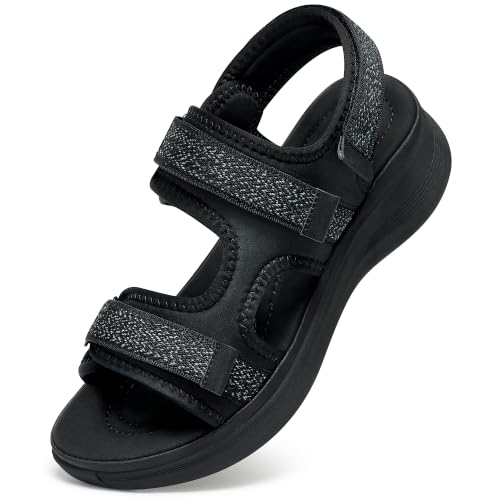 DIARILIP Diarilip Womens Orthopedic Sport Sandals: Arch Support & Adjustable Straps…
View on Amazon ↗
 LITTLEPLUM Littleplum Women Sandals with Decorative Gold‑Tone Buckle, Arch Support –…
View on Amazon ↗
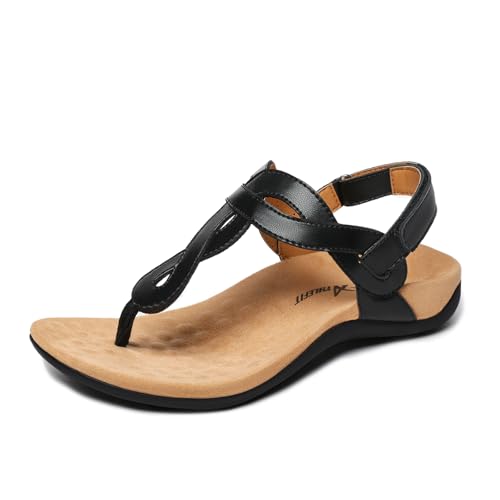 ATHLEFIT Athlefit Women's Orthopedic Flat Sandals with Arch Support Black 8…
View on Amazon ↗
Listing names and images come from Amazon and are rechecked against the live listings; last checked Nov 8, 2026. No prices shown; the current price is on the listing.
What this guide is. This guide covers arch support sandals as a category and explains what to check on any product listing, from footbed firmness to strap adjustability. It does not evaluate individual models, and no product documents, reviews, or tests were used, so verify any dimension or material claim on the listing before you buy.