Wildlife photography hinges on three things: autofocus that tracks moving animals, a fast burst rate to catch the moment, and a sensor that holds detail in low light. Buyers on a budget should prioritize autofocus and a long telephoto lens over megapixels. The main tradeoff is reach and speed against size and cost.
Autofocus Is the Real Film in Wildlife
A camera can have a huge megapixel count and still miss a bird taking off if the autofocus hunts. Wildlife rarely poses. Check the listing for subject detection: animal eye AF, bird detection, or a tracking mode that locks onto a moving target. Compare how many autofocus points cover the frame and whether the camera can hold focus during a burst.
Phase detection autofocus works faster than contrast detection for moving subjects. Some cameras combine both, using phase detection for speed and contrast for accuracy. If the listing does not say, ask the seller which autofocus system the body uses.
Low light autofocus matters more than you might expect. Many animals are active at dawn and dusk. A camera rated to focus at lower light levels will grab a sharp frame when the sun is almost gone.
Burst Speed Turns Seconds Into Sequences
A bird taking flight lasts less than a second. A burst rate of 10 frames per second or higher gives you several sharp options. Below that, you may get one blurry attempt. Check the continuous shooting speed with autofocus enabled, not just the marketing number.
Buffer depth decides how long the burst lasts. A camera that shoots 20 frames per second but fills its buffer after 15 shots stops when the action is still happening. Look for a buffer that clears quickly to a fast memory card.
Mechanical and electronic shutters behave differently. Electronic shutters can be silent, which matters for skittish animals, but they can introduce rolling shutter distortion with fast wingbeats. Check whether the camera lets you switch between them.
Sensor Size Sets the Light Budget
Wildlife often happens in forests, under cloud, or at the edges of the day. A larger sensor gathers more light, which lets you use a faster shutter speed without pushing the ISO into noisy territory. APS C sensors are a common middle ground: good light gathering, smaller and cheaper than full frame.
A smaller sensor has one advantage: crop factor. A 300mm lens on a Micro Four Thirds camera frames like a 600mm lens on full frame. That reach is useful for birds and distant mammals, but the tradeoff is more noise in low light.
Check the camera's native ISO range and how it performs at high ISO. A camera that stays clean at ISO 6400 will be far more useful in a dark forest than one that tops out at 3200 with heavy grain.
Weather Sealing Keeps You Shooting
Dew, dust, and light rain are normal on a wildlife outing. A camera with weather sealing around the buttons, dials, and lens mount will survive these conditions far longer. Check the listing for terms like weather sealed, dust resistant, or moisture resistant.
Sealing is only as good as the lens attached. A sealed body with an unsealed lens can still let moisture into the mount. If you plan to shoot in wet conditions, budget for a sealed telephoto lens as well.
Cold weather drains batteries faster. A camera with a larger battery or a vertical grip that holds two batteries will keep shooting when the temperature drops. Check the battery life rating in the listing.
Size and Weight Matter More on a Trail
A full frame body with a 600mm lens can weigh over 8 pounds. That weight feels fine for ten minutes and punishing after a three mile hike. Compare the body weight and the weight of the telephoto lens you plan to attach.
Mirrorless bodies are generally lighter than DSLRs because they remove the mirror box. A mirrorless APS C camera with a 100 to 400mm lens is a common wildlife setup that balances reach and carry weight.
Handholding a long lens requires a fast shutter speed to avoid shake. A lighter setup is easier to handhold, but it may still benefit from a monopod or a lens with optical stabilization. Check whether the camera body has in body image stabilization, which helps with older lenses.
Which Features Are Real and Which Are Noise
Megapixels are the most overrated spec in wildlife. A 24 megapixel sensor is plenty for prints up to 20 inches wide and gives better high ISO performance than a 45 megapixel sensor in many cases. More pixels only help if you crop heavily and the light is good.
Subject detection modes are genuinely useful, but some cameras market detection for animals they do not track well. Check independent spec sheets for which species the camera actually recognizes. Bird detection is different from general animal detection.
Pre capture is a feature worth seeking: it buffers frames before you fully press the shutter. That catches the instant a bird takes off, which human reaction time misses. Not all cameras offer it, so check the listing.
Fit for the Way You Shoot
Beginner photographers should start with a camera that has strong automatic modes and clear subject tracking. A superzoom bridge camera or an APS C mirrorless with a kit telephoto lens offers reach without a steep learning curve.
Family travel adds a different demand: the camera must be light enough to carry alongside a daypack and quick enough to grab a shot of a child or a deer by the trail. A compact mirrorless with a 70 to 300mm zoom fits this role well.
Bird photography is the most demanding use case. You need the longest reach, the fastest autofocus, and the deepest buffer. A crop sensor body with a 150 to 600mm lens is often the practical choice over a full frame body with a shorter lens.
YouTube videos and hiking overlap when you want to film wildlife encounters. A camera with 4K video, a microphone input, and a fully articulating screen makes it easier to record yourself narrating a sighting. Check the video autofocus too, since it is often weaker than still autofocus.
Lens Reach and the Crop Factor Shortcut
The camera body is only half the wildlife equation. The lens focal length decides how close you can frame a distant animal. A 400mm lens on a crop sensor camera frames like a 600mm lens on full frame, which is a cost effective way to get reach.
Check the lens mount before you buy. Canon RF, Sony E, Nikon Z, and Micro Four Thirds all have different mounts, and the native telephoto lens selection varies widely. A mount with a limited wildlife lens lineup will cost you more or force you to adapt older glass.
Teleconverters multiply focal length but cost you light and autofocus speed. A 1.4x converter turns a 400mm f/5.6 lens into a 560mm f/8 lens. Many cameras only autofocus reliably down to f/8, so check that limit before relying on a converter.
Comparison of Wildlife Camera Design Types
Use this table to narrow the design type before comparing individual models. The deciding attributes are autofocus speed, burst rate, low light ability, and carry weight with a long lens.
| Design Type | Autofocus | Burst Rate | Low Light | Carry Weight |
|---|---|---|---|---|
| Crop Sensor DSLR | Fast, reliable | 7 to 10 fps | Good | Heavy with long lens |
| Mirrorless APS C | Very fast, tracking | 10 to 30 fps | Good | Moderate |
| Full Frame Mirrorless | Fastest, best tracking | 10 to 30 fps | Excellent | Heavy |
| Superzoom Bridge | Slow, hunts | 5 to 10 fps | Poor | Light |
A crop sensor DSLR is the budget path to serious wildlife, but it is the heaviest option. A superzoom bridge camera is the lightest and cheapest, but it will struggle with fast birds and low light. Most wildlife shooters land on a mirrorless APS C body as the balance of speed, image quality, and carry weight.
Mistakes That Cost You Sharp Frames
Buying the body first and the lens second is the most common wildlife mistake. A great body with a 70mm kit lens will not get you close to a heron. Budget for the telephoto lens at the same time, and treat the body and lens as one purchase.
Chasing megapixels over autofocus leads to blurry, high resolution images. A 45 megapixel file that is slightly out of focus is worse than a 24 megapixel file that is tack sharp. Prioritize autofocus speed and tracking accuracy.
Ignoring buffer depth means missed sequences. A camera that shoots 20 frames per second but stalls after one second is useless for a bird taking off. Check how many raw frames the buffer holds and how fast it clears.
Buying a full frame body without budgeting for full frame telephoto lenses creates a mismatch. Full frame wildlife lenses often cost two to three times as much as crop sensor equivalents. That price gap can force you to use a shorter lens, which defeats the purpose.
Assuming all weather sealing is equal is another error. Some cameras are sealed against light rain; others are fully sealed with gaskets at every joint. Check the manufacturer's description of the sealing level before trusting it in a downpour.
Who Should Skip a Dedicated Wildlife Camera
If you only photograph wildlife once a year on a family trip, a dedicated wildlife camera is overkill. A compact travel camera with a 10x or 20x zoom will capture a deer by the road or a bird at a feeder without the weight or cost.
If you shoot mostly landscapes or portraits, a wildlife camera's fast burst and subject tracking add little. A general purpose mirrorless or DSLR with a standard zoom will serve those genres better and cost less.
If you already own a recent smartphone with a telephoto lens, it can handle backyard birds and zoo animals in good light. A dedicated wildlife camera only becomes necessary when you need long reach, fast autofocus, or clean low light shots.
Wildlife Camera Questions, Answered
What is the best camera for wildlife photography on a budget?
A crop sensor DSLR or mirrorless camera with a used 70 to 300mm or 100 to 400mm lens is the best budget path. Crop sensors give extra reach for free, and older DSLR bodies still have fast autofocus. Prioritize autofocus and burst rate over megapixels.
Which wildlife photography camera is best for birds?
Bird photography needs the fastest autofocus and the longest reach you can afford. A crop sensor mirrorless body with a 150 to 600mm lens is a common choice. Look for bird detection autofocus and a burst rate of at least 10 frames per second.
Is a full frame camera worth it for wildlife?
Full frame cameras give the best low light performance, which helps at dawn and dusk. But they are heavier and their long telephoto lenses cost much more. Most wildlife shooters get better results from a crop sensor camera with a longer lens than a full frame camera with a shorter one.
How many megapixels do I need for wildlife photography?
24 megapixels is enough for most wildlife work, including prints up to 20 inches wide. Higher megapixel counts help if you crop heavily, but they increase noise in low light. Autofocus speed and lens reach matter far more than megapixels.
Can I use a superzoom bridge camera for wildlife?
A superzoom bridge camera works for casual wildlife in good light, like a deer in a meadow or a bird at a feeder. It is light and affordable. It will struggle with fast moving birds, low light, and distant subjects because the autofocus is slower and the sensor is small.
Which Wildlife Camera Fits Your Trail
A photographer who hikes to wetlands and forests at dawn should buy a mirrorless APS C body with a 100 to 400mm lens. That setup balances fast autofocus, good low light, and a carry weight you can manage for miles. A different case is the backyard bird watcher who never leaves the porch: a superzoom bridge camera with a 20x zoom is lighter, cheaper, and plenty for a feeder ten feet away.
Real wildlife photography camera listings, so you can check the points in this guide against actual products. These are affiliate links: as an Amazon Associate we earn from qualifying purchases, at no extra cost to you.
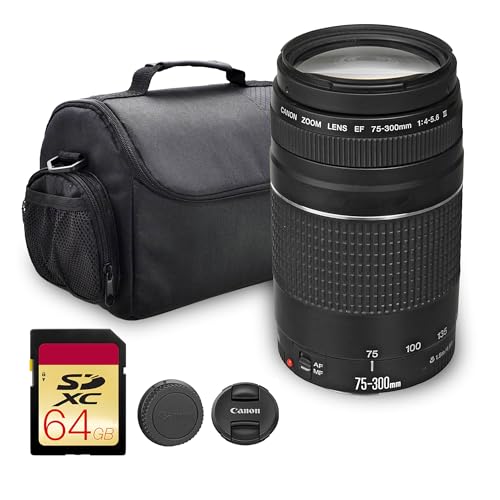 CANON Canon EF 75-300mm f/4-5.6 III Compact Telephoto Zoom Lens (6473A003)…
View on Amazon ↗
 KODAK Kodak PIXPRO AZ653 Digital Camera (Black), 20MP Digital Camera Pro…
View on Amazon ↗
Listing names and images come from Amazon and are rechecked against the live listings; last checked Nov 8, 2026. No prices shown; the current price is on the listing.
What this guide is. This guide explains the wildlife photography camera category from general knowledge of how sensors, autofocus systems, and lenses behave. It does not draw on reviews or in person testing, so check any dimension or feature on the product listing before you buy.