Two checks decide most of it: the gap between your curtain rod and the wall, and the fabric's back layer. A coated back blocks more light than a woven one. Renters with a standard rod can hang a blackout panel in minutes. If your room has deep window frames or you hate any light leak, look for a wrap around rod or a ceiling track instead.
Read the back layer before the color
The back of the panel does the real work. A coated back, often acrylic or foam, acts like a solid barrier. A woven blackout fabric has a tight triple weave that dims light but can still glow faintly in a bright room. Check the listing for the words coated, foam backed, or triple weave.
For a bedroom that faces a streetlight or morning sun, a coated back is the safer bet. It also muffles more outside noise. The tradeoff is stiffness: coated panels hang heavier and can feel less airy.
Thermal means the fabric slows heat transfer, not that it creates warmth. In summer, a coated back keeps a room cooler by blocking sun. In winter, it traps a thin layer of air near the window. That helps, but it will not fix a drafty window frame.
The gap that ruins a dark room
Side gaps are the main reason a blackout curtain fails. A standard bracket holds the rod two to four inches off the wall. Light spills around the edges and falls on the floor. You can check this before buying: measure from the wall to the rod, then compare it to the bracket projection in the listing.
The fix is a wrap around rod. Its brackets curve back toward the wall, so the panel's outer edge touches the wall or the window frame. That closes the side channel almost completely.
Top light is a separate issue. Grommets create small openings above each ring. A rod pocket leaves a smaller gap but still lets a sliver through. A panel with a sewn in valance or a ceiling mounted track blocks that top line.
Headers and how they hang
Grommets are the easiest to open and close. The panel slides smoothly and stacks tightly. Rod pockets look softer but are slower to move. Pleated headers, often used with tracks, fold neatly and block light well but need specific hooks or rings.
For a bedroom where you open the curtains every morning, grommets feel best. For a nursery or a home office that stays dark most of the day, a rod pocket or pleated panel works fine.
Check the panel width before you buy. A curtain that just matches the window width will look stretched flat and let light around the folds. You want a panel or a pair that is at least one and a half times the window width.
Renters, dorms, and temporary walls
Rental windows often have blinds or shades you cannot remove. A blackout curtain can hang over them on a tension rod inside the frame. That avoids drilling and leaves no holes. A tension rod works best for windows up to about four feet wide.
Dorm rooms have short windows and cinder block walls. A tension rod or a spring loaded rod is the simplest option. Check the rod diameter: grommets need a rod that fits through the ring, usually up to one and a half inches.
Nurseries benefit from blackout curtains for daytime naps. A room darkening panel alone is not a blackout panel. Look for a stated blackout label and a coated back. The curtain should also be machine washable, since nursery dust and spills collect on fabric.
What the listing should tell you
A useful listing states the panel width, the length, the material, and the back layer. It tells you whether the panel is sold as a single piece or a pair. If it says one panel, you need two for a standard window.
Check the care line. Some coated backs cannot go in a washing machine. Others are machine washable but must air dry. If you have pets or a dusty room, washability matters more than a slight difference in light blocking.
Ask the seller two questions when the listing is unclear: what is the back layer made of, and what is the exact width of one panel. A vague answer usually means a woven fabric with a thin liner. For total darkness, pass on it.
Noise, heat, and the long term cost
A heavy, coated blackout panel also dampens street noise. It will not silence a busy road, but it softens voices and traffic hum. The thicker the back layer, the more sound it absorbs. That same thickness helps keep a room warmer in winter and cooler in summer.
There is no recurring cost. These curtains do not need liners, filters, or replacement parts. The only long term expense is washing. A panel washed too often can lose its coating. Wash on a gentle cycle and hang it to dry.
Some panels have a chemical smell when new. That usually fades after a few days of airing out. If a room is used by a baby or someone with sensitivities, look for a panel labeled low VOC or Oeko Tex certified.
Easy to hang or fully dark
Grommet panels are the fastest to put up. You slide them on a rod and you are done. They leave light gaps at the top and around the rings. A rod pocket panel is almost as easy and blocks a little more top light.
A wrap around rod takes ten extra minutes to install but closes the side gaps. That one change matters more than upgrading the fabric. If you can only change one thing, change the rod, not the curtain.
A ceiling track is the most complete option. The panel runs from the ceiling to the floor, so no light slips over the top. It costs more and needs more mounting hardware, but it is the only style that approaches total darkness.
| Hang style | Top light | Side light | Setup effort | Suits |
|---|---|---|---|---|
| Grommet | Visible gaps | Depends on rod | Lowest | Bedrooms in use daily |
| Rod pocket | Small gap | Depends on rod | Low | Nurseries, offices |
| Wrap around rod | Small gap | Blocked | Medium | Streetlit bedrooms |
| Ceiling track | Blocked | Blocked | Highest | Shift workers, studios |
Mistakes that show up the first morning
Buying a single panel for a double window is the most common error. The panel covers the glass but not the wall around it. Light pours in from both sides. Measure the total width you want to cover, then buy enough panels to reach that width.
Choosing a white or light colored front layer can also backfire. The front color matters less than the back layer, but a pale front over a thin liner can glow when the sun hits it. A medium or dark front color hides that glow.
Skipping the header check is another mistake. A grommet panel on a thin rod can sag in the middle. That opens a wide gap at the top. Use a rod at least one inch in diameter for grommets, or choose a rod pocket panel.
When a different window covering makes more sense
Blackout curtains make sense when you want darkness and some noise control. They are not the right pick for a kitchen or a living room where you want filtered light most of the day. A light filtering curtain or a sheer panel works better there.
If you have a very wide window or a sliding door, a curtain panel can be heavy and awkward. A blackout roller shade or a cellular shade may be easier to open and close. Those mount inside the frame and leave no side gaps.
Skip thermal blackout curtains if you need to open and close the window covering many times a day. Heavy coated panels are slow to move. A lighter woven panel with a separate blackout liner gives you more flexibility.
Thermal Blackout Curtain Questions, Answered
Is thermal blackout the same as room darkening?
No. Room darkening fabrics dim light but still let a glow through. Thermal blackout means the panel has a coated or tightly woven back layer that blocks nearly all light. Check the listing for the word blackout, not just darkening.
What is the best header style for no light at the top?
A ceiling mounted track blocks top light almost completely because the panel starts at the ceiling. A wrap around rod with a rod pocket panel is a close second. Grommets always leave small gaps above the rings.
Can I wash thermal blackout curtains?
Many can go in a washing machine on a gentle cycle, but some coated backs must air dry. Read the care tag before buying. Washing too often can crack the coating, so wash only when the panel looks dusty or stained.
How wide should blackout curtains be for a window?
The total curtain width should be at least one and a half times the window width. For a 36 inch window, you want about 54 inches of curtain width. That gives the fabric enough fullness to close the side gaps when drawn.
Does a blackout curtain keep a room warmer in winter?
It helps a little. The thick fabric traps a thin layer of air near the glass, which slows heat loss. It works better at keeping a room cooler in summer by blocking direct sun. It is not a replacement for weatherstripping or insulated windows.
Which Thermal Blackout Setup to Get
A renter in a bright bedroom who wants darkness without drilling should start with a rod pocket panel on a wrap around rod. The rod closes the side gaps, the header blocks most top light, and the setup leaves no holes. For a nursery or a room where the curtain stays closed all day, a coated back panel on a ceiling track is the better pick. That combination blocks nearly all light and holds up to daily naps.
Real thermal blackout curtains listings, so you can check the points in this guide against actual products. These are affiliate links: as an Amazon Associate we earn from qualifying purchases, at no extra cost to you.
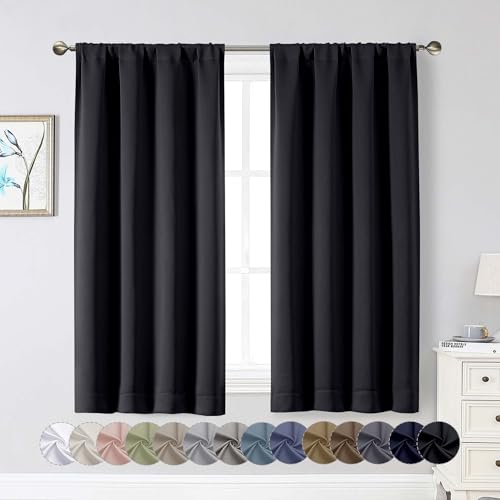 WELVETBLK WelvetBLK Black Blackout Curtains for Bedroom Living Room 54 Inch…
View on Amazon ↗
 SIMPLEBRAND Simplebrand Ava Black Blackout Curtains 78 Inch Length for Bedroom…
View on Amazon ↗
 JOYDECO Joydeco 100% Blackout Curtains for Bedroom - Nature Linen 84…
View on Amazon ↗
Listing names and images come from Amazon and are rechecked against the live listings; last checked Nov 8, 2026. No prices shown; the current price is on the listing.
How to read this guide. This guide covers the thermal blackout curtain category as a whole, from fabric back layers to mounting styles. It does not evaluate individual curtain models, brands, or listings. Check the exact panel width and care instructions on the product page before you buy.