Start with the window type and where you can stand. A fixed squeegee suits reachable glass, while a pole tool handles high windows without a ladder. The main tradeoff is control versus reach: shorter tools give more pressure and streak control, longer tools cover more area but are harder to keep flat. Check the blade width, the head flexibility, and how the tool stores before buying.
Read Your Windows Before the Tool
Measure the tallest window you will clean from the floor or a stable step. If the top edge is above your shoulder with your arm extended, you need a pole or an extension. High stairwell windows and transom glass often require a telescoping handle, while standard double hung sashes may only need a handheld squeegee.
Count how many small panes, mullions, or divided lites you have. A wide blade skips over narrow strips and leaves water behind, so windows with grids or many small panes call for a narrow blade or a detail tool. Large picture windows reward a wide blade because fewer passes mean fewer streaks.
How the Head Design Changes Your Finish
The head is where most streaks are born. A flexible, pivoting head follows the glass surface and keeps the blade edge in contact, which matters on old windows that are not perfectly flat. A fixed head is easier to control for straight pulls but can lift at the edges on curved or recessed glass.
Look for a channel that holds the rubber blade snugly with a slight curve under pressure. If the channel is loose, the blade will chatter and leave lines. A head with a replaceable rubber strip is a better long term buy because the rubber is the first part to wear, harden, or nick.
Reach Without Losing Pressure
Pole tools solve the ladder problem but change how you clean. The longer the pole, the harder it is to keep the blade flat against the glass, and the more your arm works to press from a distance. Telescoping poles let you shorten the reach for lower panes, which restores some control.
For indoor windows over furniture or stairs, a pole with a pivoting head reduces the need to lean. A spray mop style tool with a built in soap dispenser adds convenience but usually trades away the precise blade pressure that a bare squeegee gives. Choose based on how often you clean high glass versus how picky you are about streaks.
The Blade and Channel Check
Check the blade material before buying. Natural rubber leaves the cleanest, quietest pull on smooth glass, while silicone lasts longer but can skip on very wet surfaces. A blade that feels stiff out of the box will soften with use, but a rock hard edge is already aged or cheap.
The channel, the metal or plastic strip that holds the rubber, should be rigid enough not to twist. A flimsy channel bends under pressure and creates uneven contact. Compare the listing photos for a channel that extends past the rubber ends slightly, which protects the blade corners from tearing.
| Tool style | Best for | Reach | Streak control | Storage footprint |
|---|---|---|---|---|
| Fixed squeegee | Small to medium reachable panes | Low | High | Very small |
| Bent neck squeegee | Recessed or angled glass | Low to medium | High | Small |
| Telescoping pole | High windows, skylights | High | Medium | Long but slim |
| Spray mop combo | Whole house, quick cleanups | High | Lower | Bulky |
A fixed squeegee is the easiest to master and the least likely to streak, which makes it the right starting point for most people. A spray mop combo saves trips to the bucket but needs more cleanup itself and takes up real space in a closet.
Frames, Tracks, and the Drips You Forgot
Window frames decide whether you also need a scrubber or a detailing cloth. Squeegees leave a thin line of water at the edges, and if the frame is recessed, that water sits against the wood or vinyl. A tool with a microfiber sleeve or a built in scrubber lets you pre wash the glass and wipe the edges in one pass.
Pet households and busy families often have nose prints, paw smudges, or sticky handprints low on the glass. A spray applicator helps here, but only if the spray reaches the bottom corners. Check whether the listing shows a spray nozzle angle that can hit the lower sash without removing the tool from the pole.
How to Read a Listing Without the Marketing
Look past phrases like 'streak free guarantee' and 'professional grade'. Those terms describe the result you want, not the mechanism that produces it. Instead, check three things: the blade width in inches, the pole length or extension range, and whether the rubber strip is replaceable.
Ask the seller if the channel is metal or plastic, how the head pivots, and whether the tool can stand on its own for drying. A listing that omits the blade width or the maximum reach is often hiding a mismatch. Compare the weight of the tool, especially pole models, because a heavy head at the end of a long pole tires your shoulder quickly.
Care That Keeps the Rubber Alive
The rubber blade is a consumable, not a permanent part. It hardens with sun exposure, picks up nicks from rough frames, and loses its edge after a season of regular use. Store the tool indoors, blade side up, and rinse the rubber after every session to remove grit and soap film.
A microfiber sleeve or scrubber pad also wears and holds detergent residue, which transfers back to the glass. Rinse it thoroughly and let it dry before storing. If the tool has a spray reservoir, empty it between uses or the soap can clog the nozzle and grow mildew.
When a Squeegee Is the Wrong Tool
Textured, frosted, or leaded glass defeats a rubber blade because the surface is not smooth enough for a clean pull. A spray cleaner and a microfiber cloth work better there. Likewise, very large commercial storefronts or exterior windows on upper floors may justify a professional water fed pole system, not a handheld consumer tool.
Hardwood floors below the window matter too. Drips and overspray can damage the finish, so if you are cleaning above wood, choose a tool with a drip guard or a controlled spray pattern. A rental with old, painted sashes may also call for a gentler approach than a stiff blade scraping against chipped paint.
Window Cleaning Tool Questions, Answered
Is a window cleaning tool worth it?
For most households, yes. A basic squeegee and scrubber set replaces paper towels and glass spray, which means less waste and faster results. The value is clearest if you have more than a few windows or if you clean them more than twice a year. For one small bathroom window, a microfiber cloth may be enough.
Which window cleaning tool is best for high windows?
A telescoping pole with a pivoting head reaches high glass without a ladder. Look for a pole that extends to at least your tallest window plus your arm length, and check the head locks in place at an angle. A spray mop combo adds convenience but is harder to keep flat against the glass from a distance.
What is the difference between a squeegee and a spray mop?
A squeegee pulls water and soap off the glass with a rubber blade and needs a separate bucket or spray bottle. A spray mop has a built in reservoir and often a scrubber pad, so it combines application and removal. The squeegee gives more precise streak control, while the spray mop is faster for whole house cleanups.
Can a window cleaning tool scratch glass?
A clean rubber blade will not scratch glass, but a blade that has picked up grit or sand can. Rinse the rubber before each use and inspect it for embedded particles. Avoid metal channels that touch the glass directly, and never use a blade on frosted or textured glass where the surface is uneven.
How do I choose a window cleaning tool for a small apartment?
Prioritize storage and reach. A fixed or bent neck squeegee takes almost no space and handles most apartment windows. If you have a tall living room window, look for a telescoping pole that collapses short enough to fit in a closet. Skip bulky spray mop combos unless you clean many windows weekly.
The Window Cleaning Tool That Fits Most Homes
A household with standard double hung windows and a mix of reachable and slightly high glass does best with a telescoping pole squeegee that has a pivoting head and a replaceable rubber blade. It covers both low and high panes without a ladder and stores slim. If you clean only a few small bathroom or kitchen windows, skip the pole and buy a basic fixed squeegee with a scrubber sleeve, it is cheaper, easier to control, and takes up almost no space.
Real window cleaning tool listings, so you can check the points in this guide against actual products. These are affiliate links: as an Amazon Associate we earn from qualifying purchases, at no extra cost to you.
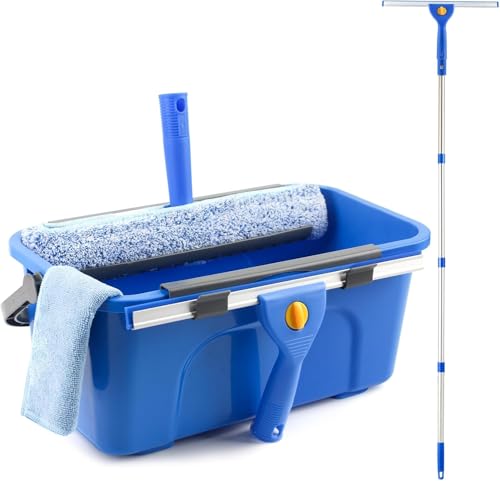 PIMEKOY PIMEKOY Window Cleaning Kit with Bucket, Squeegee and Scrubber for…
View on Amazon ↗
 NICOFPHY Window Cleaning Kit with Bucket, Squeegee and Scrubber for Home,…
View on Amazon ↗
 X XINDELL XINDELL Interior Windshield Cleaner Tool – Car Interior Window Cleaning…
View on Amazon ↗
Listing names and images come from Amazon and are rechecked against the live listings; last checked Nov 8, 2026. No prices shown; the current price is on the listing.
What this guide is. This guide draws on general knowledge of how window cleaning tools work, including blade materials, head mechanics, and pole design. It does not evaluate any specific model or listing, so check the blade width, pole length, and replaceable rubber on the product page before ordering.