Start with how the mask seals on your face, because a leak ruins everything else. Then pick a lens style by where you snorkel: a single wide lens for clear, calm water, or twin lenses for lower volume and easier clearing. Most casual swimmers are fine with a budget mask, but frequent travelers or rough water users should pay for a tempered glass lens and a dry top snorkel.
The Seal That Sits on Your Face
A mask skirt is the flexible edge that touches your face. Silicone skirts are the standard because they stay soft in cold water and do not irritate skin. Cheaper masks sometimes use PVC, which stiffens and can leak after a season in a beach bag.
Before buying, press the mask to your face without the strap. Inhale gently through your nose. A good seal holds the mask in place for a few seconds. Check the listing for a double feathered edge on the skirt, because that detail spreads pressure and reduces red marks after a long swim.
Facial hair breaks the seal along the upper lip. A small amount of silicone grease or a tighter strap helps, but a mustache will still let water trickle in. If you do not plan to shave, look for a mask with a wide chin pocket and a soft second skirt layer.
Lens Shape Changes What You See
A single lens mask gives an uninterrupted view, which feels natural when you are looking at coral or a school of fish. The tradeoff is a larger internal air space, so clearing water takes a bigger exhale. Twin lens masks sit closer to your face and clear faster, but the center frame post sits in your peripheral vision.
Tempered glass is the only lens material you should consider for anything beyond a hotel pool. It resists shattering and takes an anti fog treatment well. Plastic lenses scratch quickly and are not rated for impact, so skip them for open water.
Some masks add side windows for a wider field of view. This helps when you are scanning for boats or keeping an eye on a child. The side panels add weight and can catch glare, so try the mask on if possible.
The Snorkel Top That Fits Your Water
An open top snorkel is just a curved tube. It is the easiest to rinse and nothing can jam, but any wave or head dip sends water into your mouth. This style works for calm lakes and pool practice where you keep your head still.
A semi dry top has a splash guard at the opening. It deflects small waves and spray, but if you dive under the surface the tube floods and you must clear it with a sharp exhale. Most casual beach snorkelers are happiest with this style.
A dry top uses a float valve that closes when the opening goes underwater. It keeps almost all water out during a surface swim, which matters on a kayak or boat trip where waves come from every direction. The valve adds a small air resistance, and sand can jam it if you drop the snorkel on the beach.
Purge Valves and Full Face Designs
A purge valve is a one way flap at the bottom of the mask. When you exhale, water drains out instead of you lifting the mask to dump it. This helps beginners who struggle to clear a mask the usual way, but the flap can wear out or trap sand.
Full face masks cover your eyes, nose, and mouth in one sealed dome. You breathe through your mouth and nose, and a floating ball valve in the snorkel tube stops water entry. They feel easy at first, but you cannot dive below about three feet because the air volume makes equalizing pressure difficult.
For a family outing or a first lake swim, a full face mask reduces panic. For any activity where you might duck under or swim hard, a traditional mask and separate snorkel is safer and easier to clear.
Fit Checks That Prevent Leaks
A mask that fits a friend may not fit you. Face width, nose bridge height, and the space between your eyes all change the seal. When you compare listings, look for an adjustable strap with a quick release buckle, because a strap that is hard to adjust gets left loose in the water.
The strap should sit high on the back of your head, not over your ears. A mask with a split strap stays in place better than a single band. Check the listing for a swivel buckle, which lets the strap angle match your head shape.
If you wear glasses, you need a mask with prescription lens inserts or a high volume design that fits over small frames. Contact lenses are simpler, but if you lose one in the water you are stuck. Some masks have a magnifying panel in the lower lens for reading a dive watch.
Travel Weight and Storage Shape
A mask for a carry on bag should be low volume and flexible enough to flatten. Twin lens masks pack flatter than single lens masks, and a foldable snorkel tube saves space. Look for a mask with a rigid plastic box or a soft case with a lens pocket, because a bare mask in a suitcase gets scratched.
For a beach holiday, weight matters less than sand resistance. A dark skirt hides stains better than clear silicone. Rinse the mask in fresh water after every salt water use, and let it dry out of direct sun, because UV light degrades silicone over a few seasons.
Kayak and boat users should clip the mask to a life jacket or a dry bag. A floating snorkel is easier to spot if you drop it, but most masks sink. A bright colored frame helps you find it on a sandy bottom.
Which Features Are Worth the Money
Marketing pages emphasize anti fog coatings, GoPro mounts, and 180 degree views. Anti fog coatings wear off after a few uses unless you reapply a gel or spray. A GoPro mount adds weight and catches on kelp. A 180 degree view is only as good as the skirt seal around your temples.
Pay for these instead: a tempered glass lens, a soft silicone skirt, and a dry top snorkel if you swim in chop. A purge valve matters for beginners. Everything else is a preference, not a performance gain.
Budget masks often skip the second skirt feather or use a thinner silicone. They work for a week at a lake, but the seal may fail after a few summers. Mid range masks add a better strap system and a longer snorkel tube, which matters for taller swimmers.
Mistakes That Send You Back to Shore
The most common mistake is overtightening the strap. A tight strap deforms the skirt and creates channels for water. The water pressure at the surface is enough to hold a well fitted mask, so the strap only needs to be snug.
Another mistake is buying a mask based on the snorkel color or a brand name. The same brand makes masks for different face sizes, and a pretty snorkel cannot fix a leaky skirt. Compare the skirt material, the lens glass, and the strap type before the color.
Some buyers choose a full face mask for a child because it looks easy. A child who panics with water in a traditional mask may also panic when the full face mask fogs and they cannot remove it quickly. Practice in a pool first, whatever style you buy.
Mask Types Compared by Your Situation
| Lens style | Snorkel top | Clearing effort | Suits |
|---|---|---|---|
| Single lens | Open or semi dry | Higher | Calm lakes, clear water, wide views |
| Twin lens | Open or dry | Lower | Travel, frequent clearing, smaller faces |
| Full face | Dry top built in | Lowest | Surface swimming, beginners, family outings |
| Twin with purge | Dry top | Low | Choppy water, boat trips, kayak users |
This table groups the main design choices. A single lens mask is not better than a twin lens mask, but each suits a different water condition and face shape.
For a beach holiday with small waves, a twin lens mask with a semi dry snorkel covers most needs. For a kayak trip with spray and chop, a twin lens mask with a dry top and purge valve is easier to live with.
Snorkeling Mask Questions That Come Up Before You Buy
How do I stop my snorkeling mask from fogging up?
Use a commercial anti fog gel or a drop of baby shampoo rubbed on the inside of the lens, then rinse lightly. Spit also works in a pinch. Avoid touching the inside of the lens with your fingers, because skin oils create a film that fogs faster. A mask with a tempered glass lens holds an anti fog treatment longer than plastic.
What is the difference between a dry snorkel and a semi dry snorkel?
A dry snorkel has a float valve at the top that closes when the opening goes underwater, keeping almost all water out. A semi dry snorkel has a splash guard that deflects waves but does not seal, so the tube floods if you dive under. Dry tops are better for choppy water, semi dry tops are lighter and cheaper.
Can I wear a snorkeling mask over glasses?
Most masks do not fit over glasses because the arms break the skirt seal and the frames press into your temples. You can buy a mask with prescription lens inserts, or wear contact lenses. Some high volume masks fit over very small frames, but the seal is unreliable. Check the listing for a prescription ready label.
Is a full face snorkeling mask safe for beginners?
For surface swimming in calm water, a full face mask is easy to use because you breathe normally and no water enters. It is not for diving below a few feet, because the large air space makes it hard to equalize ear pressure. If you might panic or need to remove the mask quickly, a traditional mask is easier to pull off.
Which snorkeling mask is best for a child?
Look for a child sized mask with a soft silicone skirt and a small nose pocket. A purge valve helps because children struggle to clear water by exhaling hard. Avoid full face masks for children under about ten, because the seal is harder to check and a scared child may not remove it fast enough. Try the mask on the child before buying.
Which Snorkeling Mask Fits Your Next Swim
A swimmer heading to a calm lake or a beach with small waves should buy a twin lens mask with a semi dry snorkel and a soft silicone skirt. That combination clears fast, packs flat, and costs a mid range price. For a kayak trip or a boat day with chop, switch to a dry top snorkel and a purge valve mask. The dry valve keeps water out when waves break over your head, and the purge valve clears the rest with one exhale.
Real snorkeling mask listings, so you can check the points in this guide against actual products. These are affiliate links: as an Amazon Associate we earn from qualifying purchases, at no extra cost to you.
 AEGEND Aegend Snorkeling Gear Set for Adult - Anti-Fog Mask &…
View on Amazon ↗
 ZEEPORTE ZEEPORTE Mask Fin Snorkel Set with Adult Snorkeling Gear, Panoramic…
View on Amazon ↗
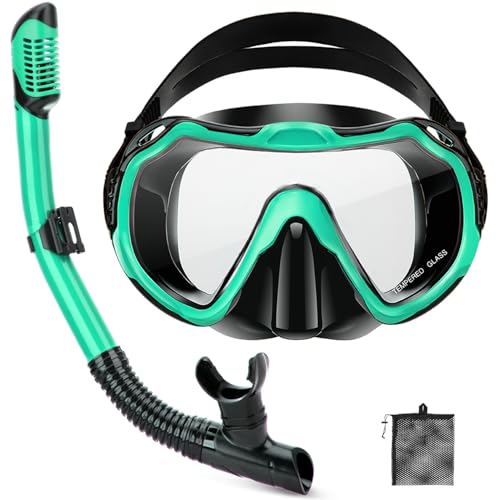 PIYAZI PIYAZI Snorkeling Gear for Adults, Adult Snorkel Set with Panoramic…
View on Amazon ↗
Listing names and images come from Amazon and are rechecked against the live listings; last checked Nov 8, 2026. No prices shown; the current price is on the listing.
Scope and limits. This guide is written from general knowledge of snorkeling mask design and how the components behave in water, not from testing individual models. It cannot tell you whether a specific listing has a defective skirt or a weak buckle, so check the dimensions and material on the product page before you buy.