Two factors decide most sample pack purchases: whether the sounds match your genre and whether the license covers how you release music. Check the audio format and BPM labeling next. Buyers who make one specific genre should pick a focused pack over a giant bundle. The main tradeoff is breadth against depth: huge packs cover more ground but thin out the sounds you will actually use.
Match the pack to the music you actually finish
The quickest way to waste money on samples is to buy a bundle that covers everything. A pack labeled for techno will not help much if you make lo fi hip hop. The kick drums, bass hits, and textures are shaped for a different mix.
Start with the genre label on the listing, then listen to the preview if one is available. Preview tracks are often mixed and mastered, so a raw drum one shot may sound dull next to a finished loop. That is normal. Judge whether the sound fits your template before you judge the polish.
If you work in two or three related genres, a producer bundle can make sense. If you work in one, a focused pack gets used faster. The deeper a pack goes into one style, the less time you spend scrolling past sounds you will never place in a track.
Read the license like a release plan
Royalty free is not the same as free to use anywhere. Most sample packs allow use in original music without paying per stream or sale. The limits show up in other places: sync licensing, sample packs you resell, or tracks you register with content ID systems.
Check whether the license allows commercial releases, remixes, or use in music for ads and games. Some licenses restrict use in library music or require clearance for major label placements. Others forbid reusing the samples in your own sample pack, even after heavy processing.
If you plan to release through a distributor that registers content ID, look for a license that permits that. Some distributors flag royalty free loops that other artists use too. A clear license note from the seller is worth more than a vague promise of no copyright issues.
File format and tempo labeling change your workflow
WAV files keep the full quality and load into every DAW. MP3 previews are fine for browsing but not for production. Check the sample rate and bit depth: 24 bit WAV at 44.1 kHz or higher is standard for professional use.
Tempo matters more for loops than for one shots. A pack that labels every loop with its BPM saves you from warping each file by ear. Some packs also include the musical key for melodic loops, which helps when you layer sounds from different folders.
File naming is easy to overlook until you have two hundred kicks named audio_01 through audio_200. Clear names like kick_deep_95bpm make a pack usable months later. Look at the file list or a screenshot in the listing before you buy.
| Pack type | Genre depth | License clarity | Workflow speed | Suits |
|---|---|---|---|---|
| Genre specific pack | Deep | Usually clear | Fast | One style producers |
| Producer bundle | Moderate | Check each pack | Medium | Multi genre producers |
| General library | Shallow | Varies | Slow | Sound designers |
| Free pack | Variable | Often unclear | Medium | Beginners testing sounds |
Free packs can be a low risk way to test a genre, but the license is often vague. If a free pack becomes part of a released track, you may not be able to clear it later.
One shots, loops, or full construction kits
Sample packs usually contain one of three things: one shots, loops, or construction kits. One shots are single drum hits, bass notes, or sound effects. Loops are longer phrases, often drums or melodies, that repeat. Construction kits group loops and one shots from the same session so they fit together.
One shots give the most control. You place each hit where you want and shape it with your own effects. Loops are faster but lock you into someone else's timing and groove. Construction kits sit in between: they sound cohesive out of the box but still let you rearrange parts.
If you like building drums from scratch, a pack of one shots is the better fit. If you want to sketch ideas quickly, loops and kits get you to a finished arrangement faster. Many producers keep a small folder of each.
Check the demo and the file list before you pay
A listing that only shows a polished demo track tells you little about the raw files. Ask for or look for the actual file list, the number of samples, and the format. A pack with three hundred sounds but no list could be hiding fifty variations of the same hi hat.
Look for a description of how the sounds were made: recorded from hardware, synthesized, or sampled from vinyl. That tells you about the character and also about possible noise or tuning issues. Recorded acoustic drums will have room tone; synthesized drums will be cleaner but may feel sterile.
If the seller offers a refund or a small free taster pack, that reduces the risk. A taster pack lets you test the files in your DAW before spending on the full version.
Storage and organization habits decide long term value
A sample pack is only as useful as your ability to find sounds later. Packs that arrive as a single zip file with no folder structure take hours to sort. Packs that are organized by instrument, tempo, or key save that time.
Think about where the samples will live. If your DAW has a browser that reads metadata, check whether the pack includes tags or follows a naming convention your software can index. If you prefer to browse in your operating system, folder names matter more.
Large packs can eat drive space fast. A 5 GB pack of WAV files is not unusual for a full library. If you work on a laptop with limited storage, a smaller focused pack may serve you better than a giant bundle you have to offload to an external drive.
When a sample pack is not the right tool
Sample packs help when you need building blocks fast. They do not help when the problem is your sound design, your arrangement, or your mixing. If your tracks feel generic because the sounds themselves are the only interesting part, more samples will not fix that.
A synthesizer or a field recorder may be the better purchase if you want sounds no one else has. Sample packs are used by thousands of other producers. The same loops show up in other people's tracks, especially in popular genres.
If you are learning to produce, start with the stock sounds in your DAW. Many DAWs include a solid library of drums, synths, and effects. Once you know what your stock library cannot do, a sample pack is easier to choose well. You can also look at how to pick a DAW before adding third party sounds.
Mistakes that turn a cheap pack into an expensive one
Buying a pack because the demo track sounds good is the most common mistake. The demo is a finished, mixed, mastered song. Your raw files will not sound like that until you process them. Judge the sounds, not the song.
Ignoring the license is the second mistake. A pack that is fine for a SoundCloud upload may not be fine for a sync placement or a commercial release. Read the license before you build a track around a loop.
Collecting packs without using them is the third. A hard drive full of unopened zip files is not a studio. Buy one pack, use it until you know what it cannot do, then buy the next one.
Sample Pack Questions That Come Up Before Checkout
What is the difference between royalty free and copyright free sample packs?
Royalty free means you pay once and do not owe royalties per use, but the sounds still have a copyright owner and license terms. Copyright free is a looser term that usually means the seller claims no ownership, but that claim is hard to verify. Read the actual license text rather than relying on either phrase.
Can I use sample packs in music I release on Spotify or Apple Music?
Most commercial sample pack licenses allow streaming releases. The risk is with content ID: if your distributor registers a track that contains a loop another artist also used, you may get a false claim. Check whether the license allows content ID registration or requires you to opt out. Some sellers state this directly.
How many samples should a good sample pack have?
There is no fixed number. A focused genre pack with 150 well made one shots can be more useful than a 2,000 file general library. Look for variety within the sounds you use most. If you make house music, you need more kick and hi hat options than orchestral stabs.
Is it better to buy WAV or MP3 sample packs?
WAV is the safer choice for production. MP3 files are compressed and can introduce artifacts when you pitch or stretch them. Some packs offer both, with MP3 for preview and WAV for download. If a pack is MP3 only, assume it is meant for reference or casual use, not final mixes.
Which sample pack format works with my DAW?
WAV files work in every major DAW. Some packs also include formats for specific samplers like Kontakt, EXS24, or Ableton Live racks. If you use a hardware sampler, check its file requirements before buying. Most sellers list compatible formats in the description.
Which Sample Pack to Start With
A producer who makes one genre and wants to finish tracks faster should start with a focused, genre specific pack in WAV format with clear BPM labels and a readable license. That combination gets used immediately and avoids the content ID headaches later. A sound designer or someone still exploring genres should instead grab a free or budget pack from a reputable source, test the workflow, and only spend more once the gaps are obvious.
Real sample pack listings, so you can check the points in this guide against actual products. These are affiliate links: as an Amazon Associate we earn from qualifying purchases, at no extra cost to you.
 LUCIDSAMPLES PACKS Loops Huge Bundle of Hip Hop Sample Packs. 15.000…
View on Amazon ↗
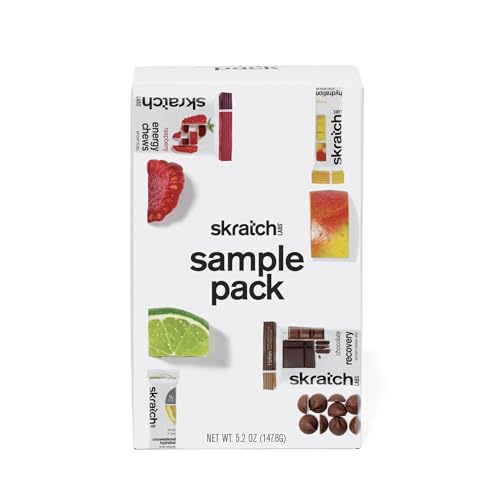 SKRATCH LABS Skratch Labs Sports Nutrition Sample Pack for Running, Cycling &…
View on Amazon ↗
 JROBEAUTY JRoBeauty Perfume High End Fragrance Samples Set for Women -…
View on Amazon ↗
Listing names and images come from Amazon and are rechecked against the live listings; last checked Nov 8, 2026. No prices shown; the current price is on the listing.
About this guide. This guide covers sample packs as a category, not any individual pack or seller. It is written from general knowledge of how these products work; no product documents, reviews, or tests were used, and you should check any file count, format, or license detail on the listing before buying.